
 Yeshiva World News
REPORT: Israel “Almost Entirely Out of the Loop” on US-Iran Talks; Trump Sidelines Netanyahu Over Failure to Topple Regime
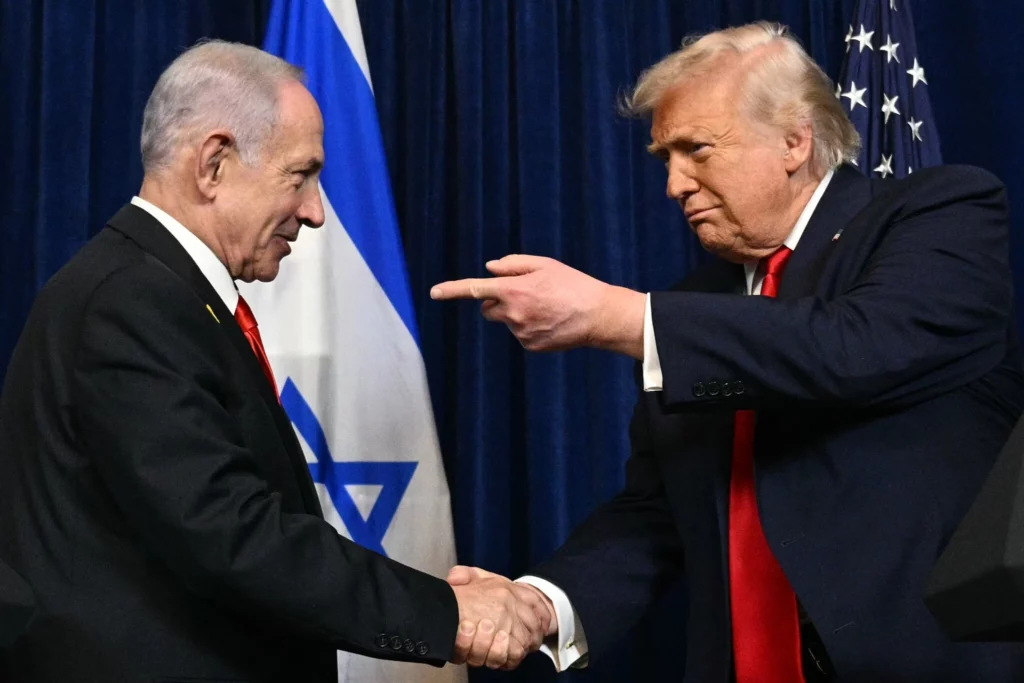
Israeli Prime Minister Benjamin Netanyahu has been sidelined by US President Donald Trump in negotiations between Washington and Tehran, with Israel cut “almost entirely out of the loop” on the talks, two unnamed Israeli defense officials told The New York Times in a report published Saturday.
According to the officials, Israel has been forced to rely on roundabout channels to gather information about the discussions, including diplomatic contacts with regional leaders and intelligence collection inside Iran. The Israeli officials spoke to the newspaper on the condition of anonymity due to the sensitive nature of the issue.
The reported exclusion marks a sharp reversal from the early phase of the war against Iran, when Netanyahu coordinated closely with Trump. In the run-up to the start of the war earlier this year, Netanyahu led a discussion in the Situation Room in Washington, where he predicted that a joint US-Israeli campaign could topple the Iranian regime. That prediction did not materialize, and Trump’s posture toward Israeli involvement in subsequent diplomacy has shifted dramatically.
“The banishment from the cockpit to economy class has potentially significant consequences for Israel, and especially for the prime minister, who faces an uphill re-election battle this year,” the report noted.
In the negotiations, the United States has reportedly proposed suspending Iran’s nuclear activity for 20 years, a timeframe that could be shortened in later proposals. IIsraeli officials cited in the report expressed concern that with Israel excluded from the talks, Iran’s ballistic missile arsenal may have been left off the table. Officials fear a final deal could impose no meaningful restrictions on Tehran’s nuclear or missile programs and lift sanctions, potentially funneling billions of dollars back to Iran and renewing its financial support for Hezbollah and Hamas.
The Times report follows an Axios account earlier in the week describing tensions between the two leaders. Axios reported that Netanyahu’s “hair was on fire” after a Tuesday phone call with Trump on the Iran talks. According to Axios, Trump called Netanyahu to discuss a “letter of intent” being drafted by mediators to end the war and launch a month-long negotiation period. The negotiations would cover Iran’s nuclear program and the opening of the Strait of Hormuz, the outlet reported, citing two Israeli sources who described clear disagreement between Trump and Netanyahu over the path forward.
Speaking to reporters on Wednesday, Trump dismissed the notion of a rift, saying Netanyahu would “do whatever I want him to do.” In comments to Axios on Saturday, Trump said “some people would much rather have a deal and others would rather resume the war,” and described Netanyahu as “torn” while rejecting the suggestion that the prime minister was worried Trump might accept a bad agreement.
Other accounts of the relationship paint a more cordial picture. The Times of Israel cited reporting describing “close coordination between Netanyahu and Trump, with no daylight between them,” a characterization at odds with the Times account of Israel’s exclusion from the negotiating loop.
According to Israel’s Yediot Acharonot, Israeli authorities must pressure third-party diplomats or regional figures merely to glean minimal insight into the nature of the U.S.-Iran dialogue. Trump is said to have stopped calling Netanyahu altogether to coordinate next steps, a stark departure from their earlier pattern of joint strategic planning.
Netanyahu’s stated war objectives since the conflict began on February 28 have been threefold: dismantling Iran’s nuclear program, eliminating its missile infrastructure, and toppling the Iranian regime. None of those goals have been achieved. The Times reported that many of Trump’s closest advisers had considered regime change in Iran unrealistic from the outset, marking the first major policy divergence between Washington and Jerusalem.
Days after the ceasefire with Iran was signed, Israel also agreed to halt its ongoing campaign against Hezbollah in Lebanon early and accept unusual restrictions, according to the Ynet account of the Times reporting.
(YWN World Headquarters – NYC)