
 Yeshiva World News
Tulsi Gabbard Resigns As Trump’s Spy Chief, Aaron Lukas Appointed Acting Director Of National Intelligence
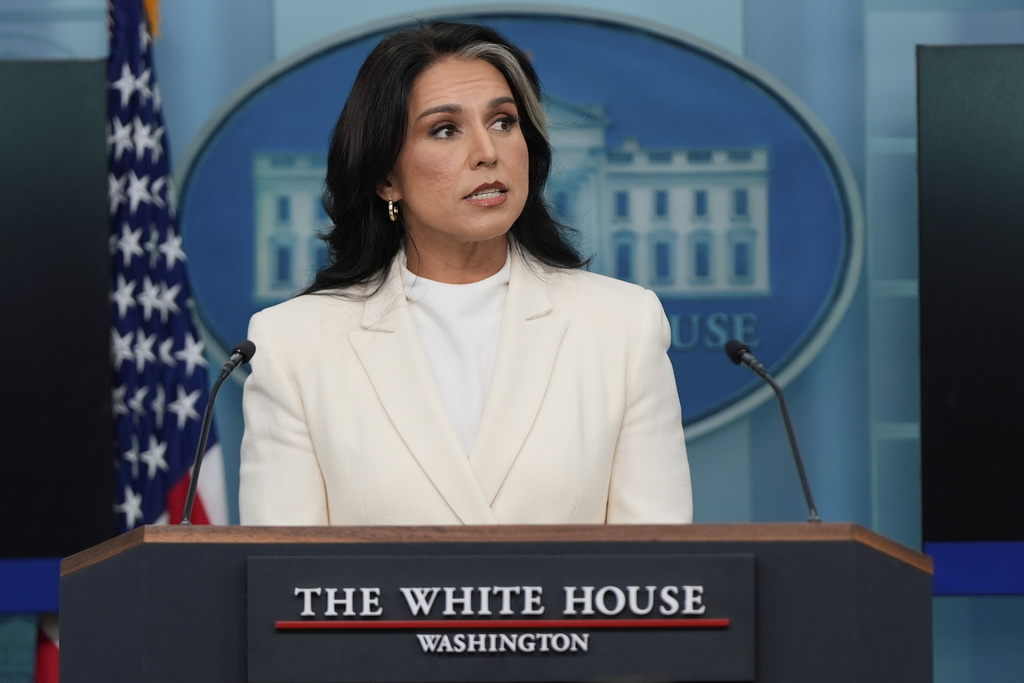
Director of National Intelligence Tulsi Gabbard resigned Friday, citing her husband’s diagnosis with an “extremely rare form of bone cancer” and saying she needed to step away from public service to support him through treatment. Her resignation takes effect June 30.
Gabbard notified President Donald Trump of her decision during a meeting in the Oval Office on Friday and later posted her resignation letter to X. “I am deeply grateful for the trust you placed in me and for the opportunity to lead the Office of the Director of National Intelligence for the last year and a half,” she wrote, adding that her husband, Abraham, “faces major challenges in the coming weeks and months.”

Trump confirmed the resignation in a Truth Social post, praising Gabbard for having done an “incredible job” and saying the administration would “miss her.” He announced that Principal Deputy Director of National Intelligence Aaron Lukas will serve as acting director following her departure.
Gabbard becomes the fourth person to leave Trump’s Cabinet during his second term. Former Homeland Security Secretary Kristi Noem and former Attorney General Pam Bondi were both fired from their posts, while Lori Chavez-DeRemer resigned as labor secretary amid a misconduct investigation.
Her exit follows months of reported friction with the White House over the administration’s military posture toward Iran. CNN reported in June 2025, days before the U.S. struck Iranian nuclear facilities, that multiple people inside the West Wing had grown disillusioned with Gabbard’s performance, with Trump seeing her as “off message” regarding the Israel-Iran conflict.
Trump’s annoyance reportedly peaked after Gabbard posted a video warning that the world was “closer to the brink of nuclear annihilation than ever before” and blaming “political elite and warmongers” for stoking tensions between nuclear powers.
During pivotal moments as Trump deliberated military action or watched live video feeds of operations in Iran or Venezuela, Gabbard was often not in the room, underscoring her outsider status within the national security team. Her tenure was marked by reports of behind-the-scenes clashes with Trump and other administration officials that sometimes spilled into public view.
Reuters reported Friday that the White House had pressured Gabbard to step down, citing a source familiar with the matter. The administration pushed back forcefully on that account. “As the President said, she is stepping aside to ensure that her husband becomes better than ever before,” White House spokesman Davis Ingle wrote on X. “Any suggestion that the White House forced her to resign over her husband’s health is slanderous.”
Gabbard’s departure also follows the March resignation of Joe Kent, the Trump administration’s top counterterrorism official, who reported directly to her at ODNI and announced he could not “in good conscience” support the Iran war. In his resignation letter, Kent said Iran posed “no imminent threat” to the U.S. and argued the administration had been pulled into war by Israel. Gabbard publicly defended Trump’s decision following Kent’s exit, saying the president had concluded the Iranian regime posed an imminent threat.
Her office has also been locked in a behind-the-scenes feud with the CIA for months that became public last week during a Senate Homeland Security Committee hearing, when a member of Gabbard’s Directors Initiative Group testified about internal tensions between the two agencies.
A former Democratic congresswoman from Hawaii, Gabbard endorsed Trump in 2024 on anti-interventionist grounds, praising him as a peace-seeker. She was confirmed as national intelligence chief less than a month after Trump’s second term began and led the U.S. intelligence community, a sprawling coalition of 18 agencies and organizations.
Should Trump eventually nominate Lukas or another individual to the post, the Senate would face a truncated midterm election-year calendar to process the nomination, hold hearings and move toward floor votes. The chamber is scheduled to be out all of August for its annual summer recess and in October to campaign.
(YWN World Headquarters – NYC)