
 Matzav
Ebola Resurgence Sparks Global Concern, Travel Restrictions: What to Know
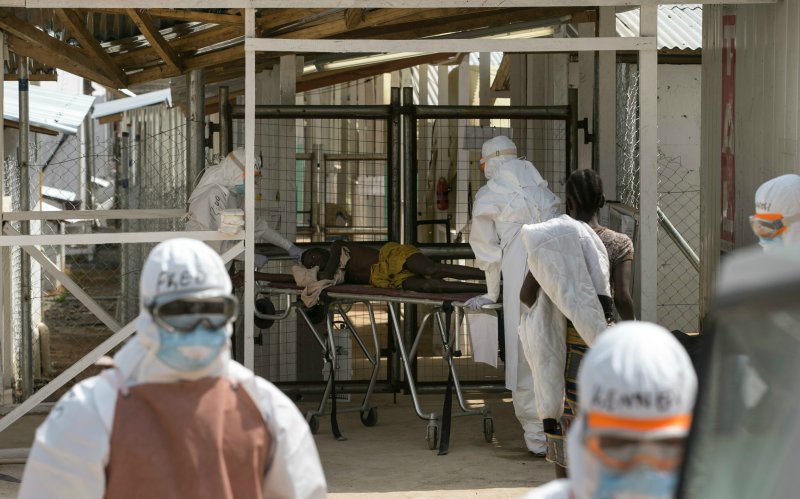
International health authorities are racing to contain a growing Ebola outbreak in central Africa that has already spread across parts of Congo and Uganda, prompting emergency declarations, tighter travel restrictions, and fears that the virus could expand into neighboring countries.
The World Health Organization declared a global public health emergency last week after cases linked to the rare Bundibugyo strain of Ebola continued rising in multiple regions. Health officials in Congo have confirmed 83 infections and nine deaths as of May 23, while another 176 suspected infections and 176 suspected fatalities are under investigation, according to figures released by the CDC. Uganda has so far confirmed five cases and one death.
WHO Director-General Tedros Adhanom Ghebreyesus said Friday that the outbreak in Uganda appeared “stable,” but warned that conditions in Congo were “deeply worrisome” and “spreading rapidly.”
The U.N. health agency has since upgraded its assessment of the crisis, classifying the danger as very high within Congo, high across the region, and low globally.
Health officials say the outbreak appears to have begun in Bunia, the capital of Congo’s Ituri Province, after a nurse fell ill following treatment of several patients suffering from symptoms initially believed to resemble malaria.
Authorities now believe the virus had likely been circulating quietly through local communities for weeks before being identified.
Doctors in Mongbwalu, a mining center in Ituri, began noticing clusters of severely ill patients with unusually high death rates and formally alerted the WHO on May 5.
Laboratory testing conducted in Kinshasa later confirmed Bundibugyo virus disease in eight samples, leading Congo to officially announce its 17th Ebola outbreak on May 15.
From there, the virus spread rapidly across several health zones in Ituri Province, including Rwampara, Bunia, and Nyankunde. By mid-May, confirmed infections had also appeared farther south in North and South Kivu provinces.
Uganda declared its own outbreak the same day after an elderly Congolese man died in a private hospital in Kampala following admission with severe symptoms.
The epidemic has erupted in one of the most isolated and medically fragile regions in the world, with healthcare workers warning that hospitals remain understaffed, poorly equipped, and lacking proper training to handle a crisis of this scale.
Public health specialists have voiced alarm over the “scale and speed” of the outbreak, particularly because infections are now appearing in urban areas alongside heavy cross-border movement.
Ghebreyesus cautioned Friday that “violence and insecurity” were disrupting containment efforts after unrest broke out at an Ebola treatment facility in Rwampara when residents attempted to retrieve the body of a local man.
A treatment tent operated by Doctors Without Borders in eastern Congo was also torched Friday, according to Dr. Richard Lokudi, director of Mongbwalu General Reference Hospital.
“We strongly condemn this act, as it caused panic among the staff of the Mongbwalu Referral Hospital and also resulted in the escape of 18 suspected cases into the community,” he said.
Officials are increasingly worried that infected travelers who have not yet developed symptoms could unknowingly carry the virus into additional countries.
Robert Redfield, who previously led the CDC, warned Wednesday that the disease could potentially “leak” into Tanzania, southern Sudan, and Rwanda, creating the possibility of a “very significant pandemic.”
The Bundibugyo strain is one of four forms of Ebola known to infect humans. It was first identified in 2007 in western Uganda’s Bundibugyo district, from which it takes its name.
The disease causes a rare but frequently deadly hemorrhagic fever. According to the CDC, the virus is believed to originate in fruit bats and can spread to humans through close contact with infected wildlife.
Transmission between people occurs through direct exposure to bodily fluids including saliva, urine, vomit, sweat, feces, breast milk, and blood, as well as contaminated surfaces. Health experts warn that hospitals and burial settings are especially dangerous because deceased victims can remain highly contagious.
The incubation period generally ranges from two to 21 days, though most patients begin developing symptoms within four to 10 days after exposure. Infected individuals are not believed to be contagious until symptoms emerge.
Early signs of infection often resemble common illnesses such as malaria or influenza, including fever, exhaustion, muscle aches, headaches, and sore throat, complicating efforts to identify cases quickly.
The Bundibugyo strain carries an estimated fatality rate of between 30% and 50%. No approved vaccine currently exists, leaving supportive medical care as the primary treatment option.
“There’s a bit of evidence that vaccination for the Zaire Ebola virus might give a small amount of protection against Bundibugyo,” said Yonatan Grad, professor of immunology and infectious diseases at Harvard T.H. Chan School of Public Health.
“But this work is preliminary, hasn’t been thoroughly tested in people, and there’s reason to be skeptical that it will show a benefit,” Grad added. “It’s a big question whether the Zaire vaccine will be deployed in the hopes of helping quell the current outbreak.”
Despite mounting concern overseas, U.S. health officials insist the immediate threat to Americans remains limited.
“Currently, the risk to the United States remains low, because Ebola is spread through direct contact with body fluids and because the United States has a strong public health monitoring, infection control, and healthcare preparedness system in place,” Dr. Satish Pillai, the CDC’s Ebola response leader, told reporters on Friday.
An American doctor who had been serving with a Christian mission hospital in Bunia is now isolating in Germany after exposure to Ebola patients.
U.S. officials also confirmed that another American citizen with high-risk exposure had been transported to the Czech Republic for observation and monitoring.
No infections connected to the current outbreak have been identified inside the United States.
At the same time, federal authorities have begun imposing stricter entry requirements for travelers arriving from affected regions.
Foreign nationals who visited Congo, Uganda, or South Sudan within the previous 21 days are currently prohibited from entering the United States. On Friday, the Department of Health and Human Services expanded the restrictions to include green card holders.
The measures are being enforced under Title 42, which gives the CDC emergency powers to temporarily block entry of noncitizens during communicable disease threats.
The State Department has additionally directed all travelers bound for the United States — including American citizens — who recently visited those countries to undergo “enhanced public health screening” at designated airports before continuing their journeys.
The screenings are currently taking place at Washington Dulles International Airport near Washington and Hartsfield-Jackson Atlanta International Airport, with Houston’s George Bush Intercontinental Airport expected to join the program after May 26.
Travelers may be escorted for additional questioning regarding symptoms and travel history, undergo temperature checks using contactless devices, and in some cases be subjected to post-arrival monitoring.
Dr. Pillai said the precautions are intended to reduce the chances of the virus entering the country and follow containment strategies used during previous Ebola emergencies.
“This is an evolving situation, and the outbreak in the affected areas continues to expand,” Pillai said on Friday. “And with that in mind, that is why CDC has initiated entry screening processes, and which is a part of an overall broader, layered public health approach — starting with exit screening, airline illness reporting, and public health monitoring after arrival.”
{Matzav.com}