
 Vos Iz Neias
New Program Seeks To Train 2000 Charedi Health Professionals Within 5 Years
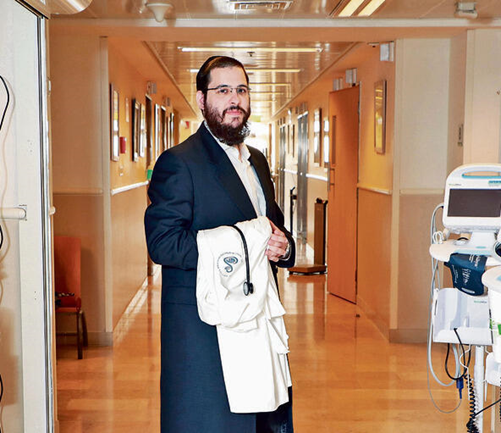
JERUSALEM (VINnews) — A large-scale program has been launched for the first time to train doctors and health professionals from the charedi sector in Israel, amid an increasingly severe shortage of physicians in the country. The stated goal is to significantly increase the number of charedi students entering medical studies and the Israeli healthcare system.
The program will include structured pre-academic preparatory courses, bridging gaps in mathematics, English, and science, along with personal mentoring, living stipends, financial support, professional guidance, and social and cultural assistance throughout the years of study. In addition, guidance tracks will be opened for health professions such as speech therapy, physiotherapy, and occupational therapy, fields that are currently in short supply and can later serve as a basis for four-year medical programs.
The initiative is backed by the Kemach Foundation (promoting charedi professionals), the Ministry of Health, the Authority for Social and Economic Development of the Haredi sector, the Ministry of Jerusalem and Heritage, the JDC, and additional partners. The program will be headed by Prof. Yossi Makori, former chair of the Planning and Budgeting Committee and dean of the Faculty of Medicine at Tel Aviv University, who described it as a national effort to address one of the most critical problems in the healthcare system: the shortage of doctors and caregivers.
According to Makori, Israel is currently significantly behind OECD countries in the number of medical students and new doctors entering the system. “A real opportunity has been created here,” he said. “There is a population with high motivation, excellent abilities, and a desire to integrate. This program is designed to remove barriers and enable them to reach places that were previously almost inaccessible.”
The first cohort is expected to include around 280 Haredi men and women across all tracks, from preparatory programs to support for students already admitted to medical and health sciences studies.
However, even the program’s initiators acknowledge the scale of the challenge. According to presented data, only 0.3% of Haredi students currently study medicine, compared to 1.2% in the general Jewish population, amounting to only a few dozen Haredi medical students per year. The program’s ambitious target is to add about 2,000 Haredi men and women to health and caregiving professions within five years.
Importantly, the program does not create a separate medical track for charedim and does not include a dedicated segregated faculty or preferential admissions. Studies will take place within existing medical faculties and accredited institutions in Israel. The emphasis, according to organizers, is on a broad “support envelope” to help charedi students overcome barriers and succeed in demanding academic studies.
The Kemach Foundation stressed that a key goal is enabling students to maintain their Haredi identity throughout their studies. “The potential already exists in the field, and our mission is to ensure it is not lost along the way,” said CEO Moti Feldstein. “Our role will be to ensure graduates can preserve their identity even within such demanding academic frameworks.”