
 JBizNews
Congressional Committee Asks Telecoms To Do More To Prevent Scams As Losses Surge
By JBizNews Desk
NEW YORK, May 24, 2026 — Nearly every American has received one at this point: the fake IRS call, the text claiming a package cannot be delivered, the urgent message pretending to come from a bank, hospital, or even a family member in distress.
Congress now says the problem has become large enough to demand answers directly from the country’s biggest telecommunications companies.
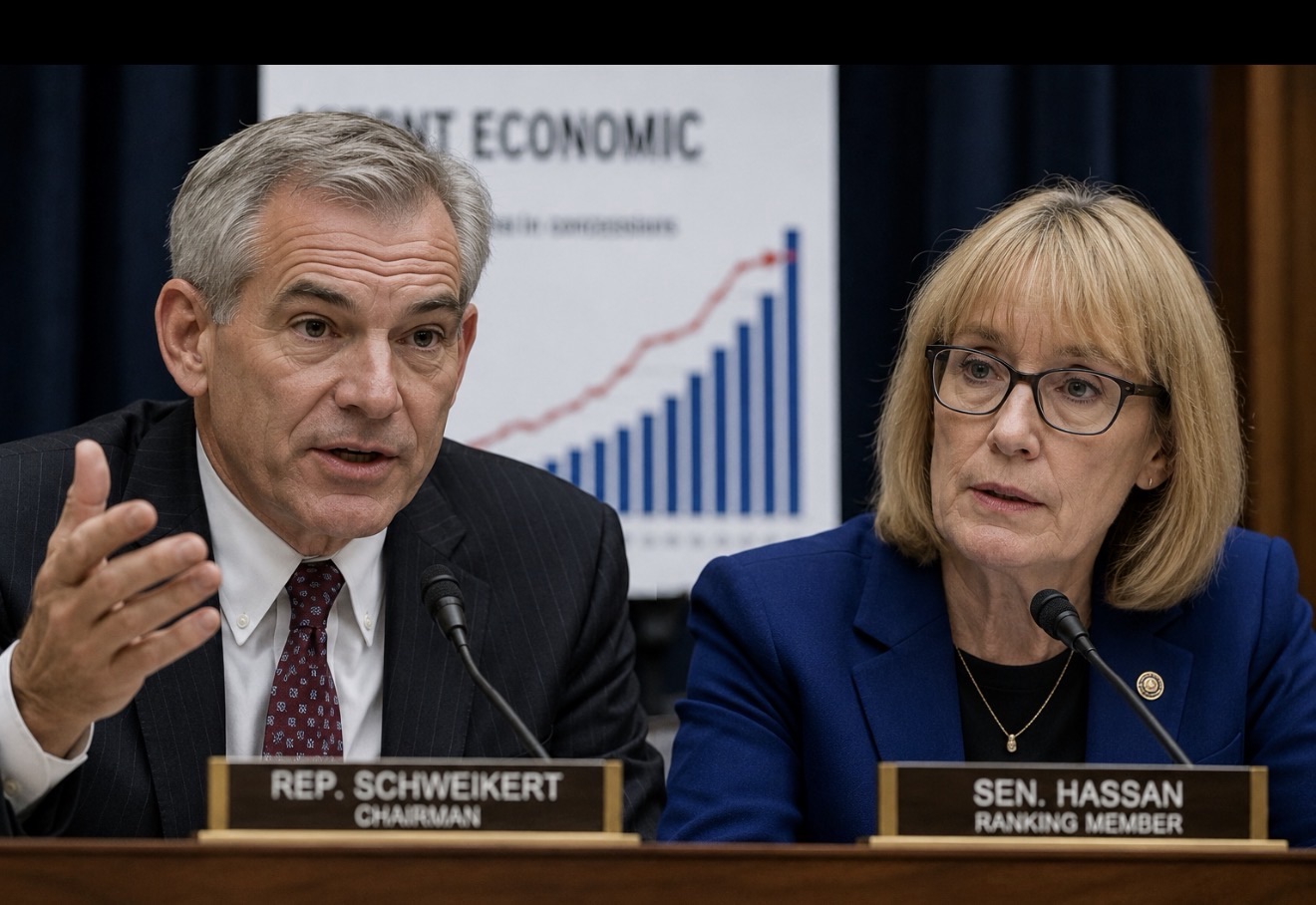
Representative David Schweikert, the Arizona Republican who chairs the Joint Economic Committee, and Senator Maggie Hassan, the New Hampshire Democrat serving as the committee’s senior member, sent a bipartisan letter Wednesday to AT&T Inc., Verizon Communications Inc., and T-Mobile US Inc. demanding detailed explanations of what the carriers are actually doing to detect, block, and prevent fraudulent calls and text-message scams moving through their networks.
The request comes as financial losses tied to scams continue rising sharply across the United States.
According to figures cited by the committee, scams cost Americans an estimated $200 billion during 2024. The Federal Trade Commission separately reported $16.6 billion in officially confirmed fraud losses last year, up roughly 33% from the prior year, while outside estimates suggest the true scale may be dramatically higher because many victims never report losses.
The financial damage has increasingly become concentrated among older Americans.
The FBI reported that seniors lost more than $4.8 billion to fraud schemes in 2024 alone, with many cases involving life savings wiped out through phone-based impersonation scams, investment fraud, romance scams, or fake emergency requests targeting retirees.
Lawmakers from both parties have spent the past year escalating scrutiny of what they increasingly describe as a highly organized international scam economy tied to criminal networks operating across Southeast Asia and other overseas jurisdictions.
The bipartisan nature of the congressional letter is itself notable in Washington.
Schweikert and Hassan rarely align publicly on major economic or regulatory issues, but both lawmakers argued the burden of scam detection has fallen too heavily on ordinary consumers rather than the communications companies transmitting the fraudulent traffic.
“Consumers need to be able to trust that the calls and texts they receive — from their doctor’s office or their child’s school, for example — are authentic,” the lawmakers wrote. “Scam communications, however, are increasingly difficult to distinguish from legitimate messages, and too much of the burden of detection is falling on customers.”
The committee is requesting detailed information from AT&T, Verizon, and T-Mobile regarding how they identify suspicious activity, how many scam calls and texts they block, how they coordinate with law enforcement, and what actions are taken against bad actors once fraudulent traffic is detected.
The letter effectively asks the carriers to prove their anti-scam systems are working at a time when reported fraud losses continue climbing.
The pressure on telecom providers has been building since Congress passed the TRACED Act in 2019, legislation aimed at combating robocalls and spoofed phone numbers. The law authorized the Federal Communications Commission to require carriers to implement authentication technology known as STIR/SHAKEN, designed to verify whether incoming calls are actually originating from the numbers displayed on caller ID.
While the technology has reduced portions of spoofed traffic, enforcement gaps remain — particularly involving smaller carriers, international routing systems, and increasingly sophisticated scam operations capable of adapting around detection systems.
Congressional investigators now appear increasingly skeptical that the existing protections are enough.
The telecom industry is also not the only target.
Lawmakers have recently expanded scam-related investigations into social media platforms, artificial-intelligence companies, online dating services, and digital advertising systems increasingly used by criminal networks to locate victims and distribute fraudulent content.
Earlier this year, members of the bipartisan Stop Scams Caucus sent a similar letter to Meta Platforms Inc. Chief Executive Mark Zuckerberg after reports suggested Meta-owned platforms may have played a significant role in distributing scam advertisements and fraudulent content targeting American consumers.
Several lawmakers are also pursuing legislation aimed at disrupting the overseas criminal organizations orchestrating many of the operations.
For AT&T, Verizon, and T-Mobile, the political implications extend beyond consumer complaints alone.
Telecommunications companies rely heavily on federal regulators and congressional support for spectrum access, merger approvals, infrastructure policy, and universal-service funding decisions. Sustained bipartisan criticism that consumers are losing billions through scams delivered across carrier networks could eventually lead to tougher reporting requirements, enforcement standards, or financial penalties.
At the moment, however, Congress is still primarily demanding transparency.
For consumers, the guidance from regulators and law enforcement remains consistent: government agencies, banks, hospitals, and legitimate businesses generally do not demand immediate payment through gift cards, cryptocurrency, wire transfers, or urgent threats delivered over unsolicited calls or text messages.
Security experts continue advising Americans to independently verify any suspicious communication by contacting institutions directly through official phone numbers rather than responding through incoming messages.
The broader issue now confronting Washington is larger than individual scams themselves.
The United States has built one of the world’s most advanced communications infrastructures, yet criminal networks continue exploiting those systems at industrial scale to target ordinary Americans.
Congress is now asking the telecom industry a direct question: if the carriers possess the data, network visibility, and technical tools to identify fraudulent traffic, why are the losses still accelerating?
The answers may shape the next phase of federal regulation surrounding America’s phone networks — and determine how aggressively telecom companies are ultimately required to police the systems they operate.
JBizNews Desk
© 2026 JBizNews. All Rights Reserved. Reproduction or distribution without written permission is prohibited.