
 JBizNews
Commercial Real Estate Reckoning Hits: Banks Dump Bad Loans at 85% Discounts as ‘Extend and Pretend’ Era Ends
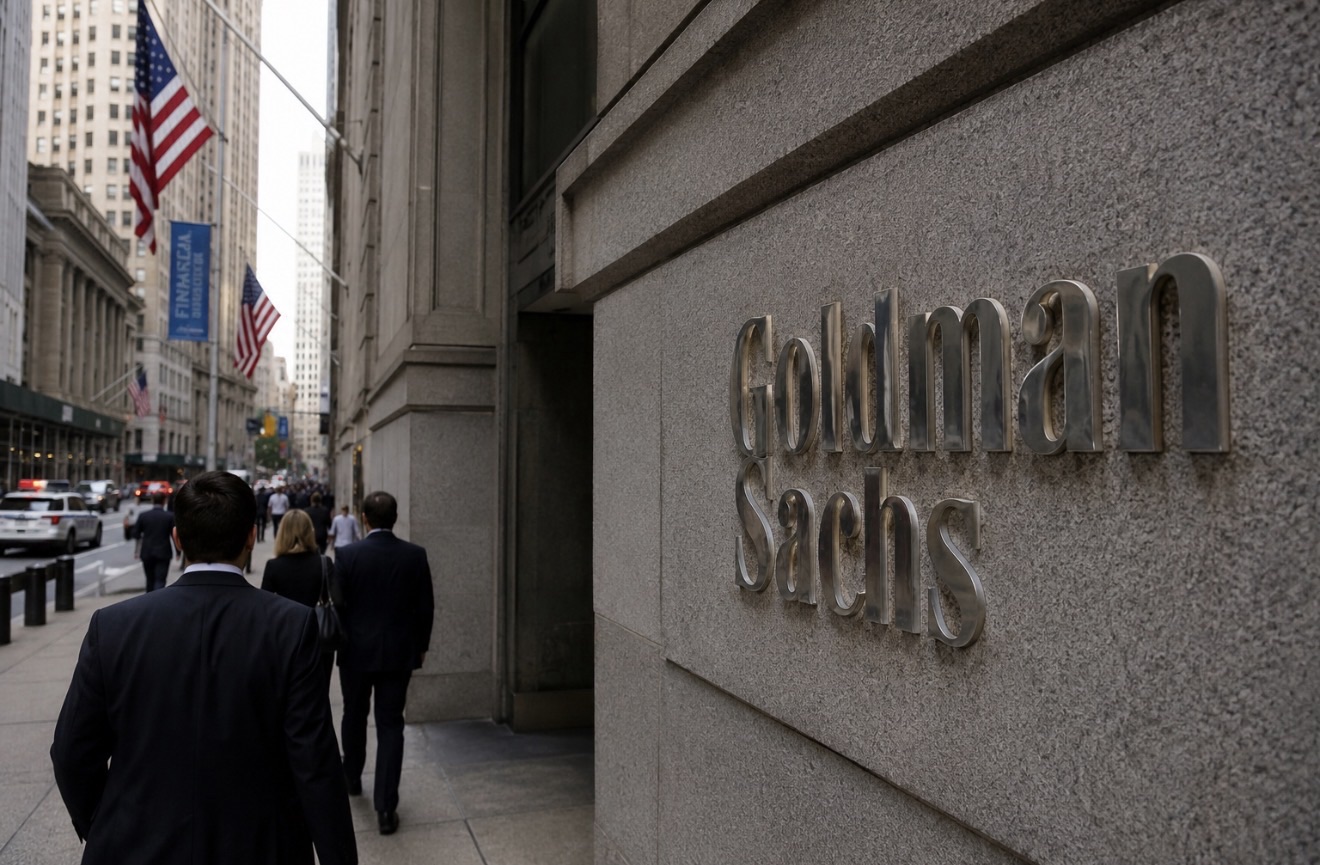
Major U.S. and global commercial real estate lenders, including Goldman Sachs Group and Deutsche Bank, have started aggressively unloading troubled property loans at steep discounts — in some cases taking losses of up to 85% — signaling that the long-running strategy known across the industry as “extend and pretend” is finally breaking down.
For the past three years, many banks avoided recognizing losses by repeatedly extending commercial real estate loans instead of forcing borrowers into default. Now, with interest rates still elevated, office buildings sitting half-empty, and hundreds of billions of dollars in debt coming due, lenders are beginning to accept painful losses rather than continue pretending troubled properties will recover quickly.
The shift is becoming visible across major U.S. cities.
In Manhattan, Shanghai Commercial Bank reportedly sold debt tied to a stalled condo conversion project at 335 W. 35th Street at roughly an 85% discount to the loan’s payoff amount. In Los Angeles, lenders led by Goldman Sachs seized control of the historic Radford Studio Center, with Netflix now reportedly negotiating to buy the property at a fraction of its previous valuation.
In San Francisco, investors tied to a $240 million commercial mortgage-backed securities (CMBS) deal backed by the office tower at 600 California Street absorbed major losses after the underlying loan sale generated only about $101 million for bondholders.
Meanwhile, in Downtown Los Angeles, Brookfield Property Partners and its lenders are trying to offload nearly 5 million square feet of office space tied to distressed buildings — roughly 18% of the entire downtown office market.
The numbers behind the crisis are staggering.
According to Trepp, the commercial real estate data firm, the delinquency rate for office loans packaged into CMBS securities surged to a record 12.34% earlier this year — higher than the worst periods of the 2008 financial crisis. The overall CMBS special servicing rate climbed to 11.38% in April, with office buildings driving most of the distress.
The biggest problem is refinancing.
During the ultra-low interest-rate years of 2020 and 2021, many office landlords borrowed money at rates near 3% or 4%. Those same borrowers are now trying to refinance loans at rates closer to 6% or 7%, while simultaneously dealing with lower occupancy rates caused by remote and hybrid work.
Many buildings simply no longer generate enough rent to support the new financing costs.
Nationwide office occupancy remains stuck around 80%, according to CommercialEdge, well below the levels many buildings need to break even.
The scale of debt coming due is enormous.
The Mortgage Bankers Association estimates roughly $875 billion in commercial real estate loans will mature during 2026 alone. Banks hold nearly half of that exposure.
Regional banks remain especially vulnerable because many concentrated heavily in commercial property lending during the low-rate era.
Bank analysts have repeatedly flagged institutions including New York Community Bancorp, Valley National Bancorp, Western Alliance, Zions Bancorporation, and Cullen/Frost Bankers as among the most exposed to commercial real estate stress.
The issue matters far beyond Wall Street or large office towers.
When regional banks absorb losses, they often tighten lending across the board. That means small business owners, restaurant operators, doctors, contractors, and families seeking home equity loans can all face tougher borrowing conditions.
Banks in stressed markets are already demanding larger down payments, shortening loan terms, and raising financing requirements for small-business and commercial borrowers.
The crisis is also reshaping cities themselves.
Empty office towers in San Francisco, Chicago, Los Angeles, Houston, Washington, D.C., and parts of New York City are reducing property-tax revenue that local governments rely on to fund schools, police, transit systems, and city services.
San Francisco officials have already warned of structural budget gaps tied partly to collapsing downtown office values. Chicago and New York are facing similar pressures.
Politicians are increasingly pushing office-to-apartment conversions as a solution.
Congress recently advanced bipartisan legislation designed to encourage developers to convert older office buildings into housing as the U.S. faces an estimated 4.7 million-home shortage.
But the reality is more complicated.
Many office towers are difficult or prohibitively expensive to convert because of plumbing layouts, window spacing, elevator configurations, and zoning rules. Industry experts say only a relatively small percentage of distressed office buildings are actually suitable for residential conversion.
While banks are taking losses, large investment firms are moving in aggressively.
Private equity giants including Blackstone, KKR, Apollo Global Management, Brookfield, Starwood Capital Group, and Carlyle Group have raised billions of dollars specifically to buy distressed commercial real estate loans at discounted prices.
Executives including Goldman Sachs CEO David Solomon, JPMorgan CEO Jamie Dimon, and Morgan Stanley CEO Ted Pick have all described distressed commercial real estate as one of the biggest investing opportunities of the current cycle.
The basic strategy is simple: buy distressed assets cheaply, wait for markets to stabilize, and eventually profit when values recover.
There are early signs the worst may eventually pass.
Industry analysts say the market cannot recover until losses are finally recognized and bad loans clear through the system. Banks taking losses today may actually help reset the market faster by allowing new investors and new uses for old properties to emerge.
But the pain is unlikely to end quickly.
The more than $130 billion in distressed commercial real estate debt already circulating through the financial system is expected to continue pressuring banks, property owners, and city budgets well into 2027.
The lesson of the current cycle is becoming increasingly clear: the lenders who accepted smaller losses early are moving forward. The ones who waited the longest are now absorbing the deepest pain.
— JBizNews Desk
© 2026 JBizNews. All Rights Reserved. Reproduction or distribution without written permission is prohibited.