
 Yeshiva World News
U.S. Says Iran’s Supreme Leader Has Agreed To “Broad Template” Of Peace Deal, Including Relinquishing Enriched Uranium
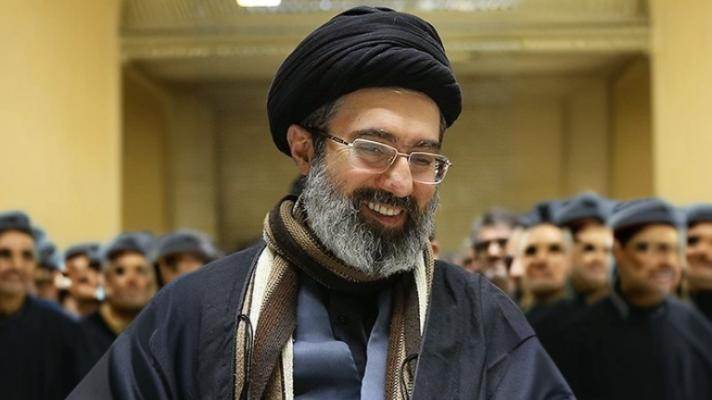
American negotiators believe Iranian Supreme Leader Mojtaba Khamenei has approved the basic framework of a peace agreement that would end three months of war by reopening the Strait of Hormuz and committing Iran “in principle” to dispose of its highly enriched uranium, a senior Trump administration official said.
Final ratification by Iranian negotiators could still take days, the official cautioned, with both sides still working through the precise wording.
“They will open up the strait in exchange for us lifting the blockade, and they will agree in principle to dispose of the highly enriched uranium, but then there’s a question about how precisely to do that,” the official said. “We feel quite confident that the supreme leader has signed off on the broad template.”
President Trump announced Saturday that an agreement had been “largely negotiated” and said he had spoken with the leaders of Israel, Saudi Arabia, the United Arab Emirates, Qatar, Pakistan, Turkey, Egypt, Jordan and Bahrain in the run-up to the deal. The U.S. blockade of the Strait of Hormuz has now redirected more than 100 commercial ships entering or leaving Iranian ports.
Under the emerging framework, the strait would reopen without new tolls, the U.S. blockade would be lifted, and major issues — including the disposition of roughly 1,000 pounds of highly enriched uranium and an enforcement mechanism to bar future enrichment — would remain subject to further negotiation. Sanctions relief would be tied to verifiable progress on offloading the nuclear material. Iran would receive no interim unfreezing of assets before a final deal is signed, the official said.
Trump has floated two possible paths for the uranium stockpile: outright destruction, or shipping it out of the country with technical assistance from China, which could help excavate the material from buried facilities.
“A lot of this debate is not really what happens to the stockpiled material, but it’s how the Iranians can sell it to their own hardliners and to their own population in a way that gets us what we need as well,” the senior administration official said. “The Iranian side has national pride considerations.”
The official summarized the U.S. position on sanctions as “no dust, no dollars.”
“In other words, no highly enriched uranium, then the Iranians aren’t going to get any real relief,” the official said. “If the Iranians make significant accommodations on the enrichment question, then we will make significant accommodations on sanctions relief, and that’s always been the fundamental question.”
The Iranian foreign ministry has described the document as a “framework agreement” or memorandum of understanding that would be followed by detailed talks within 30 to 60 days. Foreign Ministry spokesman Esmail Baghaei said the deal would address the reopening of the Strait of Hormuz and other “essential” issues, with final terms negotiated over a “reasonable time span.”
But Iranian officials have publicly contested key elements of the American account. Iran’s Fars news agency, citing exchanged text, reported that the strait would remain under Iranian management and dismissed Trump’s announcement as “incomplete and inconsistent with reality.” Reuters cited a senior Iranian source as saying Tehran has not agreed to surrender its highly enriched uranium stockpile and that the nuclear question is not part of the preliminary agreement.
Iranian President Masoud Pezeshkian struck a measured tone. “We are ready to assure the world that we are not seeking nuclear weapons. We are not seeking instability in the region,” he told reporters. But he added that Iran’s “negotiating team will not compromise when it counts to our country’s dignity and sovereignty.”
Doubts have also persisted inside Washington about the status of Mojtaba Khamenei himself, who assumed the position of supreme leader after Operation Epic Fury killed his father, Ayatollah Ali Khamenei. Administration officials have described receiving conflicting messages from different parts of the Iranian government, and said domestic and foreign actors with an interest in derailing the talks may be feeding the press misleading information.
“I would say, by and large, most people in the Iranian system don’t love the deal, but they also don’t like the idea of going back to war,” the senior administration official said, adding that the administration has concluded some dubious leaks have surfaced “because somebody is trying to kill this thing or is trying to derail our progress.”
Trump has faced pressure from Republican hawks who fear that Iran cannot be trusted to surrender its stockpile and that any agreement could embolden Tehran to weaponize control of the Strait of Hormuz in future disputes. Top Israeli officials have privately conveyed unease, according to reports.
“I have informed my representatives not to rush into a deal in that time is on our side,” Trump wrote on Truth Social. “The Blockade will remain in full force and effect until an agreement is reached, certified, and signed.”
Secretary of State Marco Rubio, speaking in New Delhi, reiterated the three U.S. red lines: no Iranian nuclear weapon, the Strait of Hormuz reopened without tolls, and Iran turning over its enriched uranium. “This problem will be solved, as the president’s made clear, one way or the other,” he said.
Administration officials cautioned that, even with the supreme leader’s apparent assent to the broad framework, “whether the broad template becomes an actual agreement is still an open question.”
(YWN World Headquarters – NYC)