

 Jewish Breaking News
US Apache Crashes Near the Strait of Hormuz as Trump Confirms Crew Survived; Cause Still Undisclosed
A U.S. Army Apache attack helicopter went down near the Strait of Hormuz, one of the world’s most dangerous military flashpoints, with both crew members safely rescued and President Donald Trump saying no one was injured.
“The pilots are fine. Nobody injured,” Trump told reporters in New York, adding that the administration would issue a report on the incident. For now, the central question remains unanswered: whether the Apache was brought down by Iranian fire, suffered a mechanical failure, or went down because of another operational problem.
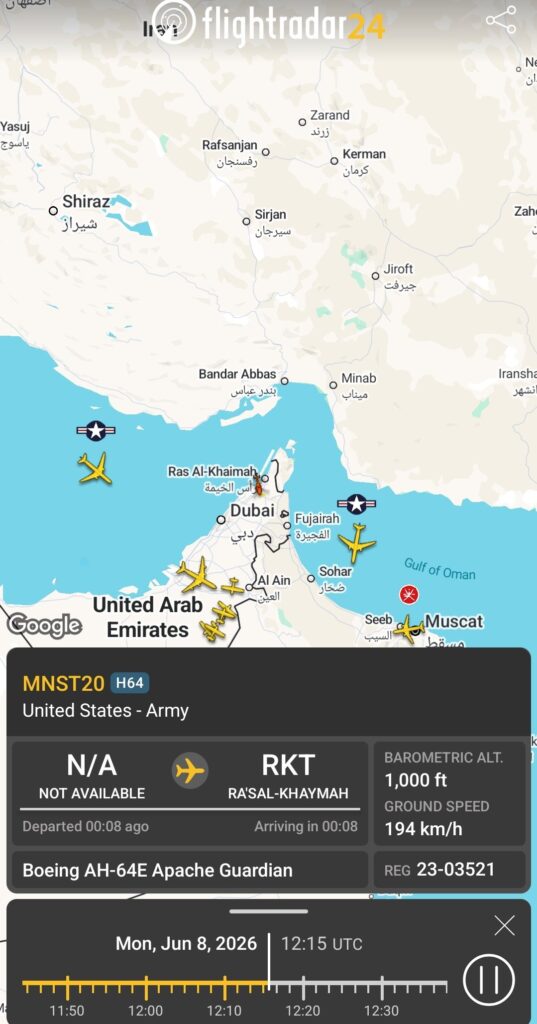
The crash comes as U.S. forces are operating in an increasingly hostile Gulf environment, where Iran’s regime has been trying to squeeze one of the world’s most critical maritime routes. U.S. Central Command has been using attack helicopters, fighter jets, and drones around Hormuz as Washington pushes back against Iranian threats to shipping and attempts to restrict traffic through the waterway.
Apache helicopters fly low, close, and exposed. In the Strait of Hormuz, that means operating inside a crowded battlespace filled with Iranian drones, coastal weapons, small boats, radar systems, and constant risk of miscalculation. Even with the crew safe, the loss of an Apache near the strait sends a clear signal: the U.S.-Iran standoff is still sitting on a live wire.
CENTCOM recently said U.S. forces shot down Iranian attack drones that threatened international maritime traffic in the same area. Those interceptions came after another wave of Iranian drones was also destroyed near the strait, underscoring how aggressively Tehran has been testing American and allied red lines.
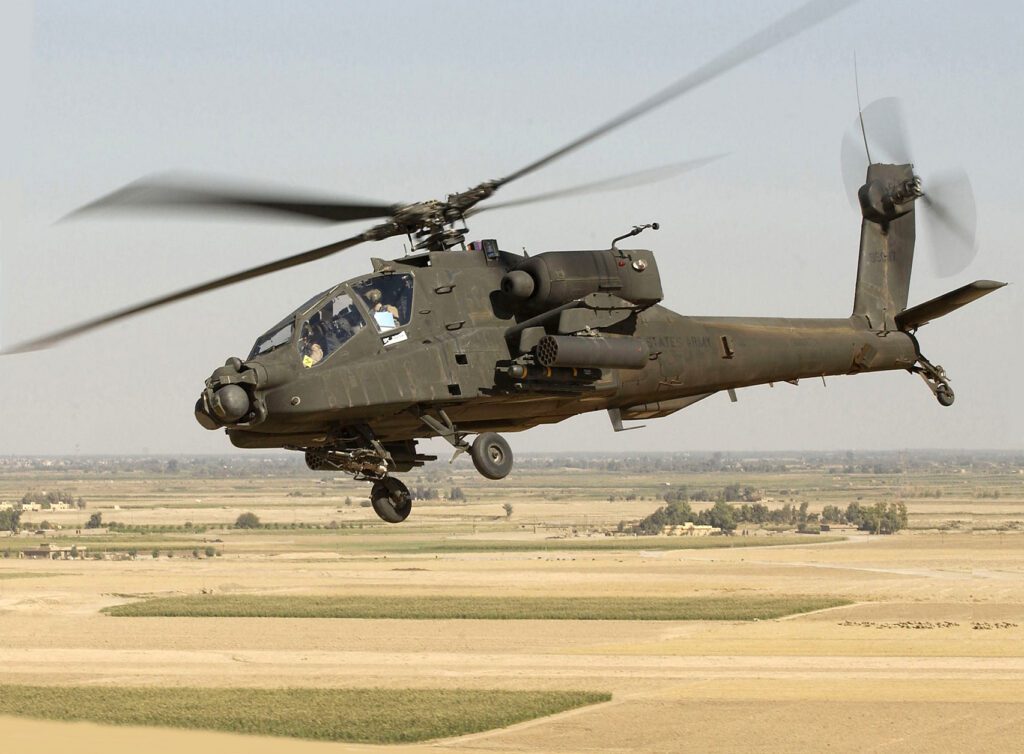
A U.S. Army AH-64D Longbow Apache, 1st Battalion, 101st Aviation Regiment, Fort Campbell Ky., provides ground forces with air support from Forward Operating Base Speicher Iraq, Oct. 21, 2005, during Operation Iraqi Freedom. (U.S. Air Force photo by Tech. Sgt. Andy Dunaway) (Released)
The 1st Battalion, 101st Aviation Regiment, the “Expect No Mercy” Battalion, is the premier attack helicopter battalion in the United States Army. Its lethal fleet of 24 Ah-64D Longbow Apaches is currently conducting combat operations in Northern Iraq, caring on a long tradition of excellence among Army Aviation.
1-101st first gained notoriety during Operation Desert Storm in 1991, when it fired the first shots of the Gulf War during Operation Normandy, destroying key Iraqi radar sites and creating a safe corridor for US aircraft to commence the air campaign. The battalion again proved itself during Operation Iraqi Freedom in 2003-2004, conducting several mobile strike deep attacks during major combat operations followed by eight months of quick reaction force (QRF), reconnaissance, and VIP security missions during stability and support operations (SASO). After a rigorous 19 months of training and maintenance back at Fort Campbell, Kentucky, the “Expect No Mercy” battalion deployed to Iraq for its second OIF tour.
Since arriving in Iraq, the battalion has conducted an aggressive Relief-in-Place/Transfer-of-Authority (REP/TOA) with 8-229th Aviation Regiment from Fort Knox, Kentucky. The battalion is on track to fly over 1000 combat hours in October, and is already making an impact on operations in Iraq. Initial combat missions involved teams of two “No Mercy” aircraft along with one 8-229th aircraft conducting local area orientations (LAO) to familiarize aircrews with the environment, geography, and unity on the ground. By no means was an LAO an administrative mission though: while on orientations, aircrews participated in numerous reconnaissance
The timing is also sensitive because Israel and Iran have just stepped back from another direct exchange of fire, after Iranian missile attacks and Israeli strikes on Iranian military infrastructure. Tehran is still trying to link the Iran front to Israel’s fight against Hezbollah in Lebanon, warning of renewed escalation if Israel continues targeting the terror group.