
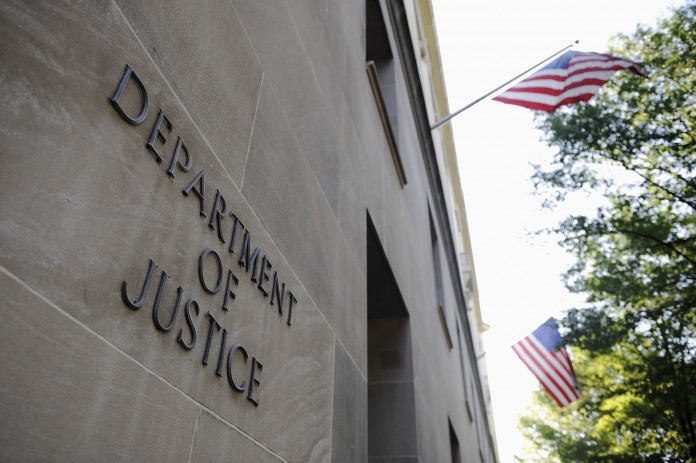

The Department of Justice has initiated legal proceedings against 17 naturalized citizens in an effort to revoke their U.S. citizenship, alleging they obtained it through fraud, deception, or the concealment of serious criminal conduct during the immigration process.
Announcing the actions, Acting Attorney General Todd Blanche said the administration is taking a hard line against abuse of the naturalization system.
“Gaining U.S. citizenship is a privilege and under the steadfast leadership of President Trump, this Department of Justice maintains a zero-tolerance policy for the abuse of this process,” Acting Attorney General Todd Blanche said in a department statement.
Homeland Security Secretary Markwayne Mullin echoed that message, arguing that citizenship must be earned through honesty and compliance with the law.
“American citizenship is a privilege, and it must be earned honestly,” said DHS Secretary Markwayne Mullin. “If you come here break our laws, and lie in your immigration proceedings, you forfeit that privilege,” he added.
Federal law permits the government to seek denaturalization and removal of individuals who obtained citizenship through fraud or material misrepresentations during the immigration process. However, citizenship generally cannot be revoked solely because of crimes committed after a person has already become a U.S. citizen. In many cases, immigrants become eligible for citizenship approximately five years after receiving permanent residency.
While the new initiative has attracted attention, immigration advocates note that the number of cases remains relatively small compared with the overall naturalized population in the United States and the broader effects of decades of large-scale immigration policies.
“The expansion of denaturalization remains very small in scale,” said Aaron Reichlin-Melnick, a pro-migration advocate with the American Immigration Council. “17 people is a significant increase from historical efforts, true, but represents around 0.00006% of the total naturalized population.”
Even so, observers note that the latest cases extend beyond the types of denaturalization actions traditionally associated with war criminals or individuals involved in major human rights abuses.
According to the Justice Department, the current cases largely involve individuals accused of hiding criminal activity during the lengthy, multi-step path to citizenship.
“This Department of Justice maintains a zero-tolerance policy for the abuse of this process,” said Blanche.
Some analysts argue that if the government aggressively pursues such cases, many more naturalized citizens could potentially face scrutiny if evidence emerges that they concealed criminal conduct before becoming citizens. Such a possibility is expected to fuel political opposition to expanded denaturalization efforts.
The Justice Department released details of the 17 cases, several of which involve allegations of fraud, immoral crimes, immigration deception, financial crimes, or other offenses that officials say were concealed during the naturalization process.
One case involves Leidys Delmas Garcia, a Cuban-born woman accused of participating in a healthcare fraud conspiracy that allegedly billed insurers more than $36 million for unnecessary or nonexistent physical therapy services. Prosecutors allege she falsely stated during her citizenship process that she had not committed crimes for which she had not been arrested and had never provided false information to immigration authorities.
Another case targets Jean Claude Alfred, a Haitian immigrant who became a U.S. citizen in 1994. The government alleges that he repeatedly abused his minor daughter beginning shortly before filing for naturalization and continued the conduct while his citizenship application was pending. Officials say he failed to disclose the criminal behavior during the process.
Andrea Marroquin, originally from Colombia, is accused of obtaining permanent residency by concealing a bigamous marriage and later participating in wire fraud, bank fraud, and money laundering schemes involving funds inherited from her father, whom authorities describe as a major Colombian drug trafficker.
Talman Harris, a Jamaican national, is accused of participating in a long-running stock manipulation scheme that allegedly caused tens of millions of dollars in investor losses. According to the government, portions of the conspiracy overlapped with his naturalization proceedings.
In another case, New Jersey businessman Neeraj Sharma, originally from India, is accused of filing multiple fraudulent H-1B visa petitions while serving as owner and chief executive of a staffing company.
The Justice Department also filed a complaint against Abdikadir Ali Kadiye, a Somali immigrant whom authorities allege sought admission to the United States using two different identities.
Ronnie Price, a native of Trinidad and Tobago, is accused of concealing conduct that later resulted in a guilty plea. Prosecutors allege he falsely denied having committed crimes during his citizenship application process.
Rodger George Gurdon, originally from Jamaica, is accused of participating in a conspiracy involving the theft and resale of medical supplies from military hospitals before becoming a U.S. citizen.
Another case involves Milagros Marileisis Acosta Torres of Cuba, whom prosecutors allege participated in a scheme that defrauded a tribal casino in Florida of millions of dollars through fraudulent credit vouchers before her naturalization.
Alongside the denaturalization effort, Trump administration officials have also moved to tighten citizenship requirements by increasing expectations regarding applicants’ conduct and making the naturalization examination more demanding.
{Matzav.com}