
 JBizNews
Powell Warns Political Pressure on the Fed Could Become a Major Threat to Markets
BOSTON — Former Federal Reserve Chair Jerome Powell is warning that one of the biggest risks facing the U.S. economy may not be inflation, recession, or financial instability, but political interference in the nation’s central bank.
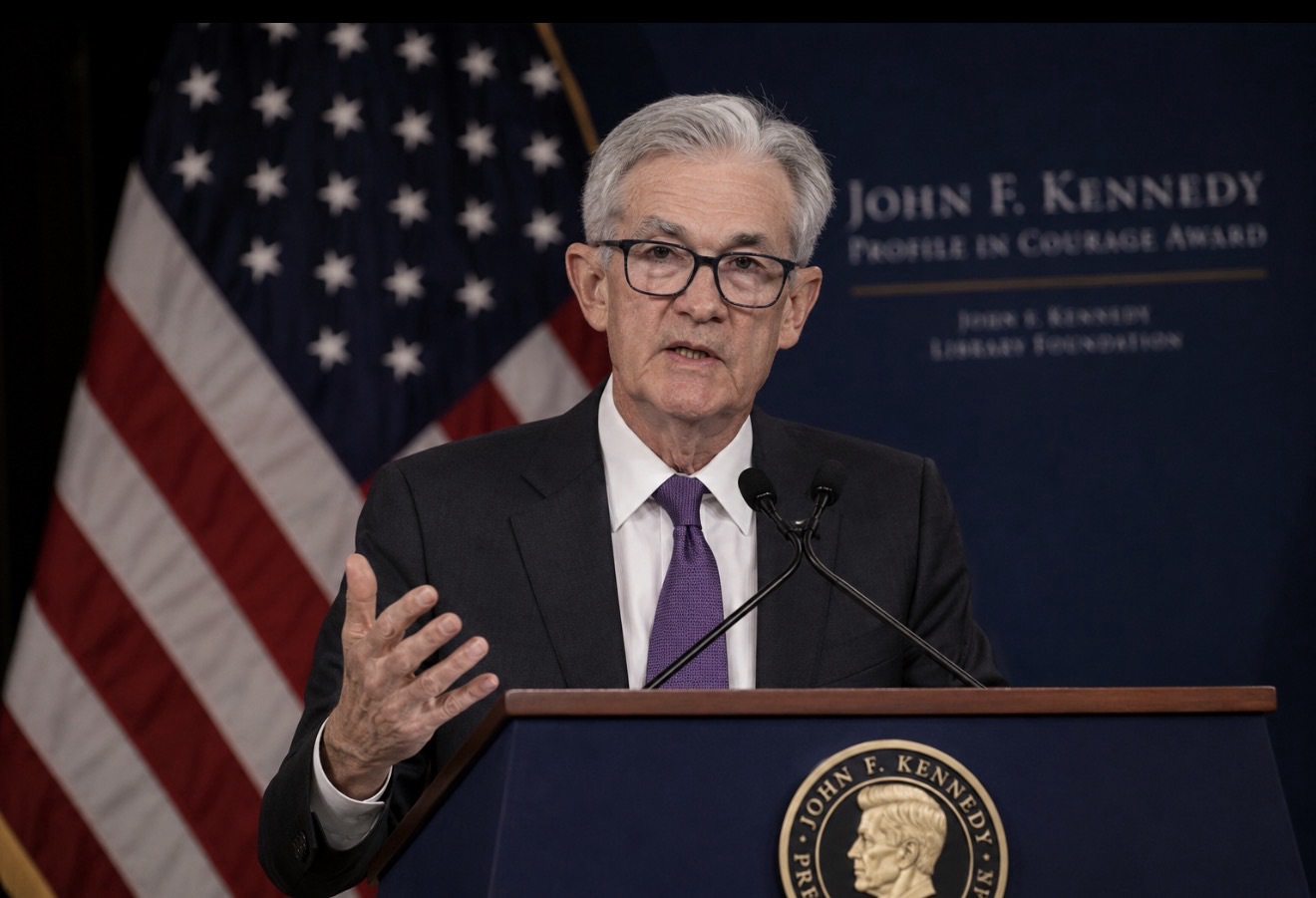
Speaking while accepting the 2026 John F. Kennedy Profile in Courage Award on May 31 in Boston, Powell said the independence of the Federal Reserve remains one of the most important pillars supporting confidence in the U.S. economy and financial markets. The Federal Reserve later published the full text of his remarks.
Powell argued that the Fed’s ability to make decisions free from political pressure is a “priceless asset” that took generations to build and could be damaged if elected officials gain greater influence over monetary policy decisions.
His message was straightforward.
If future presidents can remove Federal Reserve officials simply because they disagree with interest-rate decisions, Powell said, investors and the public may eventually lose confidence that monetary policy is being set for the benefit of the country rather than for political advantage.
The warning arrives during an increasingly visible debate over interest rates.
The Federal Reserve was established by Congress in 1913 and was deliberately structured to operate independently from day-to-day political pressures. Governors serve staggered 14-year terms, ensuring that no single administration can completely reshape the institution.
The purpose is simple: allow policymakers to make difficult decisions on inflation, employment, and economic growth without worrying about election cycles.
For financial markets, that independence carries enormous value.
Investors buy U.S. Treasury bonds and hold U.S. dollars partly because they believe the Federal Reserve will act when necessary to keep inflation under control. If markets begin to doubt that commitment, borrowing costs can rise and confidence can weaken.
Powell spent much of his tenure defending that principle.
The award recognized his efforts to maintain the central bank’s independence during years of political criticism and public pressure. While Powell stepped down as Fed Chair at the end of his term, he continues serving on the Federal Reserve Board of Governors and remains a voting member of the Federal Open Market Committee.
His remarks come as the Federal Reserve faces a difficult economic environment.
Inflation remains above the Fed’s long-term target, while higher energy prices linked to instability in the Middle East continue adding pressure to consumer prices.
At the same time, many business leaders, homeowners, and elected officials have argued that interest rates remain too high and are slowing economic activity.
That tension lies at the center of Powell’s concern.
Supporters of an independent Federal Reserve argue that interest rates should rise or fall based on economic data rather than political considerations. They point to historical examples around the world where politically controlled central banks contributed to higher inflation and economic instability.
Others argue that the Federal Reserve wields enormous influence over the economy and should be more accountable to elected officials who answer directly to voters.
The debate is likely to intensify as policymakers consider future interest-rate decisions.
Financial markets are watching closely because perceptions matter almost as much as policy itself.
If investors believe monetary policy decisions are being driven by political objectives rather than economic conditions, long-term borrowing costs could rise as markets demand higher returns to compensate for increased uncertainty.
That could affect mortgage rates, business loans, and government borrowing costs even if the Federal Reserve lowers its benchmark interest rate.
In other words, confidence is part of the system.
Powell’s broader message was that trust in institutions, once lost, is difficult to rebuild.
The former Fed Chair framed the issue not as a partisan argument but as a long-term question about economic credibility and stability.
For everyday Americans, the implications may seem distant, but they ultimately influence everything from mortgage payments and credit-card rates to retirement savings and investment returns.
The Federal Reserve’s next policy decisions will continue attracting attention, but Powell’s speech highlighted a larger question that extends beyond any single meeting or interest-rate move: whether markets continue believing that the central bank is making decisions based on economic realities rather than political pressure.
That confidence, Powell suggested, remains one of the country’s most valuable financial assets.
JBizNews Desk — Economy
© JBizNews.com All Rights Reserved. Reproduction or distribution without written permission is prohibited.