
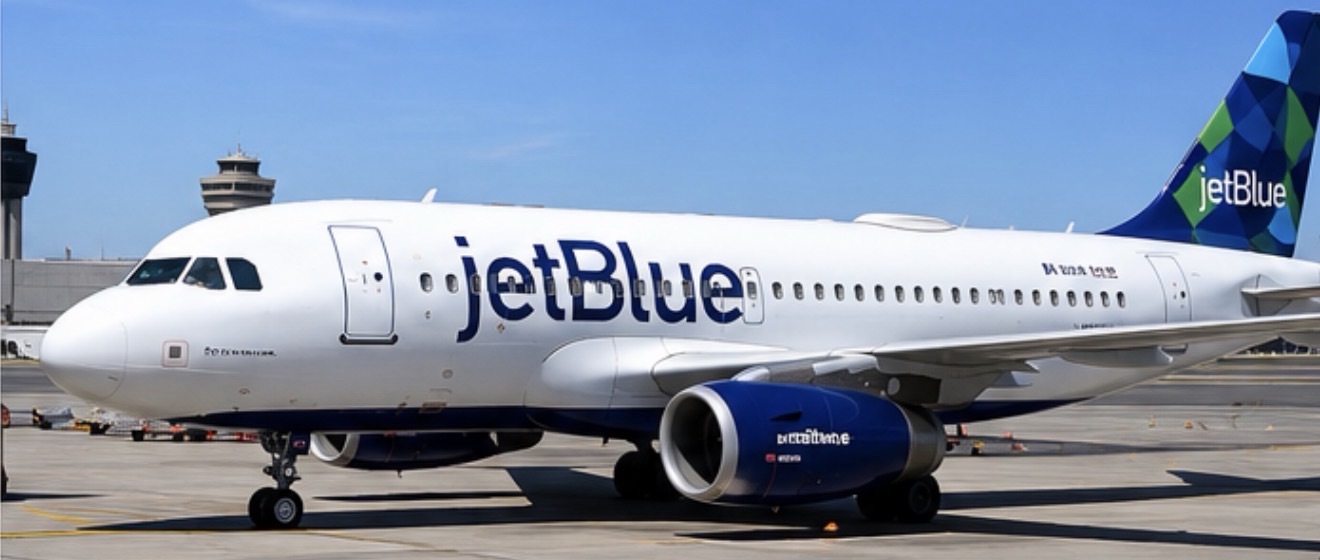

NEW YORK — JetBlue Airways is preparing one of the most significant changes in its history.
For the first time, the airline best known for affordable fares and generous coach seating will introduce a domestic first-class product, marking a major shift in strategy as it seeks to improve profitability and attract higher-paying travelers.
Chief Executive Officer Joanna Geraghty told employees the airline remains on track to launch the new cabin in 2026, with roughly one-quarter of the fleet retrofitted next year and most aircraft completed by the end of 2027.
The move reflects a simple reality.
Premium travel has become one of the most profitable segments of the airline industry.
While many travelers continue searching for low fares, airlines increasingly earn their strongest margins from customers willing to pay more for additional comfort, priority services, and upgraded experiences.
Competitors including Delta Air Lines, American Airlines, and United Airlines have spent years expanding premium offerings.
JetBlue is now trying to capture a larger share of that market.
Industry observers often refer to the planned cabin as “Mini Mint” or “Junior Mint,” a reference to JetBlue’s existing premium Mint product.
The new seats will resemble traditional domestic first-class cabins offered by larger airlines and will be installed across Airbus A220, A320, and A321 aircraft.
The strategy comes with tradeoffs.
To create space for larger first-class seats, JetBlue plans to reduce economy-seat pitch from approximately 32 inches to 30 inches on portions of its fleet.
That may seem like a small change, but JetBlue built much of its reputation on offering more legroom than competitors.
The company is effectively betting that additional premium revenue will outweigh any dissatisfaction among coach passengers.
Geraghty argues demand supports the move.
Travelers increasingly seek premium experiences, yet many remain unwilling to pay the prices charged by larger legacy airlines.
JetBlue hopes to position itself between traditional low-cost carriers and premium airlines, offering upgraded products at more accessible prices.
The first-class expansion is part of a broader premium strategy.
The company has already begun opening airport lounges in key markets including New York JFK and Boston while also investing in enhanced onboard connectivity through partnerships such as Amazon’s Project Kuiper.
Combined with Mint business class and upgraded economy products, the airline hopes to create a full spectrum of travel options.
The financial pressure behind the strategy is substantial.
JetBlue has struggled to return to consistent profitability following the pandemic and has faced setbacks including the collapse of its alliance with American Airlines and the blocked acquisition of Spirit Airlines.
At the same time, higher fuel prices and intense competition continue squeezing margins.
For travelers, the changes create both winners and losers.
Passengers willing to spend more will gain access to a larger seat and premium experience at a potentially lower price than traditional first class.
Budget-conscious travelers may lose some of the extra space that helped distinguish JetBlue from competitors.
Ultimately, the success of the strategy will depend on a simple question.
Can enough customers be persuaded to pay more?
If the answer is yes, JetBlue may finally find a path back to stronger profitability.
If not, the airline risks weakening one of the very features that made customers choose JetBlue in the first place.
After years of financial challenges, the carrier is making a clear bet: the future of airline profits increasingly sits at the front of the aircraft.
JBizNews Desk
© JBizNews.com All Rights Reserved. Reproduction or distribution without written permission is prohibited.