
 JBizNews
Treasuries Advance Before Wednesday’s 10-Year Note Auction as Oil Prices Retreat Further
U.S. government bonds firmed at the short end on Tuesday, June 9, 2026, as traders positioned ahead of a closely watched 10-year Treasury note auction the U.S. Department of the Treasury will hold Wednesday, June 10, while oil prices tumbled and eased worries about inflation.
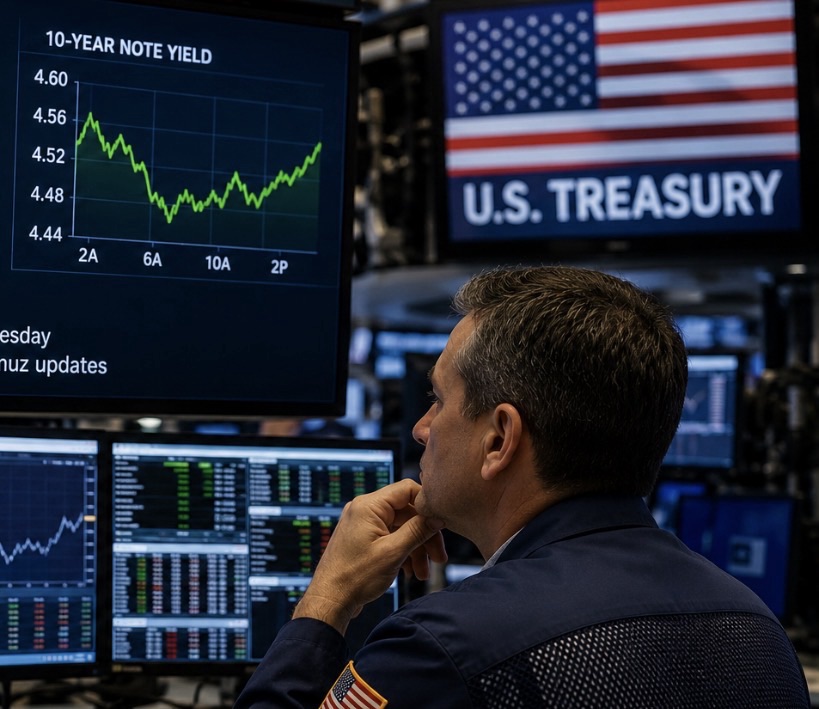
The moves were small but pointed in the same direction. Treasury yields were largely unchanged Tuesday as bond markets took a breather ahead of more economic data later this week. The 10-year U.S. Treasury note yield — the key benchmark for mortgages, auto loans, and credit card debt — was last down less than 1 basis point at 4.54%, while the 2-year note yield fell 2 basis points to 4.135%. The longer-dated 30-year bond yield rose less than 1 basis point to 5.02%.
When yields fall, bond prices rise, so the dip at the short and middle of the curve means Treasuries edged higher.
Why Oil Is Driving the Bond Market
The biggest force pushing in bonds’ favor was crude oil.
Oil prices fell nearly 4% after the U.S. Energy Secretary said ship traffic through the Strait of Hormuz is increasing. That matters because cheaper oil feeds through to lower gasoline, shipping, and manufacturing costs, helping cool inflation. Lower inflation makes bonds more attractive because it preserves the value of the fixed payments investors receive over time.
The easing in oil ties directly to the Middle East. With shipping moving more freely through the Strait of Hormuz — the narrow waterway that carries a significant share of the world’s oil exports — fears of a supply shock that drove prices higher in recent weeks have begun to fade.
What the Auction Means in Plain English
Here’s the part that sounds technical but is actually simple.
To pay its bills, the federal government borrows money by selling IOUs known as Treasury securities. This week’s schedule includes three major sales:
- 3-Year Treasury Note — Tuesday
- 10-Year Treasury Note — Wednesday
- 30-Year Treasury Bond — Thursday
Investors watch these auctions closely because they reveal how much demand exists for U.S. government debt.
If buyers show up in force, the government can borrow more cheaply, helping keep interest rates lower throughout the economy. If demand is weak, yields rise — and so do borrowing costs for mortgages, auto loans, business loans, and credit cards.
That’s why a calm bond market heading into Wednesday’s 10-year sale is generally viewed as positive.
The Data Wild Card
Bond traders are not only watching oil and Treasury auctions.
They are also bracing for fresh inflation data due later this week, which could significantly influence expectations for the Federal Reserve’s next move.
Markets are currently pricing in roughly a 70% probability of a quarter-point rate increase by December, though the Fed is still widely expected to leave rates unchanged at its next policy meeting later this month.
There were also new trade figures to digest Tuesday. The U.S. goods and services trade deficit totaled $55.9 billion in April, slightly better than economists expected.
Chris Rupkey, chief economist at FWDBONDS, said some of the recent export strength may be tied to energy markets.
“The export growth looks uncertain as much of it appears to be the result of higher energy prices from the Iran conflict,” Rupkey said.
What It Means for Everyday Americans
The thread connecting all of this runs directly to household budgets.
The 10-year Treasury yield heavily influences mortgage rates, making a stable bond market and lower oil prices quietly positive developments for anyone shopping for a home, refinancing a mortgage, financing a vehicle, or carrying other forms of debt.
The risk remains the other direction.
If inflation data comes in hotter than expected, or if Wednesday’s 10-year Treasury auction attracts weak demand, yields could move sharply higher — bringing borrowing costs up with them.
For now, however, falling oil prices and steady demand for government debt are giving financial markets a rare breather, with investors focused on Wednesday’s 10-year auction and the inflation readings that follow.
JBizNews Desk — Markets
© JBizNews.com All Rights Reserved. Reproduction or distribution without written permission is prohibited.