
 JBizNews
Boeing Will Start Building 737 Max Jets on New Everett Assembly Line July 6
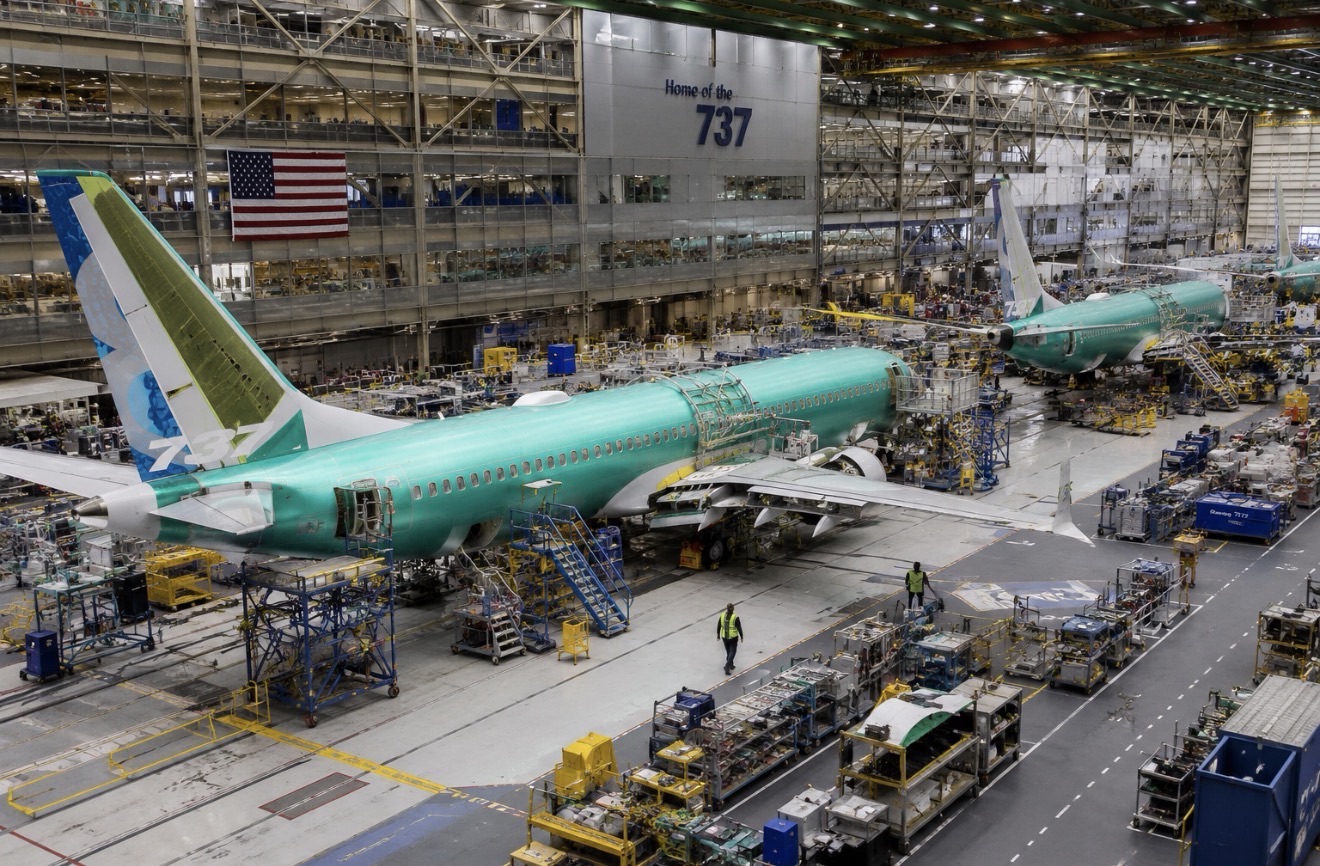
Boeing will begin building 737 Max airplanes on a new assembly line on July 6, CEO Kelly Ortberg told CNBC in an interview on Friday, June 5. The line is located at Boeing’s massive Everett complex at Paine Field in Everett, Washington, north of Seattle, and will become the company’s fourth final assembly line for its best-selling single-aisle aircraft.
Ortberg said Boeing will load its first airplane onto the line on July 6 and described the facility as nearly identical to the company’s existing production system. The new operation, known internally as the North Line, is essentially a carbon copy of Boeing’s Renton, Washington, factory, where the company currently builds the 737 Max on three separate assembly lines.
The expansion gives Boeing additional capacity at a time when airlines continue waiting for aircraft deliveries.
Boeing is currently producing 47 737 Max jets per month, up from 42 per month earlier this year after the company successfully completed a Federal Aviation Administration (FAA) production review in May. The Everett line is expected to help Boeing increase output to 52 aircraft per month, a target the company aims to reach in 2027.
Production limits remain tied to safety concerns that emerged after a dramatic incident in January 2024, when a door plug blew out of an Alaska Airlines 737 Max 9 during flight. Although no fatalities occurred, the event triggered extensive government scrutiny of Boeing’s manufacturing and quality-control systems.
In response, the FAA imposed restrictions on production growth while Boeing worked to improve factory processes and quality standards.
Ortberg told CNBC the company has spent the past 18 months rebuilding confidence by focusing on stability rather than speed.
“We slow down when we need to slow down,” he said, adding that Boeing is no longer pushing unfinished work through the production system and will increase output only when quality metrics support doing so.
According to Ortberg, airline customers have told Boeing they are receiving some of the highest-quality aircraft the company has delivered in years.
The CEO also pushed back on speculation that Boeing could eventually ramp production to 70 jets per month. He said the company’s current long-term target remains 63 aircraft monthly, assuming suppliers can support that pace.
One of the biggest constraints remains engine availability from CFM International, the joint venture between GE Aerospace and Safran that supplies engines for the 737 Max fleet.
The new Everett line will initially focus on producing the 737 Max 10, the largest version of the aircraft family.
The Max 10 has not yet received FAA certification because regulators continue reviewing several technical issues, including an engine de-icing system concern. However, Ortberg said approximately 80% of certification flight testing has been completed.
FAA Administrator Bryan Bedford said on May 28 that the agency expects to certify the Max 10 before the end of 2026 and has not identified any issues that would prevent approval.
Once certified, Boeing will be able to begin delivering the aircraft to airlines that have been waiting years for the model to enter service.
For Boeing, the financial implications are significant.
The 737 Max remains the company’s primary revenue generator, and every aircraft delivered translates directly into billions of dollars of future cash flow. Airlines worldwide have ordered more aircraft than Boeing can currently produce, creating a large backlog that the company is working to reduce.
A fourth assembly line also brings the potential for additional manufacturing jobs and economic activity throughout the Seattle-area aerospace sector.
Ortberg added that Boeing is also optimistic about increasing production of its 787 Dreamliner widebody aircraft to 10 planes per month by the end of the year.
The broader challenge for Boeing extends beyond production numbers.
The company continues to recover from two fatal 737 Max crashes in 2018 and 2019 that killed 346 people and led to a worldwide grounding of the aircraft for nearly two years. The 2024 Alaska Airlines incident revived concerns about manufacturing quality and corporate oversight.
By opening the Everett line gradually and emphasizing quality over speed, Boeing is attempting to demonstrate that growth and safety can move forward together.
JBizNews Desk — Business
© JBizNews.com All Rights Reserved. Reproduction or distribution without written permission is prohibited.