
 JBizNews
AI Layoffs Are Rising, But Most Unemployed Workers Never Claim Benefits
NEW YORK — Warnings about artificial intelligence-driven job losses are growing louder, even as labor-market data reveal a significant gap in America’s unemployment safety net.
This month, Anthropic CEO Dario Amodei renewed calls for policymakers to prepare for large-scale workforce disruption from AI. At the same time, data from the Bureau of Labor Statistics show that most unemployed Americans never apply for unemployment benefits.
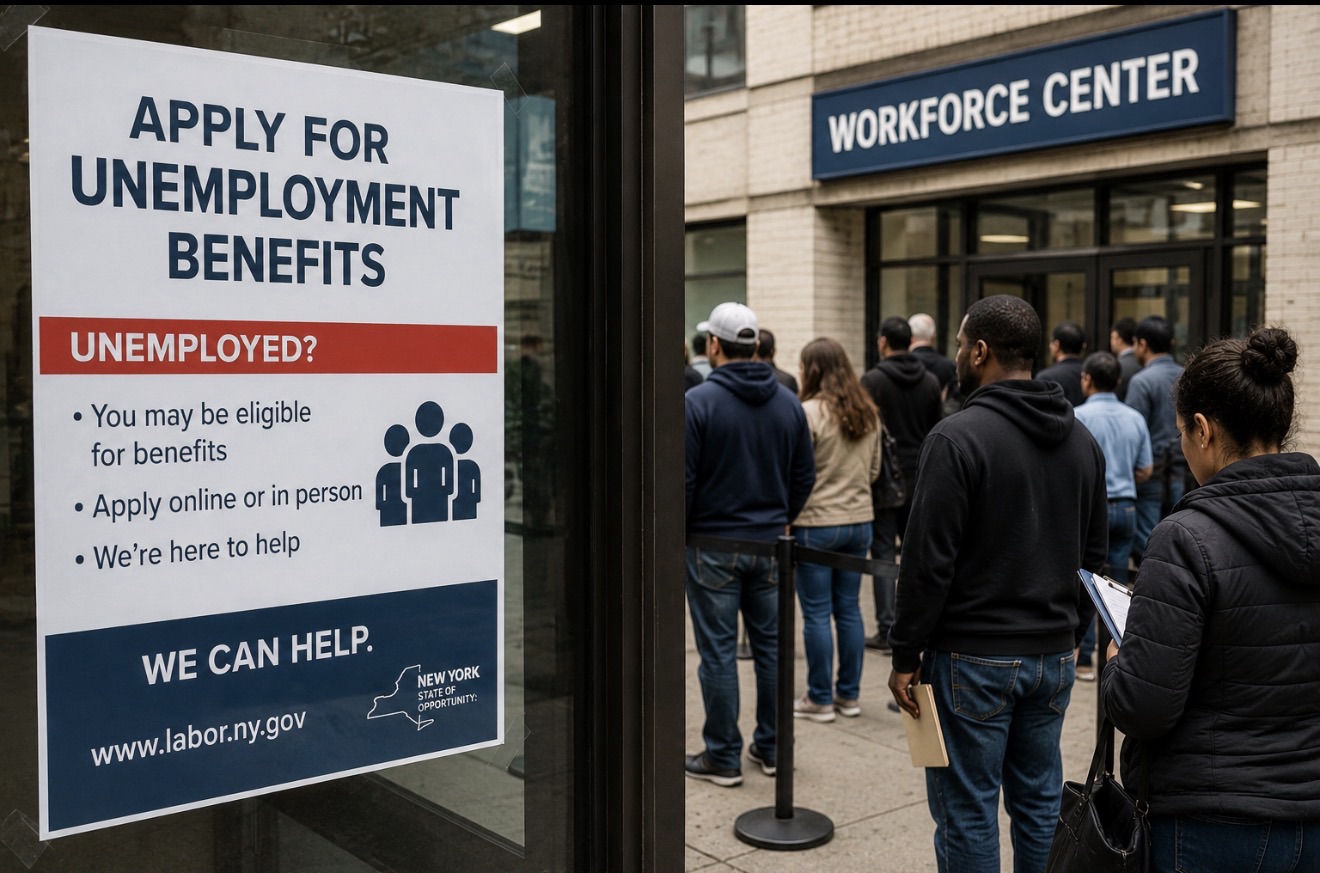
According to BLS findings, nearly 75% of unemployed workers did not seek unemployment assistance in 2022, a trend labor economists say remains largely unchanged today.
Amodei has repeatedly warned that AI could dramatically reshape white-collar employment, arguing that government action should begin before displacement accelerates.
Forecasts vary considerably.
Amodei has suggested AI could eliminate as much as half of entry-level white-collar jobs within five years. Investor Kai-Fu Lee has similarly predicted that AI could disrupt roughly half of all jobs by 2027.
Mustafa Suleyman, who leads Microsoft’s AI division, has argued that much office work could eventually be automated, while JPMorgan Chase CEO Jamie Dimon has urged policymakers and businesses to begin planning now for significant labor-market changes.
Other analysts are more optimistic.
Research from Morgan Stanley suggests that while AI will reshape many occupations, new jobs are likely to emerge as older ones disappear, limiting long-term unemployment.
Even Amodei and OpenAI CEO Sam Altman have recently moderated some of their earlier predictions.
What is clear is that workforce reductions are already occurring.
Nearly 120,000 technology-sector employees have reportedly been laid off this year as companies pursue AI-driven efficiency initiatives.
Despite those cuts, broader labor-market indicators remain relatively stable. Weekly unemployment claims continue to average roughly 200,000 to 250,000, while the national unemployment rate has edged up to approximately 4.4%, from 4.2% a year earlier.
The larger concern may be what happens if future layoffs accelerate.
According to a 2023 BLS survey, 55% of unemployed workers who did not apply for benefits believed they were ineligible. Reasons included voluntary resignation, termination for cause, insufficient work history, or jobs not covered by unemployment programs.
Others cited confusing rules, administrative barriers, or uncertainty about whether the process was worth pursuing.
Labor experts note that declining union membership may also leave more workers without guidance when navigating benefit systems. U.S. union membership fell to approximately 10% in 2024, the lowest level on record.
The consequences extend beyond individual households.
Unemployment benefits help maintain consumer spending during economic downturns by providing temporary income to displaced workers. When large numbers of unemployed individuals do not receive assistance, the economic impact of layoffs can spread more rapidly through local communities.
Reduced spending affects retailers, landlords, restaurants, and service businesses, increasing pressure throughout the economy.
Amodei has proposed several responses, including stronger worker protections, improved tracking of AI-related job displacement, expanded retraining programs, and the creation of a federal body focused on advanced AI oversight.
Other policy experts have called for simplifying unemployment-benefit systems and improving public awareness of eligibility requirements.
For now, the labor market remains relatively resilient.
But the combination of rising AI-related workforce reductions and low participation in unemployment programs highlights a vulnerability that could become more significant if automation accelerates.
Whether artificial intelligence ultimately creates more jobs than it eliminates remains uncertain.
What is already clear is that millions of workers are not accessing the benefits currently available to them — a challenge policymakers may need to address long before any large-scale AI disruption arrives.
Wall Street — JBizNews Desk
© JBizNews.com. All Rights Reserved. Reproduction or distribution without written permission is prohibited.