
 JBizNews
Euro-Area Growth Stuck Near 0.8% Even as Inflation Cools and Confidence Rebounds
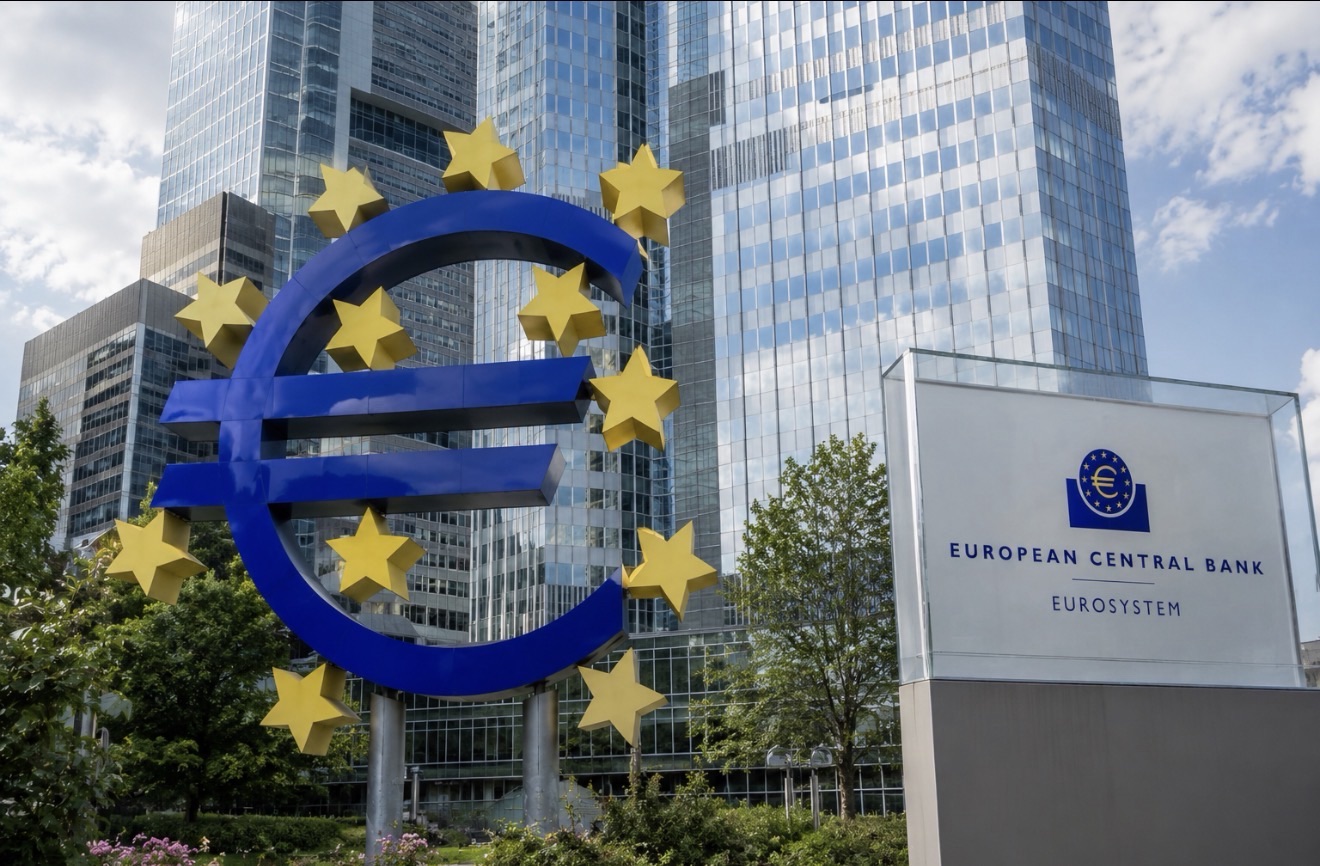
The euro area’s economy is showing early signs of stabilizing after the shock of the U.S.–Iran war, but economists still expect growth to remain sluggish throughout 2026. The European Central Bank, in staff projections released with its June 11 interest-rate decision, forecast euro-area economic growth of just 0.8 percent next year, down from 0.9 percent projected in March. While inflation has eased, oil prices have retreated, and investor confidence is recovering, economists say the damage inflicted during the first half of the year has already been built into the region’s outlook.
Private-sector forecasts largely mirror the ECB’s expectations. Vanguard projects 0.8 percent growth for 2026, while the Conference Board expects 1.0 percent, and the International Monetary Fund forecasts 1.1 percent. Together, they point to one of the weakest growth years for the euro area in more than a decade outside of recessionary periods.
The economic backdrop, however, has improved significantly since the height of the conflict.
According to Eurostat, euro-area inflation slowed to 2.8 percent in June from 3.2 percent in May, marking its lowest reading since February and coming in below economists’ expectations of 3.0 percent. Energy inflation eased sharply to 8.7 percent from 10.8 percent, reflecting a rapid decline in global oil prices after the spring’s supply shock.
Oil has been one of the biggest drivers of the turnaround.
Brent crude briefly surged above $126 per barrel during April as fighting threatened shipping through the Strait of Hormuz, but prices retreated steadily as tensions eased. By mid-July, Brent was trading near $76 per barrel, reducing pressure on European households, manufacturers, and transportation companies that depend heavily on imported energy.
Financial markets have responded positively.
The Sentix euro-zone investor confidence index climbed to -3.1 in July from -13.4 in June, marking its third consecutive monthly improvement and its strongest reading since March. The result also comfortably exceeded economists’ expectations of -10.0.
Even more encouraging, the survey’s expectations index turned positive for the first time since March.
“The slump in sentiment caused by the Iran conflict is slowly being overcome,” Sentix said, citing easing geopolitical concerns and renewed economic reform efforts in Germany, the euro area’s largest economy.
Even with improving confidence, the annual growth outlook remains subdued because much of the economic damage has already occurred.
Euro-area output expanded just 0.2 percent during the first quarter, while weaker consumer spending, higher energy costs, and slower business investment during the second quarter continue filtering through official economic data.
The slowdown has been particularly evident in Europe’s two largest economies.
Germany recently cut its 2026 growth forecast to 0.5 percent, while France reported zero economic growth during the first quarter.
The European Commission, which forecasts 0.9 percent euro-area growth this year, estimates European Union countries have spent roughly €30 billion more on fossil-fuel imports since the conflict began in late February, increasing costs for both businesses and consumers.
The changing economic picture has also reshaped expectations for interest rates.
The European Central Bank raised its three key interest rates by a quarter percentage point on June 11, its first increase since September 2023, lifting the deposit facility rate to 2.25 percent in response to inflation risks stemming from the conflict.
Since then, inflation has moderated more quickly than expected, oil prices have declined sharply, and investor inflation expectations have improved considerably. As a result, financial markets increasingly believe the ECB can afford to pause before considering additional rate increases.
Risks nevertheless remain.
Economists continue warning that potential U.S. tariffs on European exports—particularly automobiles—could weigh on growth next year. Likewise, any renewed disruption to shipping through the Strait of Hormuz could quickly reverse the recent decline in energy prices.
European Commission Executive Vice President Valdis Dombrovskis has previously warned that if elevated energy costs were to persist through late 2026, euro-area growth could be roughly half current projections. While falling oil prices have reduced that risk considerably, it has not disappeared.
For businesses and consumers across Europe, the latest data offer cautious optimism. Lower energy prices are easing pressure on household budgets and manufacturing costs, while improving confidence could encourage companies to invest and consumers to resume larger purchases postponed during the conflict.
The ECB expects euro-area growth to improve to 1.2 percent in 2027 as the energy shock fades and investment, particularly in Germany, begins to recover. For now, however, 2026 remains a rebuilding year—one in which the economic cost of war continues to weigh on annual growth even as the latest data point toward a gradually strengthening recovery.
JBizNews Desk | Frankfurt
© JBizNews.com All Rights Reserved. Reproduction or distribution without written permission is prohibited.