

Dear Matzav Inbox,
Every summer we hear speeches about kedushah. Every summer there are campaigns about guarding our eyes, guarding our mouths, guarding our children’s ruchniyus. Every summer we’re reminded that camp isn’t just recreation. It’s an extension of the home and the yeshivah. Beautiful. Inspiring. But then I walk into some camp canteens and I wonder if anyone has stopped for five minutes to think about the most basic thing that goes into a Yid’s body: the food.
Our community has become obsessed with hashgachos. We’ll spend an hour discussing whether one hechsher is better than another. We’ll call rabbanim about a new product. We’ll refuse invitations because the standards aren’t exactly what we hold by. People won’t touch a cookie until they’ve examined every symbol on the package.
And then camp opens.
Suddenly, the standards that would never be tolerated anywhere else are somehow perfectly acceptable.
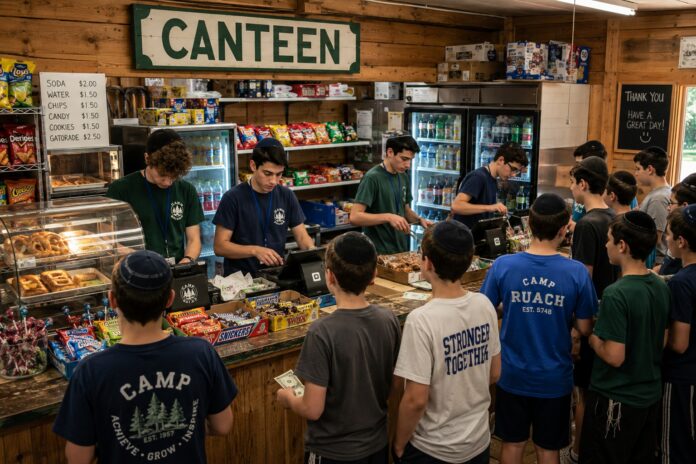
I’ve seen camp canteens from the inside. I know how they operate. I’m not talking from rumors. I’m talking from experience. In too many places, the entire operation is being run by teenagers. Good boys? Absolutely. Ehrliche boys? I’m sure. But they’re still teenagers. They’re rushing, they’re joking, they’re distracted, they’re trying to keep hundreds of campers happy, and somehow we’ve decided that this is an appropriate environment to run a food operation with zero adult oversight.
Why? Can someone please explain this to me?
If a pizza store in Brooklyn operated this way, would anybody eat there? If a caterer had sixteen-year-olds running the kitchen while the mashgiach was nowhere to be found for hours at a time, would anyone in our community touch the food? They’d be shut down before supper. There would be outrage. There would be endless conversations. WhatsApp would explode.
But because it’s “camp,” everyone shrugs.
Since when is “it’ll work out” a standard in hilchos kashrus?
Mistakes happen. Things get mixed up. Someone grabs the wrong utensil. Someone heats something where they shouldn’t. Someone puts something back in the wrong place. Someone opens the wrong package. Someone forgets. Someone doesn’t know. Someone was never taught. That’s why every serious kitchen has supervision.
Where are the people who normally scream about kashrus? Where are the organizations? Where are the rabbanim? Where are the parents asking the questions they ask everywhere else?
Parents spend thousands upon thousands of dollars to send children to camp because they want them to grow in Torah and yiras Shamayim. They assume, rightfully, that the camp is taking kashrus as seriously as they do at home. They don’t imagine that one of the most sensitive areas in camp is operating on autopilot.
Kashrus in a canteen can’t simply be left to whoever happens to be behind the counter. It deserves a real system. It deserves accountability. It deserves someone whose entire job is to make sure nothing goes wrong.
We don’t compromise on safety. We have lifeguards watching the lake every second. We have nurses for every scrape and fever. We have security because we don’t say, “Eh, it’ll probably be okay.” Why is kashrus any different? Why are we willing to gamble with something that the Torah treats with such seriousness?
I’d much rather people be offended by this letter than have another summer go by where everyone pretends there isn’t a problem.
If I’m wrong, prove me wrong. Show me the mashgichim. Show me the systems. Show me the oversight. Show parents that someone is actually taking responsibility. But if I’m right, and I believe I am, then stop looking the other way.
We keep telling our children that Torah isn’t seasonal. That mitzvos don’t go on vacation. That standards don’t change because it’s July and August.
Maybe it’s time the people who run canteens start believing that too.
Sincerely,
A Former Canteen Employee
To submit a letter to appear on Matzav.com, email [email protected]
DON’T MISS OUT! Join the Matzav Status by . Join the Matzav WhatsApp Groups by .
The opinions expressed in letters on Matzav.com do not necessarily reflect the stance of the Matzav Media Network.