
 Matzav
Burnham Takes the Helm: Britain’s Next Prime Minister Officially Becomes Labour Leader
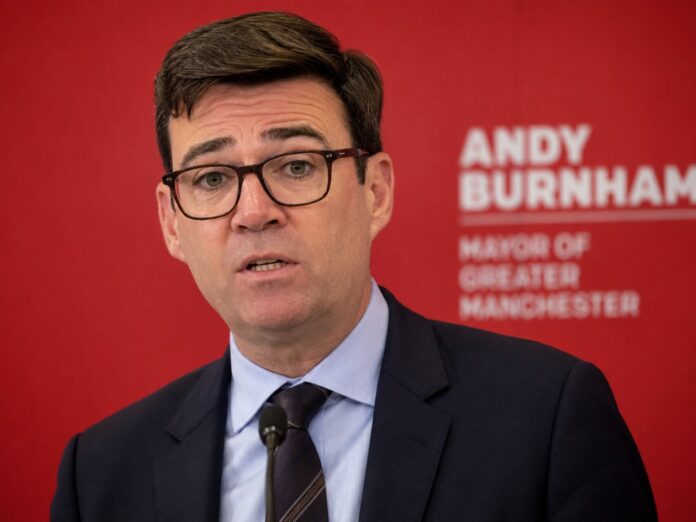
Andy Burnham officially became leader of Britain’s governing Labour Party on Friday, paving the way for him to become the country’s next prime minister when he takes office next week following Keir Starmer’s resignation.
Labour confirmed the outcome of its leadership race, which was held to choose a successor to Starmer. Burnham ran unopposed, making Friday’s announcement largely ceremonial after he had already secured overwhelming backing from Labour lawmakers.
His victory had effectively been guaranteed after receiving the nominations of 379 out of Labour’s 403 members of Parliament in the House of Commons by Thursday evening.
“We’re going to give them hope back,” Burnham said in his first speech as leader. “This is a proud moment you have given me and my family today, and an emotional one, but it is one for which I am ready.”
Starmer’s departure followed weeks of mounting calls for him to step down after Labour suffered heavy losses in local elections earlier this year. His resignation was ultimately triggered by a leadership challenge from within his own party. He will remain prime minister through Monday, when he is scheduled to formally submit his resignation to King Charles III, who will then invite Burnham to form a new government.
Burnham, who previously served as mayor of Greater Manchester, has spent recent weeks preparing to assume the country’s highest office, though he has offered only a limited preview of his policy agenda. After winning a parliamentary by-election last month, he pledged to pursue a style of politics “based on unity and hope” while promoting economic growth that benefits every region of Britain.
Despite his lengthy public career, Burnham remains relatively unfamiliar to many voters outside Greater Manchester. He has largely stayed out of the national spotlight, holding few media appearances and avoiding major press conferences since emerging as Labour’s leader-in-waiting.
When he moves into 10 Downing Street, Burnham will become Britain’s seventh national leader since 2016. Widely regarded as one of Labour’s strongest communicators, he is known for a more approachable and informal style than Starmer. Nevertheless, he inherits many of the same challenges, including sluggish economic growth, persistent cost-of-living pressures fueled by the wars in Ukraine and the Middle East, and increasing strain on Britain’s public services.
During his first address as Labour leader, Burnham began outlining the priorities of his incoming government. According to his office, he intends to demonstrate that he has the “courage to fix the big things that politics has neglected.”
Among his stated goals are rebuilding the British economy, expanding public oversight of key industries, and creating a new generation of modern manufacturing jobs. He argued that Britain made “a series of wrong turns in the 1980s” when “political power was centralized and economic power privatized.”
The comments were a reference to the reforms introduced under Conservative Prime Minister Margaret Thatcher, whose policies of privatization, industrial restructuring, and centralized government reshaped Britain’s economy during that decade.
Burnham also identified social care as one of his top priorities. In a video posted to social media on Thursday evening, he said his government would seek to improve inconsistent access to care for elderly people and those living with illness or disabilities, an issue that has challenged successive Labour and Conservative governments as Britain’s population continues to age.
Burnham has also been openly critical of President Donald Trump in the past, arguing that the president’s leadership has contributed to global instability.
“The path we’re on, if we are not careful, is a path towards the politics of the United States of America,” Burnham warned during a campaign appearance in June. While he didn’t attribute it directly to Mr. Trump, he said Americans were grappling with “a polarized, poisonous politics where people in communities don’t work together anymore.”
In an interview last year with The London Economic, Burnham discussed President Trump’s reelection alongside the rise of right-wing populist movements across Europe, saying, “I think we now have to have a real debate about what that means and the instability that [former prime minister] Liz Truss brought to Britain, I think Trump is bringing to the U.S. and the world.”
{Matzav.com}