
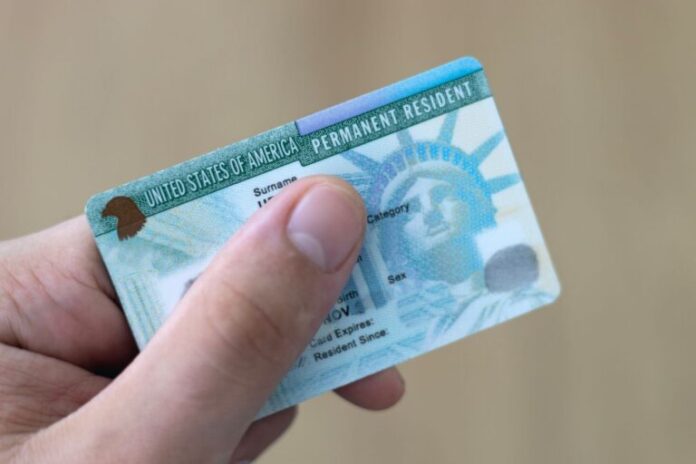

The Trump administration is moving to reinstate stricter financial requirements for immigrants seeking permanent legal residency by reversing a Biden-era policy that largely disregarded an applicant’s use of government assistance programs when evaluating eligibility for a green card.
According to CBS News, the Department of Homeland Security is preparing to rescind the Biden administration’s regulations and restore the longstanding “public charge” standard used to determine whether an immigrant is likely to become financially dependent on taxpayer-funded benefits.
The public charge test is designed to assess whether an applicant is capable of supporting himself financially or is likely to rely on government assistance after receiving lawful permanent resident status.
Under federal law, immigration officials may determine that an applicant is inadmissible if he or she is expected to become a “public charge” supported by public funds. In 2022, the Biden administration narrowed the policy, allowing many applicants who received certain forms of public assistance to remain eligible for green cards.
The revised policy being prepared by DHS would return to the broader standards that were implemented during President Trump’s first administration in 2016. Under those guidelines, immigration officers may consider factors including an applicant’s age, health, family circumstances, assets, financial resources, education, job skills, and use of means-tested government assistance programs.
As part of the change, the administration also plans to once again include benefits such as food stamps, Medicaid, and housing assistance among the programs considered when determining whether an applicant is likely to become a public charge.
DHS estimates that the revised policy could affect as many as 588,000 individuals applying for green cards from within the United States. According to reports, the rule could take effect as early as October.
Although the Trump administration is restoring the policy, the public charge standard itself predates both the Trump and Biden administrations. The modern version of the rule was first adopted in 1999 during President Bill Clinton’s administration.
The public charge proposal is one of several immigration policy changes currently under consideration. The administration is also weighing additional financial requirements for immigrants applying for green cards from outside the United States.
According to The Wall Street Journal, the State Department is evaluating a proposal that would require certain overseas green card applicants to post a $100,000 bond before being permitted to immigrate.
If adopted on a broad scale, the bond requirement could make permanent residency unattainable for many applicants who lack substantial financial resources.
The Journal reported that “applicants would likely pay the bond and receive the money back only after becoming U.S. citizens, a process that takes at least five years. That way, the bond would serve as collateral if a green-card holder moved to the country and proved unable to support themselves.”
“President Trump has made clear that those who wish to immigrate to the United States must be financially self-sufficient,” State Department spokesperson Tommy Pigott said, and added that the administration is exploring the bond idea “as a way to demonstrate they have access to the funds needed to support themselves.”
{Matzav.com}