
 Matzav
Report: NY Is Now Spending More On Medicaid Than Schools — And Pays More Per Person Than Anywhere In US
New York is now spending more on Medicaid than it does on K-12 education, according to a new fiscal analysis that highlights the state’s rapidly escalating healthcare costs and raises fresh concerns about the long-term sustainability of its budget, the NY Post reports.
A report released by State Comptroller Tom DiNapoli found that New York spent $39.4 billion on its Medicaid program during the 2025-26 fiscal year, accounting for 26.5% of the entire state budget. That exceeded the $37 billion allocated for public schools, despite New York already ranking first in the nation in both Medicaid spending per resident and education spending per student.
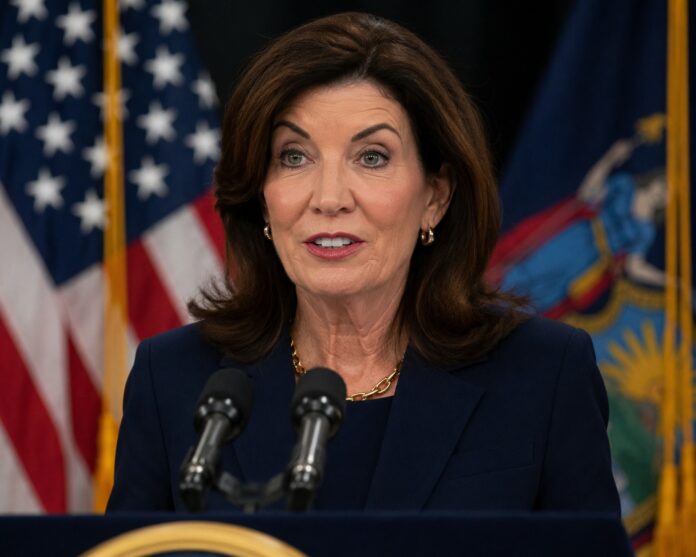
The findings come as the Trump administration is investigating Gov. Kathy Hochul’s Medicaid program over possible waste, fraud, and abuse.
“When Medicaid outranks math, the state’s fiscal diagnosis isn’t complicated,” Dr. Mehmet Oz, administrator of the US Centers for Medicare & Medicaid Services, told The Post. “Every tough decision New York makes to clean up Medicaid ensures that education is not crowded out.”
Federal officials have recently intensified their scrutiny of New York’s Medicaid system, with investigators focusing on several adult day care centers in New York City amid concerns over possible fraudulent billing and other abuses.
Medicaid is the federal-state health insurance program for low-income individuals, with funding shared among federal, state, and local governments. New York already spends more on the program per capita than any other state, while also leading the nation in per-pupil education spending.
According to DiNapoli’s report, state Medicaid expenditures have more than doubled over the past decade.
“In recent years, all [state] agency Medicaid spending has overtaken spending on School Aid,” DiNapoli’s report said in its review of New York’s record $269 billion budget for fiscal year 2026-27.
Together, Medicaid and education now consume more than half of the state’s overall budget.
Budget projections cited in the report indicate that state Medicaid spending will continue climbing sharply, reaching $53.3 billion within three years. That would represent approximately 29% of total state spending, while school aid is projected to rise to $43.7 billion, or 23.8% of the budget, leaving nearly a $10 billion gap between the two programs.
Bill Hammond, a senior fellow at the Empire Center for Public Policy who specializes in New York healthcare issues, argued that the current trajectory is unsustainable.
“Spending on Medicaid is too high. It’s a free for all. There’s no accountability. They don’t care about the results,” Hammond said.
He noted that virtually every segment of New York’s healthcare industry—including hospitals, nursing homes, outpatient clinics, pharmaceutical companies, and home healthcare providers—receives Medicaid funding.
“It’s not about serving the public interest. It’s about serving special interests,” he said.
Hammond acknowledged that Medicaid provides essential care for vulnerable populations, including low-income residents and individuals with disabilities. However, he argued that New York routinely spends beyond what is necessary, resulting in significant waste.
He pointed to the rapid expansion of adult day care centers serving elderly residents, where costs have surged and prosecutors have brought criminal cases alleging operators paid illegal kickbacks to recruit enrollees.
Hammond also said New York’s generous eligibility standards contribute to rising costs, noting that a majority of Medicaid recipients in the state have incomes above the federal poverty level.
DiNapoli’s report projects that Medicaid expenditures will increase by another $5 billion as hospitals absorb more uninsured patients arriving at emergency rooms after federal healthcare changes caused many residents to lose insurance coverage.
The comptroller also projects Medicaid enrollment will increase from 6.6 million to 7.2 million people as non-citizens transition from the state’s Essential Plan into Medicaid coverage.
According to Hochul’s Division of the Budget, the rising costs are being driven by mandatory wage increases for healthcare workers, higher prices for medical care and prescription drugs, increased reimbursement rates for hospitals and nursing homes, and continued growth among elderly and other high-cost patient populations.
The report also found a dramatic increase in the number of financially troubled hospitals across the state. Today, 75 of New York’s 261 hospitals—nearly 29%—are classified as financially distressed, representing a 200% increase over the past decade. As a result, federal and state financial assistance to struggling hospitals has risen by approximately 700%.
To address those financial pressures, the newly enacted state budget includes $500 million in one-time emergency funding for distressed hospitals.
DiNapoli concluded that Medicaid spending is now growing faster than the state’s statutory spending cap while healthcare-related tax revenues are declining. As a result, he warned that New York policymakers will eventually have to confront “the sustainability of the current trajectory of Medicaid spending.”
{Matzav.com}