
 Matzav
U.S. Preparing Major Military Buildup in Israel as Trump Weighs Broader Iran Offensive
The United States has notified Israel that it intends to send dozens of additional aerial refueling aircraft to the country as President Donald Trump considers significantly expanding military operations against Iran, Axios reported Friday. The move signals that Washington is preparing for the possibility of a much wider campaign targeting key Iranian assets.
According to the report by Barak Ravid, the decision follows a high-level strategy session in the White House Situation Room, where senior officials examined military options that would extend well beyond the recent focus on the Strait of Hormuz. Among the potential targets reportedly being evaluated are Iran’s civilian electrical infrastructure, additional attacks on nuclear facilities designed to further bury enriched uranium stockpiles, and a suspected underground installation at Pickaxe Mountain.
Although President Trump has not yet approved a final course of action, officials from both the United States and Israel told Axios that a broader offensive could receive authorization within days. The strategy is aimed at increasing pressure on the Iranian regime to reopen shipping through the Strait of Hormuz and agree to Washington’s proposed nuclear conditions.
The planning comes after five straight days of American military operations. During that time, U.S. aircraft struck seven bridges in the Bandar Abbas area, disrupting transportation routes used by Iran’s Islamic Revolutionary Guard Corps (IRGC). At the same time, Iranian forces have stepped up attacks on American positions in Kuwait, Iraq, Bahrain, Qatar, and Jordan, while the IRGC also claimed responsibility for striking an abandoned U.S. military site in Syria.
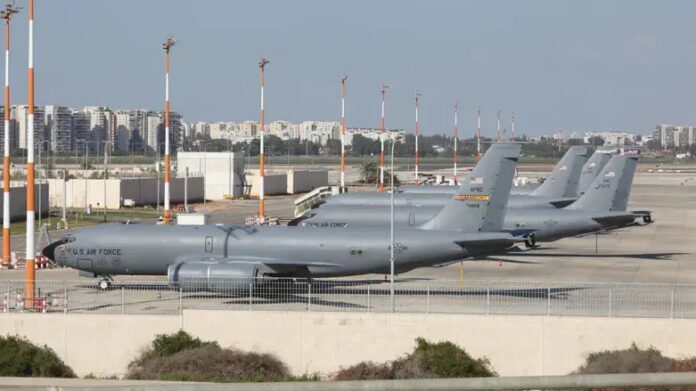
American forces currently operate roughly 30 refueling aircraft from Ben Gurion International Airport and another 30 from Ramon Air Base in southern Israel. The arrival of additional tankers would restore U.S. aerial refueling capabilities in Israel to the strength maintained during the early stages of the conflict. Axios reported that U.S. Central Command prefers using Ben Gurion because it offers stronger infrastructure and greater security than other regional bases, which are considered more exposed to potential Iranian attacks.
The growing American military presence at Ben Gurion has sparked debate within the Israeli government. While the large number of refueling aircraft caused little disruption when Israeli airspace was largely closed, the return of normal summer air travel has changed the equation. Transportation Minister Miri Regev has urged that the number of U.S. aircraft be limited or moved elsewhere to avoid widespread commercial flight cancellations, which could become a political liability ahead of the upcoming elections.
Defense officials, however, have resisted any effort to relocate the aircraft, arguing that operational requirements take precedence. With the United States now formally requesting that Israel accommodate the expanded fleet, Prime Minister Binyomin Netanyahu is expected to make the final decision.
{Matzav.com}