
 JBizNews
Iran Targets Kuwait’s Critical Energy Infrastructure in Overnight Escalation
Kuwait absorbed one of its heaviest nights of Iranian strikes overnight into Saturday, July 18, 2026, with a second power and water plant hit in as many days, a vital oil facility damaged, and air traffic suspended, deepening a war that is now squeezing energy supplies and household costs well beyond the Gulf. Sirens sounded repeatedly from around dawn as the barrage struck civilian and energy infrastructure, part of a widening campaign that has turned the machinery of daily life into a front line and pushed crude prices higher.
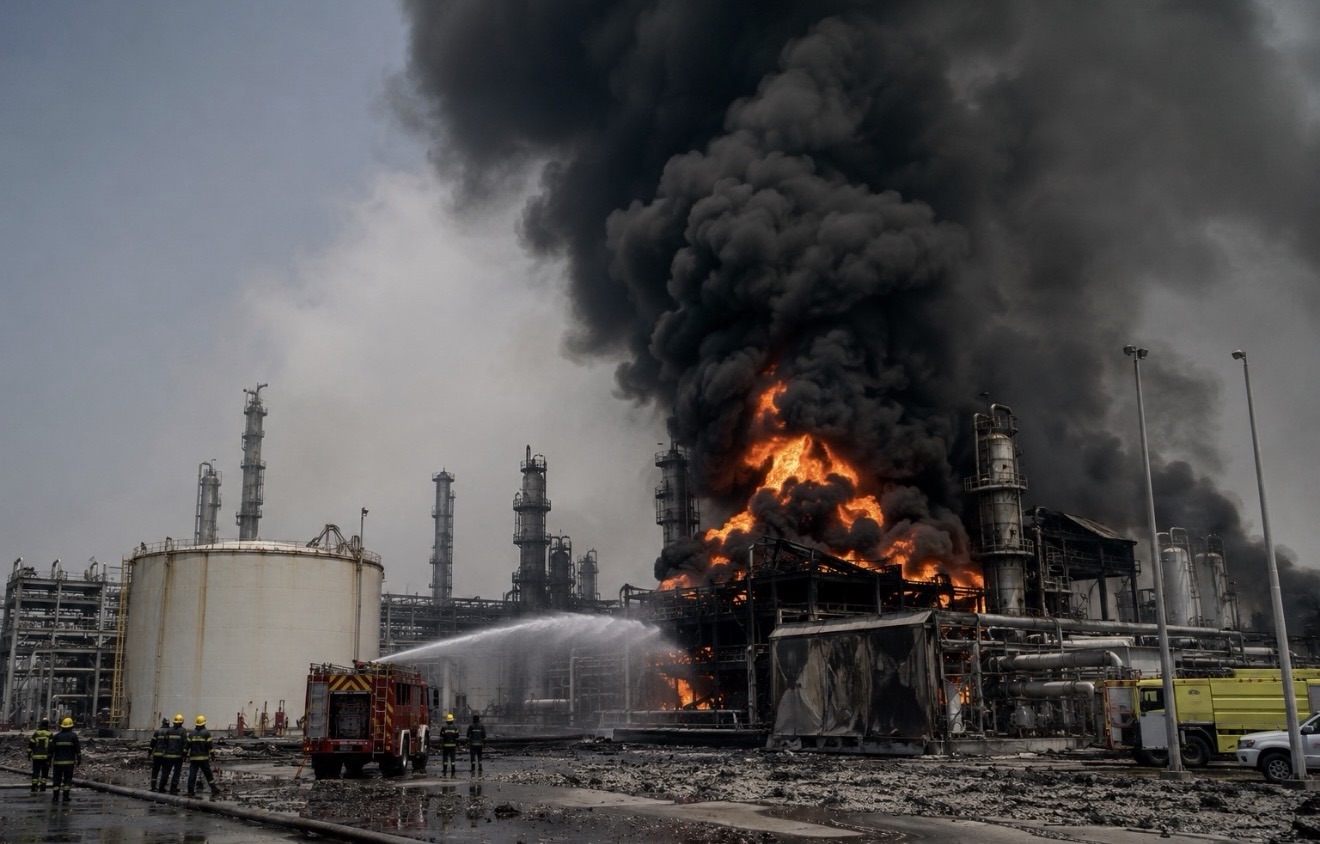
The damage inside Kuwait was extensive. The Kuwait Petroleum Corporation said one of its vital oil facilities was hit by repeated attacks that caused injuries and significant material losses, with black smoke seen rising over Mangaf, south of Kuwait City, near the Mina Al-Ahmadi refinery struck earlier in the week. The Electricity, Water and Renewable Energy Ministry reported that a second power and desalination plant was hit Saturday morning, forcing the shutdown of several generation units to protect workers and stabilize the grid. A firefighter and a plant worker were injured, and a separate strike hit an army barracks. For a country that draws close to 90% of its drinking water from desalination and faces summer heat above 110 degrees, damage to power and water capacity threatens consequences that reach far past the immediate blaze.
The strikes rippled straight into commerce. Kuwait suspended operations at its international airport amid the missile and drone threat, and Kuwait Airways rescheduled most of its flights, disrupting a regional travel and cargo network already under strain. Bahrain and Jordan also intercepted Iranian attacks overnight. Each hit on a refinery, a power station, or an airport tightens the link between the battlefield and the cost of moving goods and people across the Gulf.
The escalation sits atop a deeper fight over the Strait of Hormuz, the narrow channel through which roughly a fifth of the world’s seaborne oil and a large share of its liquefied natural gas typically move. At issue is control of the waterway itself: Iran wants vessels routed closer to its coast with a toll charged for passage, while the United States is pushing for a lane near Oman beyond Iranian control. With Tehran declaring the strait closed and Washington reimposing a naval blockade, shipping has again slowed to a near standstill after a brief recovery, and the added war-risk insurance and longer detours are lifting the delivered cost of every barrel that still moves.
Energy markets have registered the disruption. Brent crude, the international benchmark, climbed back toward the mid-$80s after trading in the high $70s, reversing a slide that had carried prices close to where they stood before the conflict began on February 28, 2026. West Texas Intermediate, the U.S. benchmark, tracked the move higher. The renewed climb followed the collapse of last month’s memorandum of understanding, which had briefly restored the free flow of traffic through Hormuz before a senior Iranian official said Tehran would suspend its commitments, mirroring what it described as a U.S. withdrawal.
The infrastructure war has hit Iran as well. A U.S. strike on a desalination plant at Bonji village on the southern coast disrupted drinking water for roughly 10,000 people across about 20 villages, and airstrikes collapsed bridges linking the critical port of Bandar Abbas to routes leading inland toward Tehran. Iran’s Energy Ministry, acknowledging damage to power infrastructure for the first time, urged residents in the south to ration electricity amid extreme heat. Iran also said its Chabahar port, where India operates a terminal, was struck, though India’s government reported the terminal itself escaped damage.
For businesses across the region, the strikes compound an already fragile picture. Ports, petrochemical complexes, and industrial zones depend on desalinated water and locally generated power, and sustained damage to either threatens production slowdowns at facilities feeding global chemical, fertilizer, and refining chains. Manufacturers that source intermediate goods from the Gulf face longer lead times and higher input costs, and the uncertainty alone is prompting some buyers to line up alternative suppliers or build inventory as a hedge.
American consumers are feeling the strain at the pump. Gasoline prices rose as crude climbed, with the national average moving well above its pre-conflict level, and fuel retailers have warned that any further loss of Hormuz throughput would push prices higher still. Because diesel powers trucking, rail, and agriculture, elevated fuel costs feed into grocery prices, delivery charges, and nearly everything that moves by road, while pump prices tend to ease slowly once fighting subsides.
With the memorandum suspended on both sides and no talks in prospect while the strikes continue, the assumptions that had allowed oil to drift back toward prewar levels no longer hold. Until the infrastructure stops burning and the strait steadies, pressure on prices and supply chains is set to build rather than ease.
JBizNews Desk | Kuwait City
© JBizNews.com All Rights Reserved. Reproduction or distribution without written permission is prohibited.