
 Matzav
Report: Iran’s Jews Forced to Praise Regime, Cut Ties With Israel to Survive Wartime Crackdown
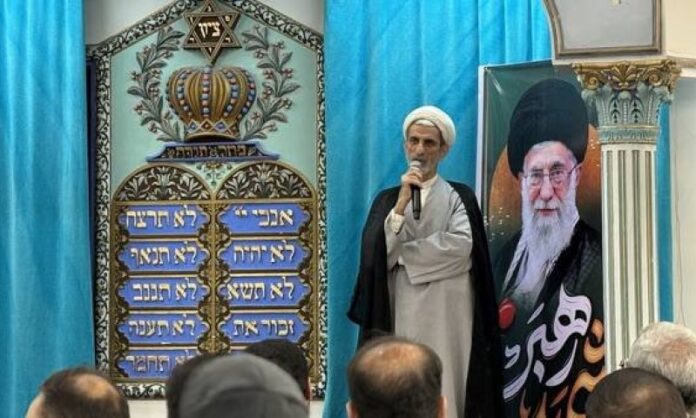
The approximately 10,000 Jews still living in Iran have been forced to demonstrate unwavering loyalty to the Iranian regime, sever contact with relatives in Israel, and avoid any online activity that could arouse suspicion, according to an Israeli expert on Iran. During the recent war, he said, Jewish communities were even compelled to hold ceremonies praising the regime and offer prayers for the success of Iranian missile attacks.
The assessment was shared by Beni Sabti, an Iran researcher at Israel’s Institute for National Security Studies (INSS), during an interview with Yaron Schneider on the institute’s “Extra Security Broadcast” podcast. Sabti described how the direct military confrontation between Israel and Iran placed the country’s remaining Jewish community under unprecedented pressure.
According to Sabti, while previous conflicts involving Hamas or Hezbollah occasionally led to harassment of Jewish business owners and professionals, the direct war with Israel dramatically intensified the danger. He said Iran’s Jews now feel compelled to constantly prove their loyalty to the regime.
“They had to hold many ceremonies praising the Iranian regime and even, unbelievably, prayers for the Iranian missiles,” Sabti said. “There were also many curses and insults directed at the State of Israel and the Americans, all in order to survive.”
Sabti said shuls have become not only places of worship and refuge, but also venues where members of the Jewish community publicly demonstrate allegiance to the Islamic Republic. He explained that Iranian Jews have spent generations learning how to conceal their true feelings in order to protect themselves.
“They are very accustomed to living a life of deception in order to save themselves,” he said.
That caution extends to communication with family members in Israel. Sabti said many Iranian Jews stop following relatives on social media, sharply reduce WhatsApp conversations, and even ask family members in Israel not to contact them at all.
“Not being in contact is actually a sign of safety,” Sabti explained. “Leave me alone, I’ll manage. It’s better that we not appear connected so no one sees our relationship.”
Although the Iranian government publicly insists it distinguishes between Judaism and Zionism—and even reserves a seat in parliament for a representative of the Jewish community—Sabti argued that the regime effectively treats Iran’s Jews as political hostages. Any contact with relatives in Israel, he warned, can quickly become grounds for accusations of espionage and interrogation by Iran’s intelligence services.
He pointed to one of the darkest chapters in the community’s modern history: the 1999 arrest of 13 Iranian Jews who were accused of spying for Israel. Several faced severe punishments before eventually being released following prolonged international pressure. The episode, Sabti said, served as a lasting reminder that no Jew in Iran is immune from sudden persecution.
Ironically, Sabti said the Jewish community often fares better when the Iranian regime feels confident and secure. When the government believes its grip on power is weakening or that it faces external threats, suspicion toward the Jewish population increases, forcing community members to make even more visible displays of loyalty to avoid being viewed as a “fifth column.”
Most of Iran’s remaining Jews live in Tehran, Isfahan, and Shiraz. Many work as merchants, physicians, engineers, and other professionals. According to Sabti, they generally maintain peaceful relationships with their Muslim neighbors and avoid drawing attention to themselves, provided they adhere to the unwritten rules and display no public connection to Israel.
Despite the mounting risks, many members of the community remain reluctant to leave. Some are elderly, while others own businesses, stores, clinics, or valuable property that cannot easily be transferred abroad. For many families, emigrating would mean abandoning everything they have built over a lifetime and starting over in Israel or the United States without their assets or social standing.
Sabti also noted the community’s profound historical and cultural attachment to Iran. Jews have lived there continuously for approximately 2,500 years, and many regard themselves as native Iranians deeply connected to the Persian language, local traditions, cuisine, and the cities where their families have lived for generations. They do not see themselves as outsiders but as members of one of the world’s oldest Jewish communities living under an increasingly hostile regime.
According to Sabti, Iran’s Jewish population numbered roughly 120,000 before the 1979 Islamic Revolution. Tens of thousands fled following Ayatollah Ruhollah Khomeini’s rise to power, while many others left during the 1980s as the Revolutionary Guard strengthened its grip and government repression intensified.
Sabti also argued that years of isolation from Jewish communities in Israel and the United States have allowed groups associated with Neturei Karta to expand their influence in some Iranian shuls and educational institutions. He said the regime has welcomed those voices as useful propaganda, presenting anti-Zionist Jews as evidence of Jewish opposition to the State of Israel.
Today, one of the world’s oldest Jewish communities remains caught between its ancient roots and a regime that views it as a political tool. While Iranian Jews continue to maintain shuls and preserve communal life, Sabti warned that during times of war, even a simple phone call to Israel or the slightest expression of identification with the Jewish state can place their freedom—and even their lives—in jeopardy.