
 JBizNews
Rubio Says Iran Is Trying to Use the Strait of Hormuz as Leverage Against the World
Washington says Tehran is seeking to turn one of the world’s most important energy corridors into a tool of economic and diplomatic pressure.
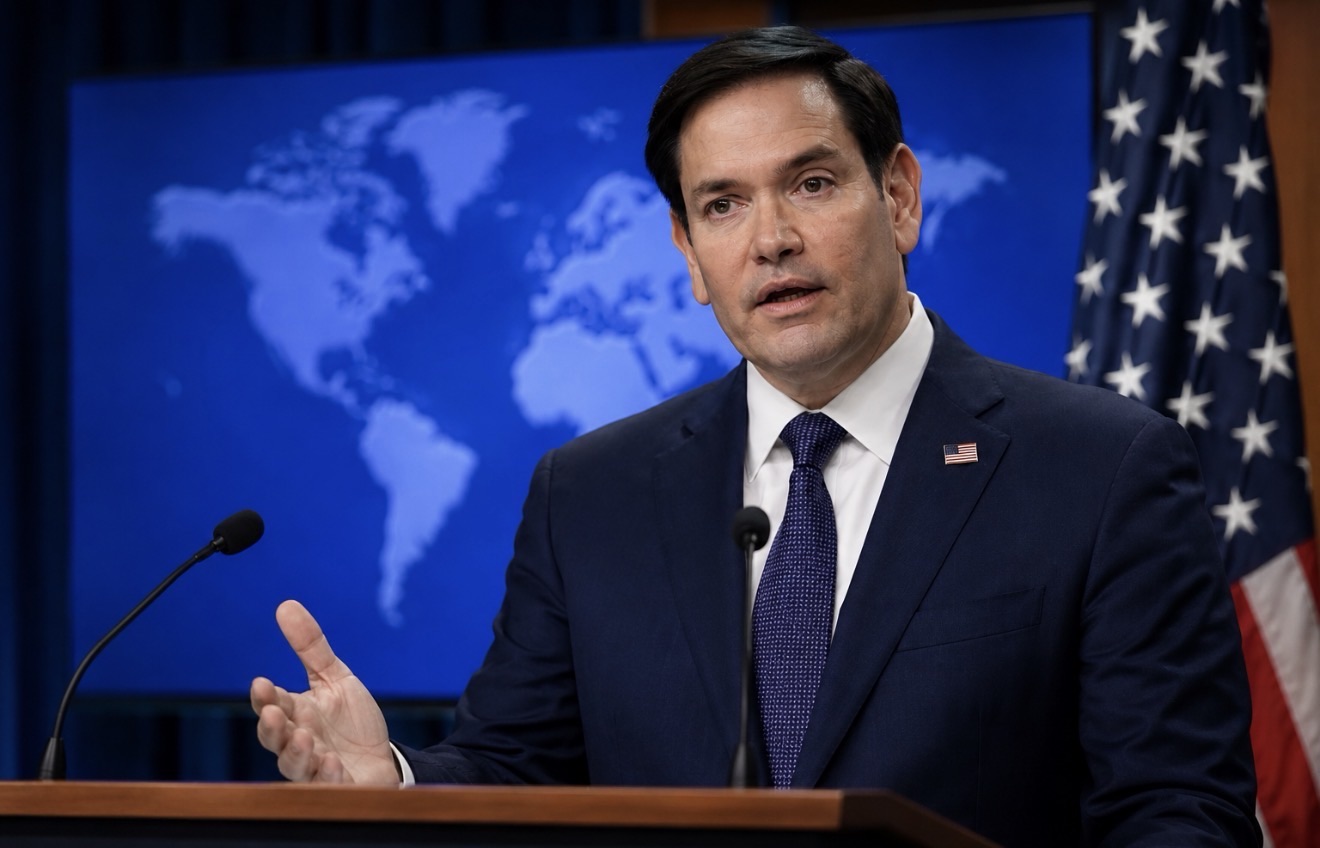
WASHINGTON — U.S. Secretary of State Marco Rubio said late Sunday, July 19, 2026, that Iran is attempting to use the Strait of Hormuz as leverage against the world, arguing that Tehran hopes growing economic pressure on global energy markets will persuade other nations to influence Washington. Rubio made the remarks before departing for the Association of Southeast Asian Nations (ASEAN) foreign ministers’ meetings in Manila, where regional security and the Middle East conflict are expected to be among the top agenda items.
“It’s clear that Iran, at least some people in Iran, want to control the straits and hold that as leverage against the world,” Rubio said.
The comments come as international concern continues to grow over shipping disruptions through the Strait of Hormuz, the narrow waterway connecting the Persian Gulf to global markets. Roughly one-fifth of the world’s seaborne oil and a significant share of global liquefied natural gas exports normally pass through the passage, making it one of the most strategically important maritime routes in the world economy.
Washington has increasingly framed freedom of navigation through Hormuz as an international economic issue rather than solely a regional security matter. U.S. officials argue that any sustained disruption threatens not only energy-producing nations in the Gulf but also importing economies across Asia, Europe and beyond.
Commercial shipping through the area has slowed in recent days as the conflict has intensified. Tanker operators have become increasingly cautious about entering the Gulf, while marine insurance premiums and freight costs have climbed as security risks increase. Energy markets have responded with higher crude prices amid concerns that prolonged disruptions could tighten global supplies.
Iran has repeatedly warned that continued military pressure could affect navigation through the strait. While Tehran has not formally declared the waterway closed, attacks on regional infrastructure and commercial shipping have raised fears that the conflict could significantly disrupt one of the world’s busiest energy corridors.
Rubio’s remarks suggest the administration believes Tehran is attempting to use those economic risks as diplomatic leverage. By increasing uncertainty over global oil and natural gas supplies, U.S. officials argue Iran hopes governments dependent on Gulf energy exports will pressure Washington to reduce military operations or offer political concessions.
The implications extend well beyond the Middle East. Major Asian economies including China, India, Japan and South Korea depend heavily on Gulf oil, while Qatar’s liquefied natural gas exports are critical for customers across both Asia and Europe. Even countries that import little Middle Eastern oil could experience higher transportation costs, inflationary pressure and increased prices for fuel and manufactured goods if shipping disruptions persist.
Although several Gulf producers have alternative export routes, including pipelines that bypass Hormuz, those systems cannot replace the full volume normally transported through the strait. Iraq, Kuwait and Qatar remain particularly dependent on maritime exports through the passage, leaving global markets highly sensitive to any prolonged interruption.
Rubio’s comments also underscore a broader U.S. diplomatic strategy ahead of meetings with Indo-Pacific allies. Washington is encouraging partner nations to view open navigation through Hormuz as a shared international interest rather than a dispute confined to the United States and Iran. Administration officials argue that allowing any country to use a critical international shipping lane as political leverage would create a dangerous precedent for global commerce.
Financial markets continue to closely monitor developments in the Gulf. Energy traders remain focused on tanker traffic, insurance rates and export volumes, recognizing that even limited disruptions can quickly affect oil prices, transportation costs and inflation expectations worldwide.
As diplomatic efforts continue alongside military tensions, the Strait of Hormuz remains one of the world’s most closely watched economic flashpoints. Rubio’s warning reflects growing concern in Washington that the conflict is evolving beyond a regional confrontation into a challenge with potentially far-reaching consequences for international trade and global energy security.
JBizNews Desk | Washington
© JBizNews.com All Rights Reserved. Reproduction or distribution without written permission is prohibited.