
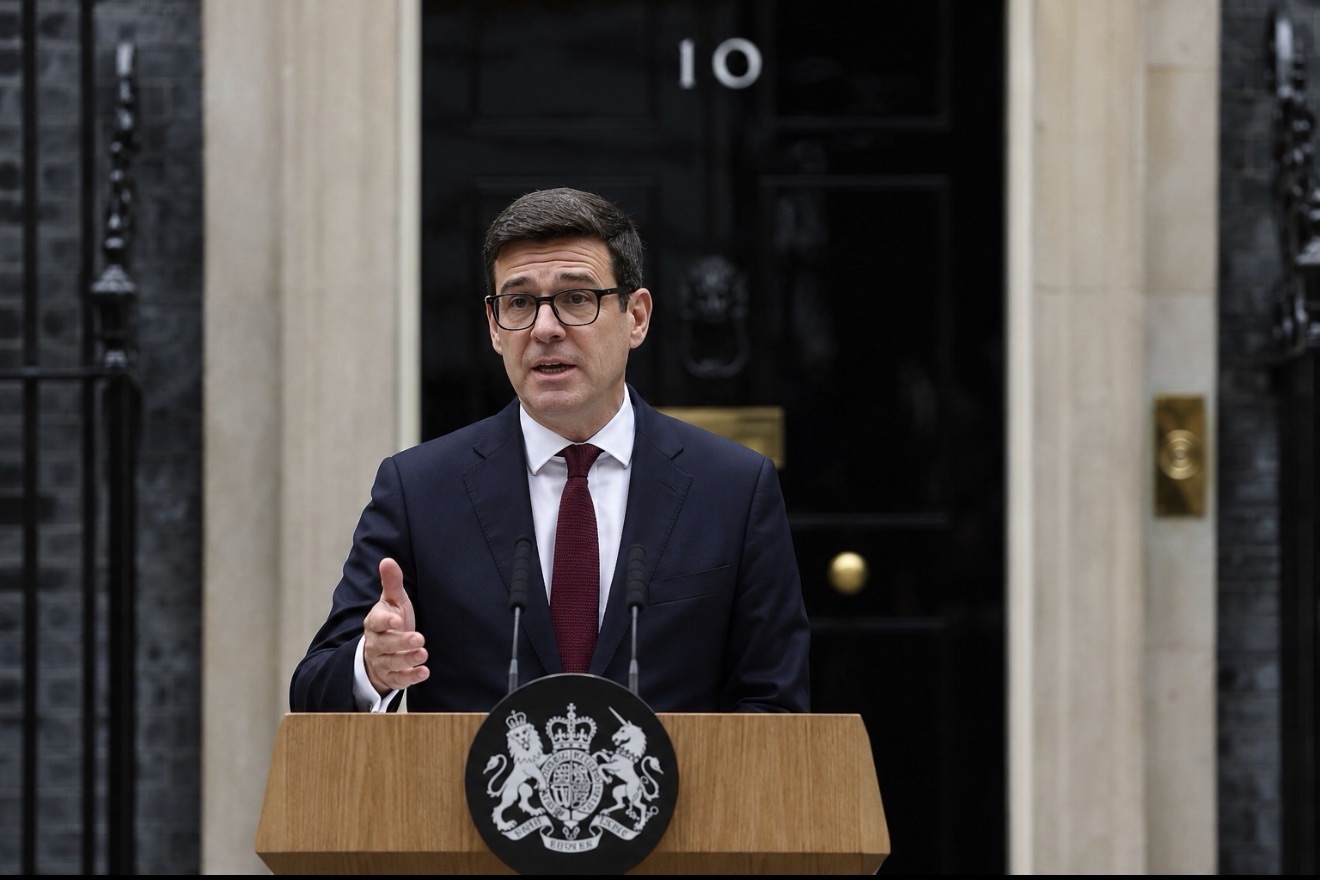

LONDON — Andy Burnham officially became Prime Minister of the United Kingdom on Monday after King Charles III invited him to form a government following Keir Starmer’s resignation. In his first address from 10 Downing Street, Burnham pledged a new economic direction focused on expanding investment in industry, housing, infrastructure, and regional development while tackling Britain’s prolonged cost-of-living pressures and sluggish economic growth. Investors immediately shifted their attention to whether his government can expand spending without undermining confidence in the nation’s public finances.
Burnham, who served for nearly a decade as Mayor of Greater Manchester before returning to Parliament and winning the Labour Party leadership, has long argued that Britain’s economy has become overly centralized and requires a larger government role to stimulate long-term growth. His first speech as prime minister outlined plans to decentralize economic decision-making, increase investment outside London, accelerate housing construction, strengthen manufacturing, and support public transportation while placing renewed emphasis on regional economic development.
Financial markets reacted cautiously rather than dramatically. The orderly transfer of power provided reassurance to investors, but economists noted that Burnham’s ambitious policy agenda will ultimately be judged by how it is financed. Britain continues to carry one of its highest public debt burdens in modern history while elevated interest rates have significantly increased government borrowing costs. Any substantial increase in spending without credible fiscal discipline could place upward pressure on bond yields and borrowing costs throughout the economy.
Among Burnham’s expected priorities are expanding affordable housing, investing in transportation networks, supporting domestic manufacturing, strengthening the National Health Service (NHS), and addressing regional economic disparities that have widened over recent decades. He has also pledged immediate measures aimed at easing the cost-of-living crisis while preparing a broader 10-year economic strategy designed to improve productivity and restore long-term growth.
Businesses across Britain are now awaiting details of the new government’s first budget and fiscal strategy. Corporate leaders will closely watch whether tax policy, infrastructure spending, industrial incentives, and regulatory reforms encourage private investment while maintaining confidence in Britain’s financial stability. International investors are expected to scrutinize cabinet appointments—particularly the selection of the Chancellor of the Exchequer—as an early signal of the administration’s economic priorities.
The leadership transition also carries significance well beyond Britain. The United Kingdom remains one of the world’s leading financial centers and one of the United States’ largest trading and investment partners. Changes in British fiscal policy, government spending, taxation, and regulation can influence multinational corporations, currency markets, investment flows, and supply chains connecting Europe and North America.
For American businesses, Burnham’s economic agenda could affect companies operating in Britain through changes in labor policy, infrastructure investment, taxation, energy policy, and industrial development incentives. Financial markets will also watch whether Britain’s new government can successfully balance stronger public investment with long-term fiscal responsibility at a time when many advanced economies are facing similar challenges.
The coming weeks will provide investors with the first concrete indication of Burnham’s governing style. His administration’s initial budget proposals, cabinet appointments, and economic strategy will determine whether markets view his vision of a more active government as a catalyst for sustainable growth or as a potential source of additional fiscal pressure. For businesses and investors alike, Britain’s new political chapter begins with heightened expectations and equally high scrutiny.
JBizNews Desk | London
© JBizNews.com All Rights Reserved. Reproduction or distribution without written permission is prohibited.