
 JBizNews
FAA Restores Boeing’s Authority to Certify 737 Max and 787 Aircraft, Marking Major Regulatory Milestone
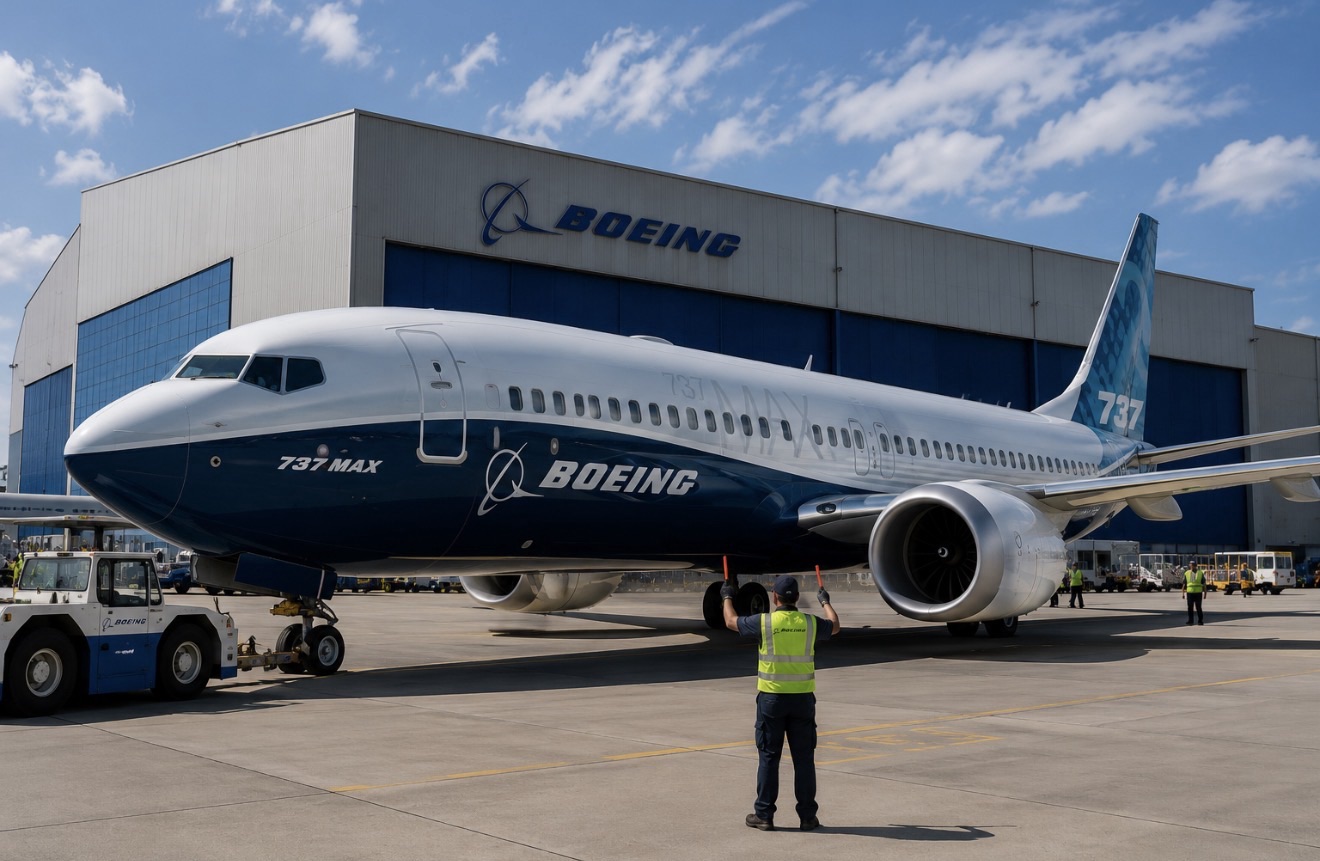
The Federal Aviation Administration (FAA) announced on Friday, July 17, that Boeing will once again be permitted to issue airworthiness certificates for newly built 737 Max and 787 Dreamliner aircraft beginning next week, restoring one of the company’s most significant regulatory authorities after years of intensive federal oversight following fatal crashes and manufacturing quality concerns. The decision represents a major milestone for the aerospace manufacturer and signals growing confidence in Boeing’s safety and production improvements.
The authority to issue airworthiness certificates is one of the most important responsibilities in commercial aviation. While the FAA continues to regulate and oversee every aspect of aircraft certification, allowing Boeing to perform the final certification process on qualifying aircraft is expected to streamline deliveries and improve production efficiency at a time when airlines worldwide continue waiting for hundreds of aircraft ordered years ago.
The restoration follows months of detailed evaluations conducted jointly by the FAA and Boeing. Since September 2025, federal inspectors and company representatives alternated responsibility for issuing final certificates before aircraft deliveries. Regulators compared the results from both processes and concluded Boeing consistently met federal certification standards, providing the confidence necessary to return the authority.
The decision marks another step in Boeing’s long recovery from one of the most difficult periods in its history.
In 2019, the FAA revoked Boeing’s authority to self-certify the 737 Max after investigations determined that design flaws in the aircraft’s Maneuvering Characteristics Augmentation System (MCAS) contributed to two fatal crashes that claimed 346 lives. The worldwide grounding of the aircraft triggered billions of dollars in losses, extensive congressional investigations, criminal and civil settlements, and sweeping reforms to aircraft certification procedures.
Regulatory scrutiny expanded again in 2022, when the FAA suspended similar authority for the 787 Dreamliner following manufacturing quality concerns involving fuselage assembly and production documentation. Deliveries of the wide-body aircraft slowed significantly while Boeing implemented corrective actions under close federal supervision.
The company’s recovery faced another setback in January 2024, when a door plug separated from an Alaska Airlines 737 Max 9 shortly after takeoff. Although the aircraft landed safely with no fatalities, the incident prompted another nationwide inspection program and renewed questions regarding Boeing’s manufacturing quality controls. The FAA subsequently imposed production limitations while requiring substantial improvements throughout Boeing’s factories.
Those oversight measures remain in place despite Friday’s announcement.
FAA inspectors will continue working inside Boeing production facilities, focusing on identifying manufacturing issues earlier in the assembly process rather than performing the final certification of completed aircraft. Federal officials emphasized that restoring certification authority does not reduce regulatory oversight or inspection requirements.
The FAA also confirmed that the decision applies only to aircraft models that have already completed federal certification. The 737 Max 7 and 737 Max 10, which remain under FAA review, are not included in the restoration and must still receive full regulatory approval before entering commercial service.
Production restrictions likewise remain partially intact. While the FAA has gradually increased Boeing’s monthly production allowance as manufacturing performance has improved, regulators continue monitoring output levels to ensure quality standards remain consistently high before authorizing additional increases.
For Boeing, the commercial impact is substantial.
Aircraft manufacturers receive the majority of an airplane’s purchase price only after delivery. Accelerating the certification process can shorten delivery timelines, improve cash flow, reduce inventory carrying costs, and help airlines receive long-delayed aircraft needed to expand routes and replace older fleets.
The decision also carries broader implications for the global aerospace supply chain. Thousands of suppliers throughout the United States and abroad depend on Boeing production schedules, while airlines continue facing strong travel demand and limited availability of new aircraft. Faster deliveries could ease some of those pressures over the coming months.
Despite the regulatory milestone, Boeing continues operating under one of the most closely monitored manufacturing environments in the aviation industry. Federal officials stressed that restoring certification authority reflects measurable progress rather than a return to pre-2019 oversight practices.
For investors, customers, and the aviation industry, the FAA’s decision represents another important step in Boeing’s effort to rebuild credibility after years of safety challenges. Whether that confidence continues will ultimately depend on the company’s ability to consistently deliver safe, high-quality aircraft while maintaining the manufacturing standards regulators now expect.
JBizNews Desk | Washington, D.C.
© JBizNews.com All Rights Reserved. Reproduction or distribution without written permission is prohibited.