 JBizNews
Cleveland Fed’s Beth Hammack Warns Inflation Remains Too High as Pressure Builds Ahead of Fed Meeting
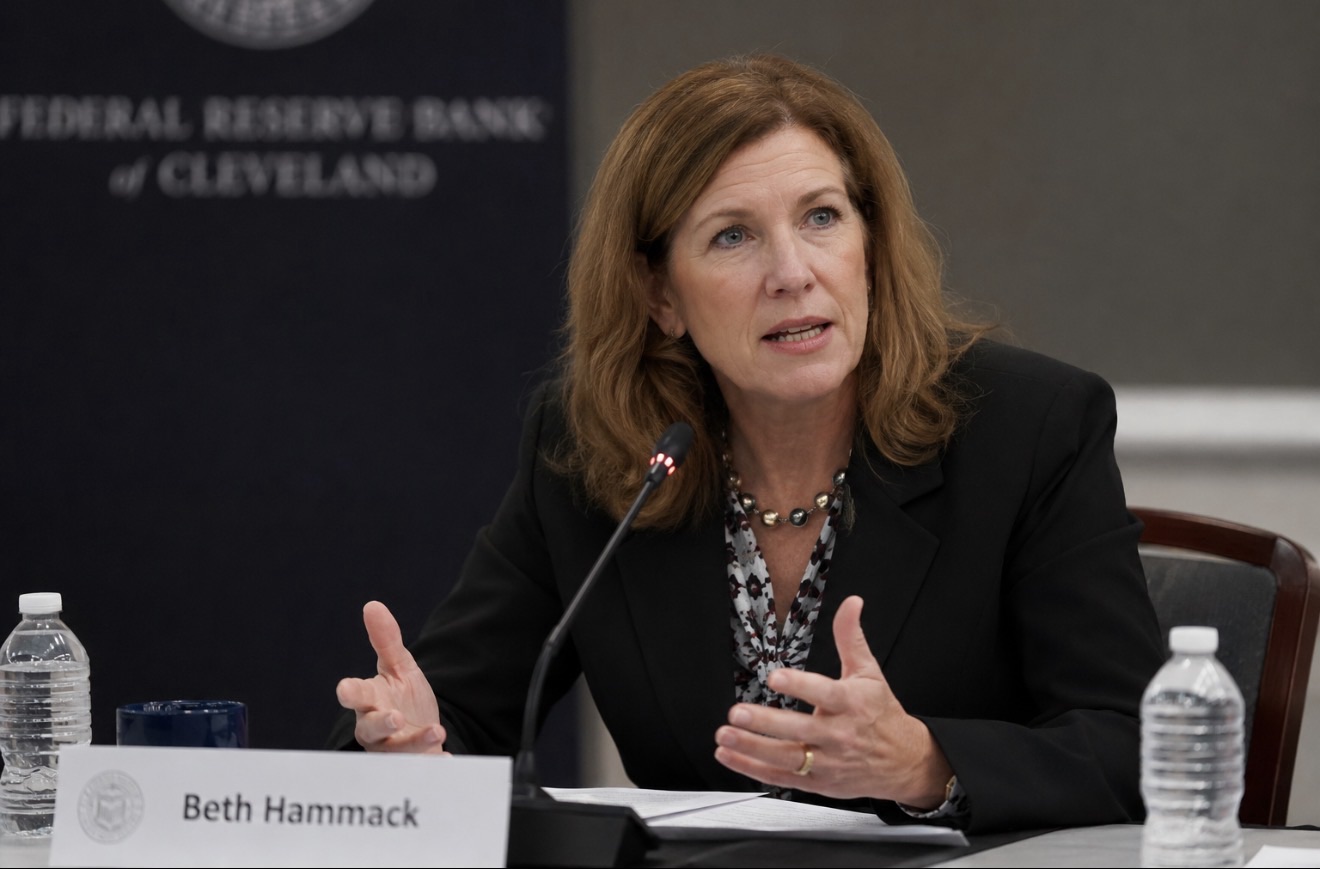
Cleveland Federal Reserve Bank President Beth Hammack used one of her final public statements before the Federal Reserve’s July 28–29 Federal Open Market Committee (FOMC) meeting to deliver one of her strongest inflation warnings yet, arguing that price pressures remain too high and suggesting policymakers may ultimately need to tighten monetary policy further if inflation fails to improve. The comments, published Friday on her official LinkedIn account during the Fed’s pre-meeting communications blackout period, underscore growing divisions inside the central bank as officials prepare to decide the direction of U.S. interest rates.
Hammack, a voting member of the FOMC this year, said she is hearing something new from businesses across the Fourth Federal Reserve District—a region covering Ohio, western Pennsylvania, eastern Kentucky, and northern West Virginia. For the first time since joining the Federal Reserve, she said employers are telling her they believe the central bank should take additional action to bring inflation under control rather than ease monetary policy.
Her message reflected concern not only about inflation data but also about public sentiment.
Hammack wrote that many consumers continue struggling with the rising cost of everyday necessities and described hearing a “growing sense of despair” from households that believe prices are unlikely to improve soon. She added that the labor market remains close to what she considers maximum employment, leaving inflation—not unemployment—as the Federal Reserve’s primary challenge.
The remarks place Hammack among the more hawkish voices inside the central bank.
While several Federal Reserve officials continue supporting the current interest-rate range of 3.50% to 3.75%, an increasing number have publicly warned that inflation may prove more persistent than previously expected. Rising energy prices, continued investment tied to artificial intelligence infrastructure, supply-chain pressures, and insurance costs have all been cited as contributing factors keeping inflation above the Fed’s long-term 2% objective.
Hammack has consistently argued that allowing inflation expectations to become entrenched would create a far more difficult problem for policymakers later. Businesses expecting higher costs tend to raise prices more aggressively, while workers seek larger wage increases, creating a cycle that can make inflation significantly harder to reverse.
Her latest comments suggest those concerns are no longer theoretical.
According to Hammack, conversations with manufacturers, retailers, and employers indicate that many business leaders are becoming increasingly worried that elevated prices are becoming part of the normal economic environment rather than a temporary disruption. She said businesses continue reporting higher operating expenses while consumers increasingly describe adjusting household budgets simply to keep pace with everyday costs.
The timing of the statement is significant.
Federal Reserve officials entered their customary communications blackout immediately after Friday, preventing policymakers from making additional public comments until after the July meeting concludes. Investors will therefore spend the coming days analyzing Hammack’s remarks alongside recent statements from other Federal Reserve officials as they attempt to gauge whether additional tightening remains under serious consideration.
Financial markets currently expect policymakers to leave interest rates unchanged later this month, although expectations for future meetings remain considerably less certain. Any indication that more Federal Reserve officials are leaning toward higher rates could affect Treasury yields, mortgage rates, stock prices, and borrowing costs throughout the economy.
For businesses, the debate carries immediate consequences.
Higher interest rates increase financing costs for commercial real estate, equipment purchases, expansion projects, and inventory while also affecting consumer demand through mortgages, automobile loans, and credit cards. Companies planning investments during the second half of the year are closely monitoring whether inflation continues improving or whether additional monetary tightening becomes necessary.
Although Hammack did not explicitly call for an immediate rate increase, her message reinforced that inflation remains the Federal Reserve’s dominant concern. As policymakers gather later this month, her remarks suggest the debate inside the central bank has shifted away from when rates might fall and toward whether current policy is restrictive enough to ensure inflation returns to target.
JBizNews Desk | Cleveland
© JBizNews.com All Rights Reserved. Reproduction or distribution without written permission is prohibited.