
 Vos Iz Neias
Indian Journalist: Israel and India Face the Same Islamic Terror Threat
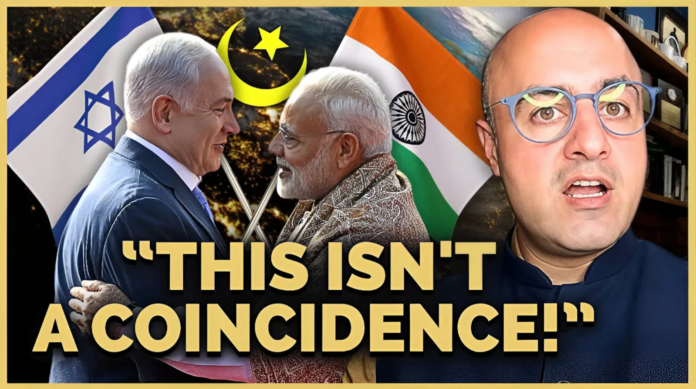
India and Israel are bound by far more than strategic interests—they are united by a shared struggle against terrorism, a commitment to democracy, and a deep cultural resilience, according to veteran Indian journalist Aditya Raj Kaul during an interview with Rabbi Daniel Schonbuch on The Viktor Frankl Podcast.
Kaul, Senior Executive Editor at NDTV and one of India’s leading national security journalists, argued that the October 7 Hamas massacre fundamentally reinforced what many Indians have understood for decades: democratic nations facing Islamist terrorism confront many of the same threats.
Reflecting on the Hamas attack, Kaul noted that Indian Prime Minister Narendra Modi was among the first world leaders to condemn the massacre because India has endured similar terrorist violence for decades, particularly in Kashmir. He said India immediately recognized the brutality of October 7 because it has lived through comparable attacks against its own civilians.
Kaul explained that while India continues to pursue diplomacy internationally, it draws a firm distinction between political disagreements and terrorism.
“When it comes to terrorism,” he said, “one cannot tolerate it.”
Throughout the conversation, Kaul emphasized that both Israel and India have paid a heavy price for extremism while often facing criticism abroad for defending themselves.
A Personal Story of Exile
The interview also became deeply personal as Kaul recounted his family’s forced flight from Kashmir.
Born into a Kashmiri Pandit family, he described how Islamist terrorists targeted the region’s Hindu minority beginning in 1989, forcing hundreds of thousands to flee their homes under threats of murder or forced conversion.
He recalled that his family left Kashmir on January 19, 1990—a bus ticket he still keeps today because it marked what became a permanent exile rather than a temporary escape.
According to Kaul, roughly half a million to six hundred thousand Kashmiri Hindus once lived in the region. Today, fewer than 10,000 remain, a demographic collapse he described as ethnic cleansing driven by Islamist terrorism.
Shared Values Beyond Security
Beyond military cooperation, Kaul argued that Israel and India share remarkably similar civilizations.
He praised Israeli resilience during wartime, recalling visits throughout Israel during the current conflict where citizens would calmly enter bomb shelters during missile sirens and then return to everyday life minutes later.
He also pointed to common values including strong family life, respect for tradition, remembrance of history, and determination to rebuild after tragedy.
Kaul said India’s annual remembrance of the Kashmiri Hindu exodus parallels Israel’s commitment to preserving the memory of the Holocaust through institutions such as Yad Vashem.
“The resilience of the Israeli people,” he said, “is something every Indian recognizes and admires.”
A Growing Strategic Alliance
The veteran journalist described the relationship between Jerusalem and New Delhi as entering an entirely new phase.
While defense and intelligence cooperation have existed for decades, he said the partnership is now expanding into agriculture, water technology, manufacturing, innovation, and trade.
Kaul predicted that Israel and India are likely to finalize a free trade agreement in the coming months and suggested that future cooperation could include emergency defense manufacturing, allowing each nation to rapidly assist the other during wartime.
He also highlighted increasing economic ties, expanding Indian employment in Israel, and growing people-to-people connections that strengthen the alliance beyond government relations.
Warning About Global Terrorism
Discussing the broader geopolitical picture, Kaul argued that terrorism has evolved into an international ideological movement fueled by online radicalization.
He said nations can no longer assume such threats are confined to the Middle East or South Asia, pointing to attacks across Europe, Australia, and North America.
Kaul also warned that democratic societies must remain vigilant while maintaining their commitment to freedom, stressing that countries often fail to appreciate the dangers until terrorism reaches their own borders.
Looking Ahead
Despite the challenges, Kaul expressed optimism about the future.
He predicted that India, Israel, and the United States will continue deepening their strategic partnership, driven not only by shared security concerns but also by common democratic values, technological innovation, and economic opportunity.
He believes the relationship has only begun to reach its potential.
“We are only working on the foundation these days,” Kaul said. “The main achievements still lie ahead.”
Follow Rabbi Daniel Schonbuch and the Viktor Frankl Podcast at www.youtube.com/@rabbiforamerica