
 JBizNews
Airline CEOs Tell Boeing and Airbus: Don’t Rush the Next Generation of Aircraft
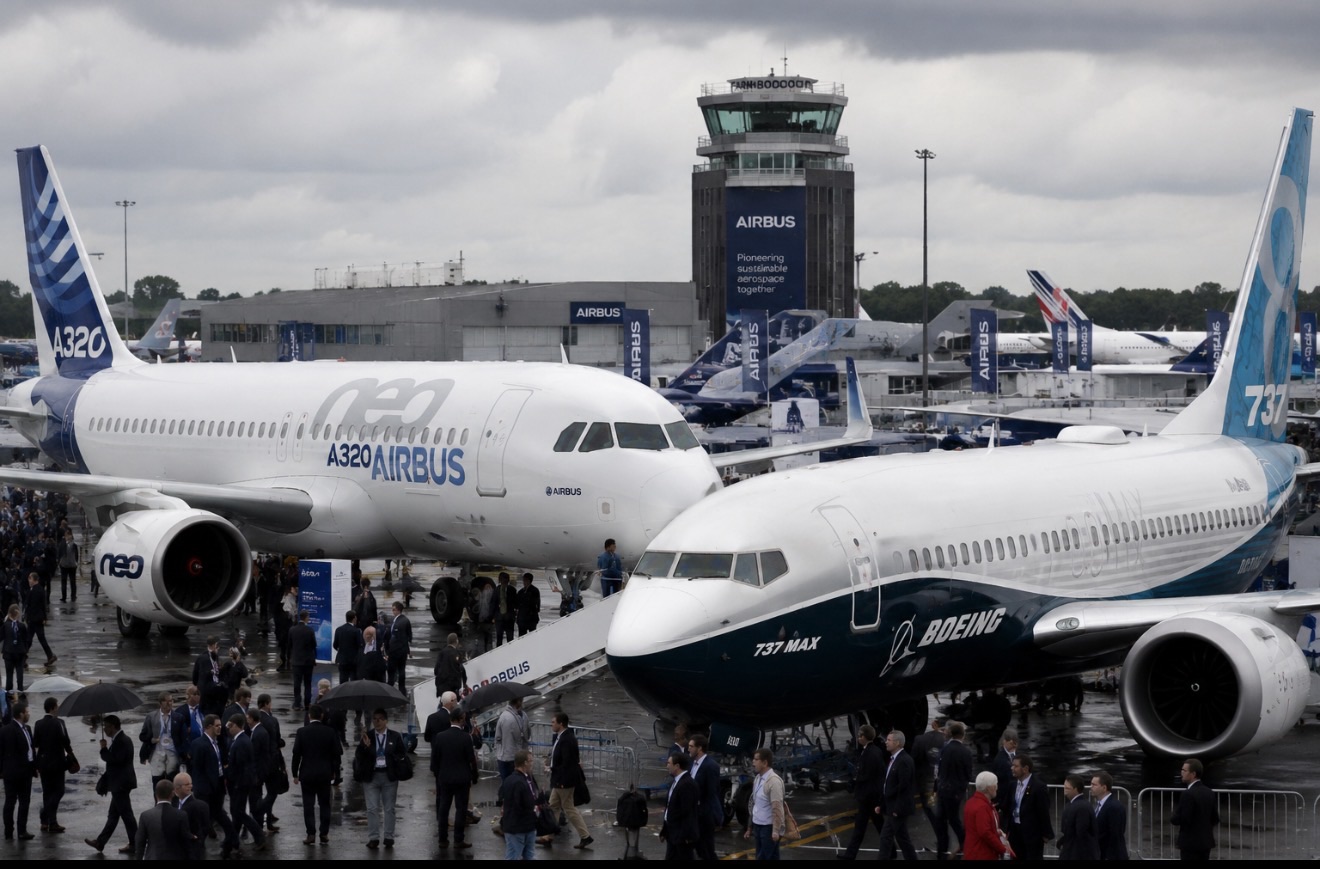
FARNBOROUGH, England — Airline executives issued an unusually direct warning to Boeing and Airbus, urging the world’s two largest aircraft manufacturers not to rush the launch of a new generation of commercial jets before the technology is fully proven. The message, delivered during the Airline Leaders Summit at the Farnborough International Airshow, reflects growing concern across the aviation industry that reliability, certification and long-term operating economics should take priority over speed to market as manufacturers plan the successors to today’s best-selling narrow-body aircraft.
The comments come as Boeing and Airbus face mounting pressure to define the future of commercial aviation. Both manufacturers have spent years studying replacements for the Boeing 737 MAX and Airbus A320neo families, aircraft that dominate short- and medium-haul travel around the world. Yet neither company has committed to launching a completely new narrow-body program, preferring instead to improve existing aircraft while waiting for propulsion technologies to mature.
Paul Kent, Chief Commercial Officer of aircraft leasing giant BOC Aviation, cautioned that introducing an aircraft before its technology is fully developed can create years of operational and financial challenges.
Executives noted that airlines are still dealing with the consequences of supply-chain disruptions, engine shortages, certification delays and production constraints that have affected aircraft deliveries in recent years. Launching another major aircraft program before those issues are resolved could place additional strain on manufacturers and airline customers alike.
Ryanair Chief Executive Michael O’Leary echoed those concerns, saying airlines are likely to continue relying on today’s Boeing 737 MAX and Airbus A320neo families for at least another decade unless a truly transformative technology emerges. Rather than introducing an aircraft offering only modest improvements, airlines indicated they would prefer manufacturers wait until meaningful advances in efficiency, operating costs and environmental performance become commercially viable.
The discussion highlights a major shift in aviation strategy.
Historically, aircraft manufacturers introduced new generations of airplanes approximately every 15 to 20 years. Today, however, technological development has become increasingly complex. Engine manufacturers continue researching open-fan designs, hybrid-electric propulsion, sustainable aviation fuels and advanced composite materials, but many of those technologies remain years away from large-scale commercial deployment.
For Boeing, the cautious approach also reflects its current priorities.
The company continues focusing on increasing production, completing certification of existing aircraft variants and restoring operational stability following years of manufacturing challenges. Launching a completely new commercial aircraft would require tens of billions of dollars in investment while demanding substantial engineering and production resources at a time when Boeing is still rebuilding manufacturing capacity.
Airbus faces similar strategic decisions.
Although the European manufacturer has publicly supported development of next-generation engine technologies, it has also emphasized that significant improvements in propulsion efficiency must be available before committing to a new aircraft family. Industry observers expect Airbus to continue refining its A320neo lineup while evaluating future technologies demonstrated by engine manufacturers.
For airlines, the debate carries major financial implications.
Commercial aircraft remain among the largest capital investments made by airlines, with fleets expected to remain in service for decades. Reliability during an aircraft’s early years directly affects maintenance costs, scheduling efficiency, passenger confidence and profitability. Executives therefore argue that introducing immature technology too quickly could ultimately increase costs rather than reduce them.
The discussion also comes as global air travel continues recovering and expanding.
Passenger demand remains strong across many regions, while manufacturers continue working through record order backlogs stretching years into the future. Because airlines already face lengthy delivery waits for existing aircraft, executives argue there is little commercial urgency to accelerate development of entirely new models before the technology is ready.
For investors, Monday’s comments reinforce expectations that Boeing and Airbus are likely to pursue evolutionary improvements over revolutionary product launches during the remainder of this decade. That approach may reduce development risk while allowing manufacturers to focus on improving production efficiency and meeting existing customer demand.
The debate ultimately reflects a broader reality confronting the aerospace industry: technological innovation remains essential, but airlines increasingly value reliability, operational maturity and long-term economics over being first to market. As Boeing and Airbus shape the future of commercial aviation, their largest customers are making clear that the next generation of aircraft should arrive only when it is truly ready.
JBizNews Desk | Farnborough, England
© JBizNews.com All Rights Reserved. Reproduction or distribution without written permission is prohibited.