
 JBizNews
Washington Rules Out Transit Fees at Hormuz, Betting on Force and Output Instead
WASHINGTON, D.C. — The Trump administration has closed the door on any system of tolls for the Strait of Hormuz, signaling that it intends to keep the world’s most vital oil passage open through military escort and expanded American production rather than negotiated fees. Energy Secretary Chris Wright said transit tolls are off the table, framing the position as part of a broader push to grow U.S. energy supply and strip Iran of its leverage over global markets.
Wright laid out the stance in an interview at a defense and innovation summit in Pennsylvania hosted by Senator Dave McCormick, and reinforced it in weekend television remarks. His central message was that the United States will guarantee the movement of oil and gas through the strait with or without Iranian cooperation, and that Washington will not accept an arrangement in which Tehran collects money for passage through the waterway.
The distinction matters because tolls have become a live point of contention in the conflict. Under a now-defunct memorandum of understanding reached in June, Iranian officials have argued they retain the right to impose new fees on ships transiting the strait. The administration has rejected that reading outright, with President Trump stating that Iran will not be permitted to charge tolls even beyond the 60-day window the original agreement specified. Wright’s comments harden that line into settled policy: the U.S. will treat any Iranian fee regime as illegitimate and keep traffic flowing by force if necessary.
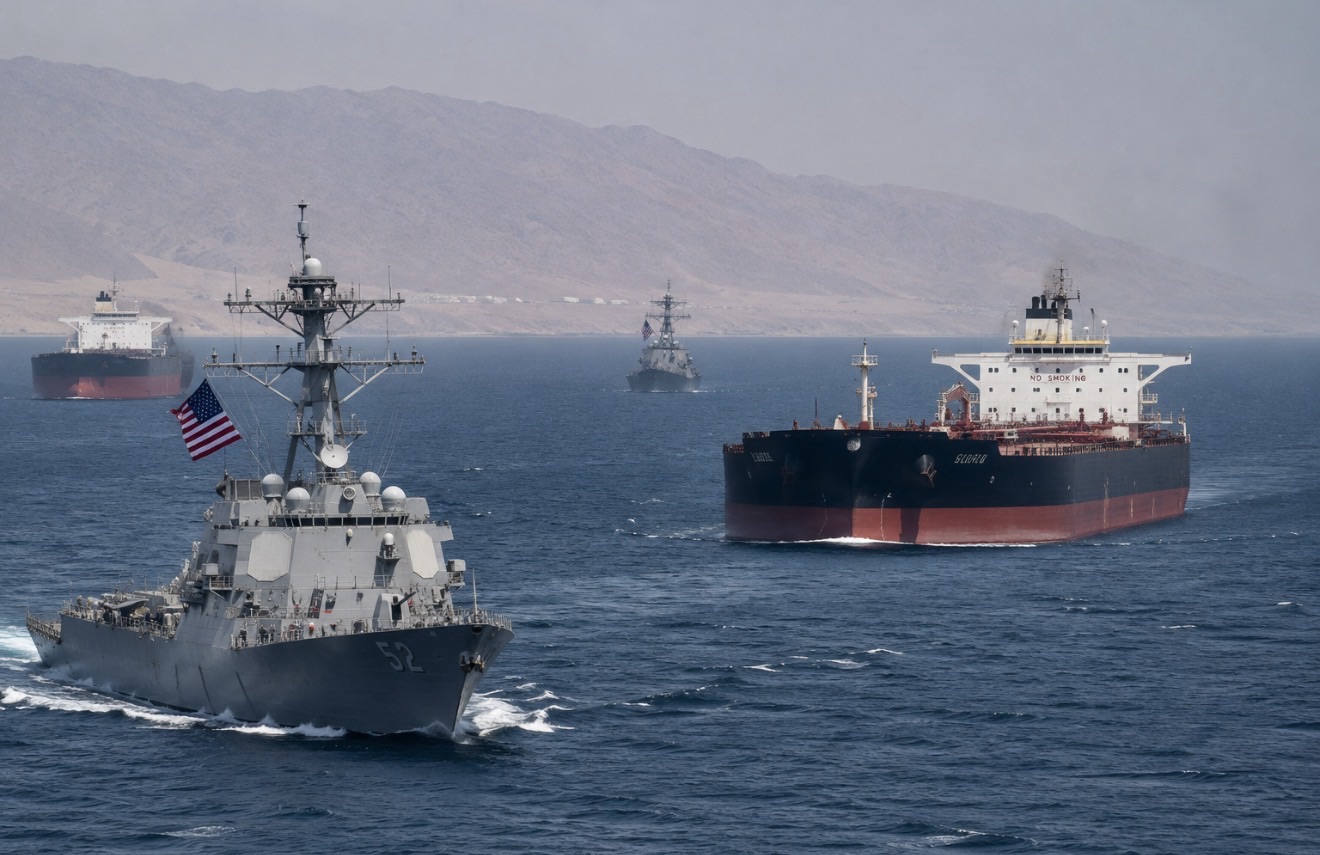
By his own account, the strategy is producing results on the water. Wright said the seven-day trailing average of oil moving through the strait stands at just under seven million barrels a day, with a comparable volume flowing through bypass pipelines, putting total throughput from the region near 14 million barrels a day. That figure, he said, amounts to roughly two-thirds of pre-conflict traffic and a substantial recovery from the near-standstill seen in March. American naval escorts moving vessels through Omani territorial waters in the southern portion of the strait are, in his telling, what prevents Iran from interdicting commercial shipping.
The economic logic behind the toll refusal is straightforward. A per-barrel fee at Hormuz would function as a permanent tax on a large share of the world’s crude and liquefied natural gas, raising costs for every economy that depends on Gulf energy and handing Iran a durable stream of revenue and geopolitical leverage. By refusing to institutionalize such fees, Washington is trying to ensure the strait remains a free passage rather than a tollbooth Tehran controls.
The administration is pairing that hard line with a bet on supply. The push to expand domestic output is meant to loosen global balances and blunt the price impact of any Gulf disruption, reducing the leverage that a chokepoint like Hormuz confers on whoever can threaten it. The theory is that the more oil the United States and its partners can put on the market, the less any single waterway can be used as a pressure point against the global economy.
The approach is not without cost or risk. Sustained naval operations in a contested strait carry the constant possibility of escalation, and the recovery in shipping volumes remains incomplete. Iran retains the ability to harass traffic, lay mines, and stage attacks that inject fresh uncertainty into energy markets even without formally closing the waterway. Each flare-up tends to push prices higher, and the strait’s status can shift quickly depending on the pace of strikes and counterstrikes.
For companies exposed to energy costs, the policy offers a measure of reassurance that Washington will not allow a toll regime to permanently raise the price of Gulf oil. But it also ties the stability of a critical supply route to the continuation of an active military commitment, one whose duration and intensity remain uncertain nearly five months into the conflict. The strait stays open for now on American terms — and on the assumption that the escorts keep running.
JBizNews Desk | Washington, D.C.
© JBizNews.com All Rights Reserved. Reproduction or distribution without written permission is prohibited.