
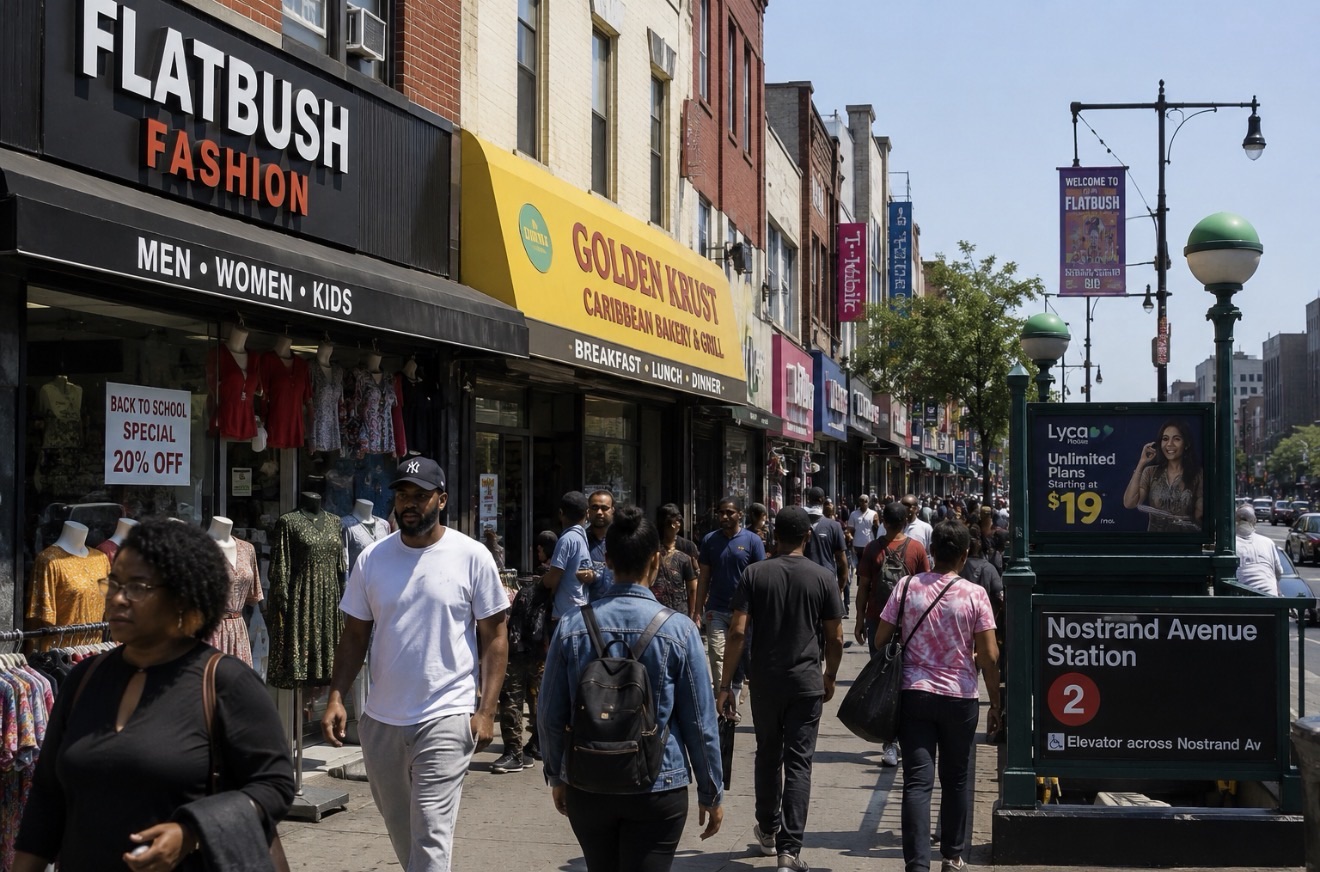

New findings from the Flatbush–Nostrand Junction Business Improvement District show rising import costs are forcing neighborhood businesses to rethink pricing, inventory and growth plans.
BROOKLYN, N.Y. — Tuesday, July 21, 2026 — A new survey released by the Flatbush–Nostrand Junction Business Improvement District found that many small businesses across one of Brooklyn’s busiest commercial corridors are under growing financial pressure as higher tariffs continue raising the cost of imported goods while customer traffic remains uneven.
The findings offer a snapshot of the challenges confronting independent businesses throughout New York City. The survey found that 90% of participating businesses reported higher operating costs linked to tariffs, while 70% said customer traffic has declined, leaving many owners balancing higher expenses against consumers who remain cautious about discretionary spending.
For neighborhood merchants, the pressure begins long before a customer enters the store.
Retailers say wholesale prices have climbed on products ranging from clothing and electronics to household goods and restaurant supplies. Many businesses have absorbed part of those increases to remain competitive, but owners say doing so has steadily reduced already-thin profit margins.
Others have taken a different approach.
Some merchants have raised prices selectively, ordered smaller inventories or delayed expansion plans until costs become more predictable. Several businesses reported placing greater emphasis on online sales and local delivery services to offset softer foot traffic and broaden their customer base.
The report illustrates how international trade policy is increasingly affecting neighborhood commercial districts rather than only large importers and manufacturers.
Unlike major national retailers that can negotiate volume discounts or diversify supply chains, many independent businesses depend on smaller overseas suppliers and have fewer options when costs increase. That leaves owners making difficult decisions about pricing, staffing and future investment.
Business leaders warn that prolonged cost pressures could eventually slow hiring and discourage new investment along commercial corridors that depend heavily on locally owned businesses. While many merchants remain optimistic that supply chains and pricing will stabilize, they say the coming months—particularly the holiday shopping season—will be critical.
Consumers are already beginning to feel the effects.
Higher wholesale costs are gradually working their way into everyday retail prices, meaning shoppers may pay more for clothing, gifts, household items and restaurant meals even as overall inflation has moderated from its recent peaks.
For Brooklyn’s independent business community, the survey underscores a broader reality: global trade policy is no longer an issue affecting only ports, manufacturers and multinational corporations. It is increasingly shaping decisions made every day by neighborhood retailers trying to remain competitive while continuing to serve their communities.
JBizNews Desk | Wall Street
© JBizNews.com. All Rights Reserved. Reproduction or distribution without written permission is prohibited.