
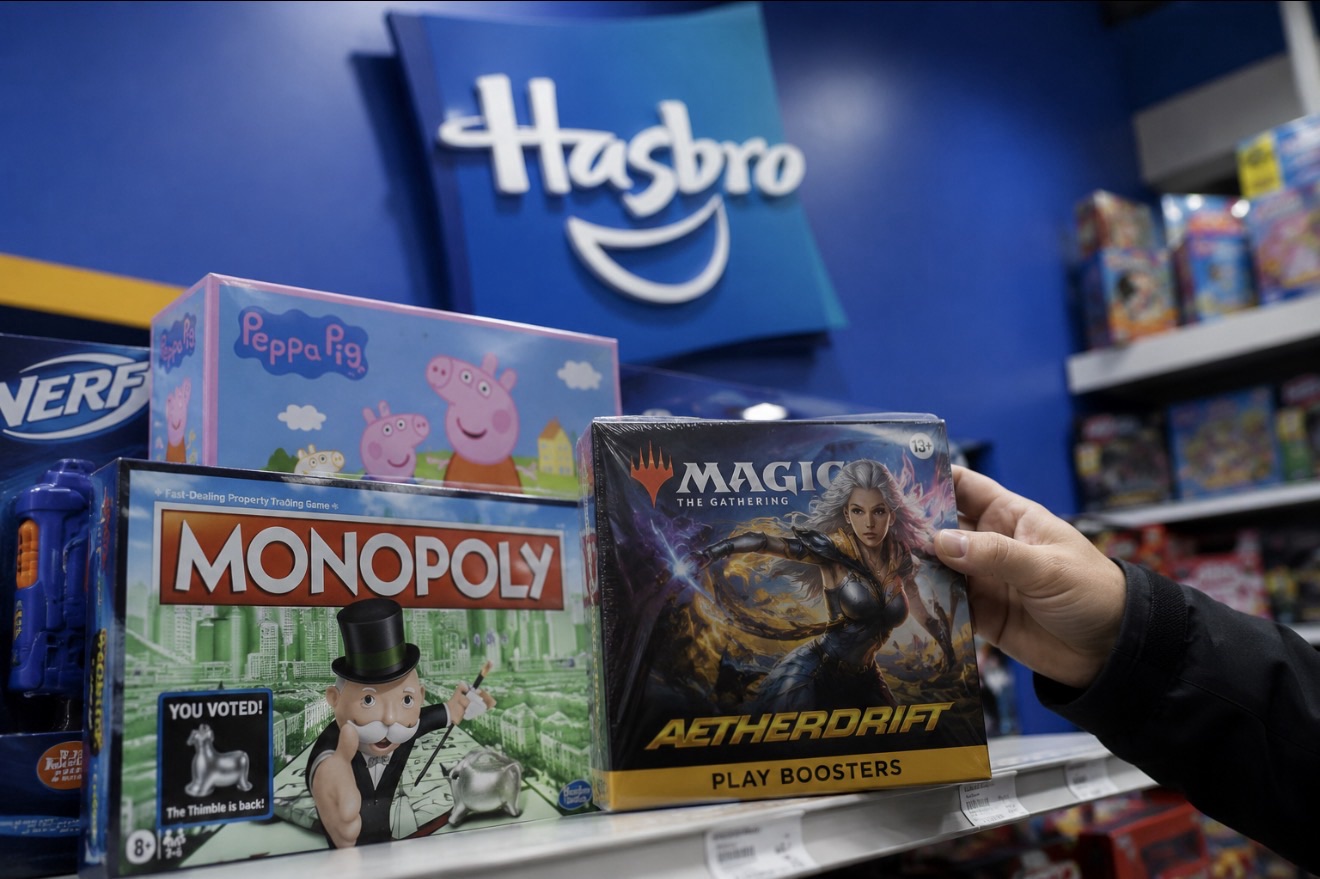

The toy maker lifted its full-year forecast after strong demand for collectible games and licensed brands helped deliver another quarter of better-than-expected results.
PAWTUCKET, R.I. — Tuesday, July 21, 2026 — Hasbro raised its financial outlook Tuesday after reporting second-quarter results that exceeded Wall Street expectations, signaling that consumers continue spending on premium games, trading cards and well-known entertainment brands even as broader discretionary spending remains uneven.
The stronger outlook was driven by a business that looks very different from the Hasbro of a decade ago. Rather than relying primarily on traditional toy aisles, the company has increasingly built its growth around higher-margin franchises such as Magic: The Gathering and Dungeons & Dragons, businesses that generate recurring revenue through new card releases, digital content, organized tournaments and dedicated collector communities.
That strategy paid off again during the latest quarter.
Revenue rose 16% from a year earlier to approximately $1.14 billion, comfortably ahead of analysts’ expectations, while adjusted earnings also surpassed forecasts. Management responded by raising its full-year guidance, reflecting confidence that demand for its biggest brands will remain strong through the important holiday shopping season.
The company’s Wizards of the Coast and Digital Gaming division once again led the way. Magic: The Gathering continued delivering record sales as collectors and competitive players purchased newly released card sets, while Dungeons & Dragons benefited from continued interest across tabletop gaming, digital platforms and licensing opportunities.
Traditional consumer products also contributed. Board games, Peppa Pig, Play-Doh, Monopoly, Nerf and licensed Disney merchandise all produced solid results, helping offset continued softness in the company’s entertainment business, where television and film production remain under pressure.
For Hasbro, the shift reflects a broader transformation underway throughout the toy industry.
Companies are discovering that products generating repeat purchases often produce steadier earnings than toys purchased only during birthdays or the holiday season. Trading-card games encourage customers to buy every new expansion. Digital gaming creates recurring engagement. Popular intellectual property supports licensing deals, merchandise, streaming content and live events, extending revenue opportunities well beyond the initial sale.
That evolution has changed how investors evaluate toy companies.
Rather than focusing solely on seasonal retail performance, analysts increasingly measure the strength of gaming ecosystems, digital engagement and brand loyalty. Businesses capable of building long-term communities around their products generally command stronger margins and more predictable cash flow than companies dependent on one-time toy purchases.
Hasbro’s latest results reinforce that trend.
Management now expects full-year revenue growth of roughly 5% to 7% while also increasing its adjusted EBITDA outlook, reflecting confidence that the momentum seen during the first half of the year can continue through the remainder of 2026. Investors welcomed the improved forecast, pushing shares higher following the earnings release.
The results also offer encouraging news for retailers heading into the second half of the year. Although consumers remain selective amid higher borrowing costs and persistent inflation in many household expenses, they continue spending on products that deliver lasting entertainment value or appeal to passionate hobby communities. Collectible games have proven particularly resilient because dedicated players often prioritize those purchases regardless of broader economic conditions.
Competition, however, continues to intensify.
Mattel, video-game publishers and independent tabletop companies are all investing aggressively in gaming, collectibles and franchise-based entertainment, recognizing that the fastest-growing opportunities increasingly extend beyond traditional toys. Hasbro’s challenge will be maintaining the pace of innovation while keeping its flagship brands fresh enough to retain loyal fans and attract new generations of players.
The quarter suggests that strategy continues to work.
As the company enters the all-important holiday selling season, investors will be watching whether premium trading cards, digital gaming and iconic brands can once again outperform the broader toy market—and whether Hasbro’s transformation into a diversified gaming and entertainment company continues delivering the steady growth that traditional toy manufacturers have often struggled to achieve.
JBizNews Desk | Wall Street
© JBizNews.com. All Rights Reserved. Reproduction or distribution without written permission is prohibited.