
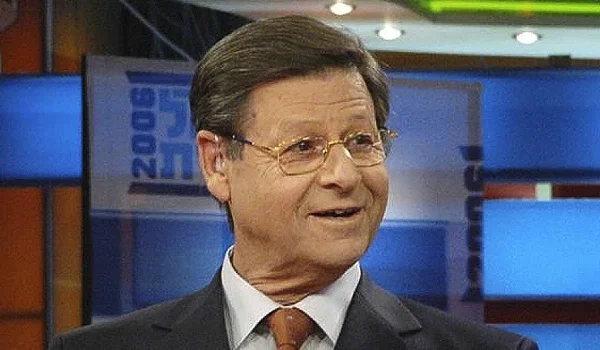

JERUSALEM (VINnews) — Veteran Israeli journalist, news anchor, and filmmaker Haim Yavin has died at the age of 93. His funeral will be held on Friday at 11:00 a.m. at Givat HaShlosha Cemetery, where family members, colleagues, and members of Israel’s media community are expected to gather to pay their final respects.
Yavin, who played a central role in shaping Israel’s public broadcasting landscape for nearly four decades, was widely regarded as one of the country’s most recognizable television personalities and earned the nickname “Mr. Television.”
Born Heinz Kluger in Germany in 1932, Yavin immigrated to Mandatory Palestine with his family in 1933. He began his broadcasting career in the 1950s at Kol Yisrael radio, working as both an announcer and editor.
When Israeli television was established in the late 1960s, Yavin was among its founding broadcasters and one of the first news presenters to appear on screen. He quickly became the face of public television, serving for decades as the chief anchor of Mabat, Israel’s flagship nightly news program, and helping define the role of the television news anchor in Israel.
Throughout his distinguished career, Yavin reported on many of the most dramatic moments in Israel’s history. He is best remembered for coining the term “Mahapach” (“political upheaval”) during the live broadcast of the 1977 Knesset elections, when he announced the historic victory of Menachem Begin’s Likud Party, ending decades of Labor Party rule. The phrase has since become a permanent part of Israel’s political vocabulary.
In addition to his work as a news anchor, Yavin held several senior positions within Israel’s public broadcasting system, including Director of the News Division and Director of Israeli Television.
After retiring from Mabat, Yavin devoted himself to producing documentary series and films examining complex social and political issues. Among the subjects he explored was the relationship between Israeli society, the media, and the charedi community. While expressing admiration for the world of Torah study and Jewish tradition, he also voiced concern over what he viewed as the growing distance between the charedi public and the institutions of the State of Israel. His documentaries sought to foster dialogue and deepen understanding of the cultural and ideological differences between the communities.
In recognition of his decades-long contribution to Israeli journalism and broadcasting, Yavin was awarded the Israel Prize for Communications in 2010.