
 JBizNews
Tesla’s CFO Says Capital Spending Will Keep Climbing for the Next Two to Three Years
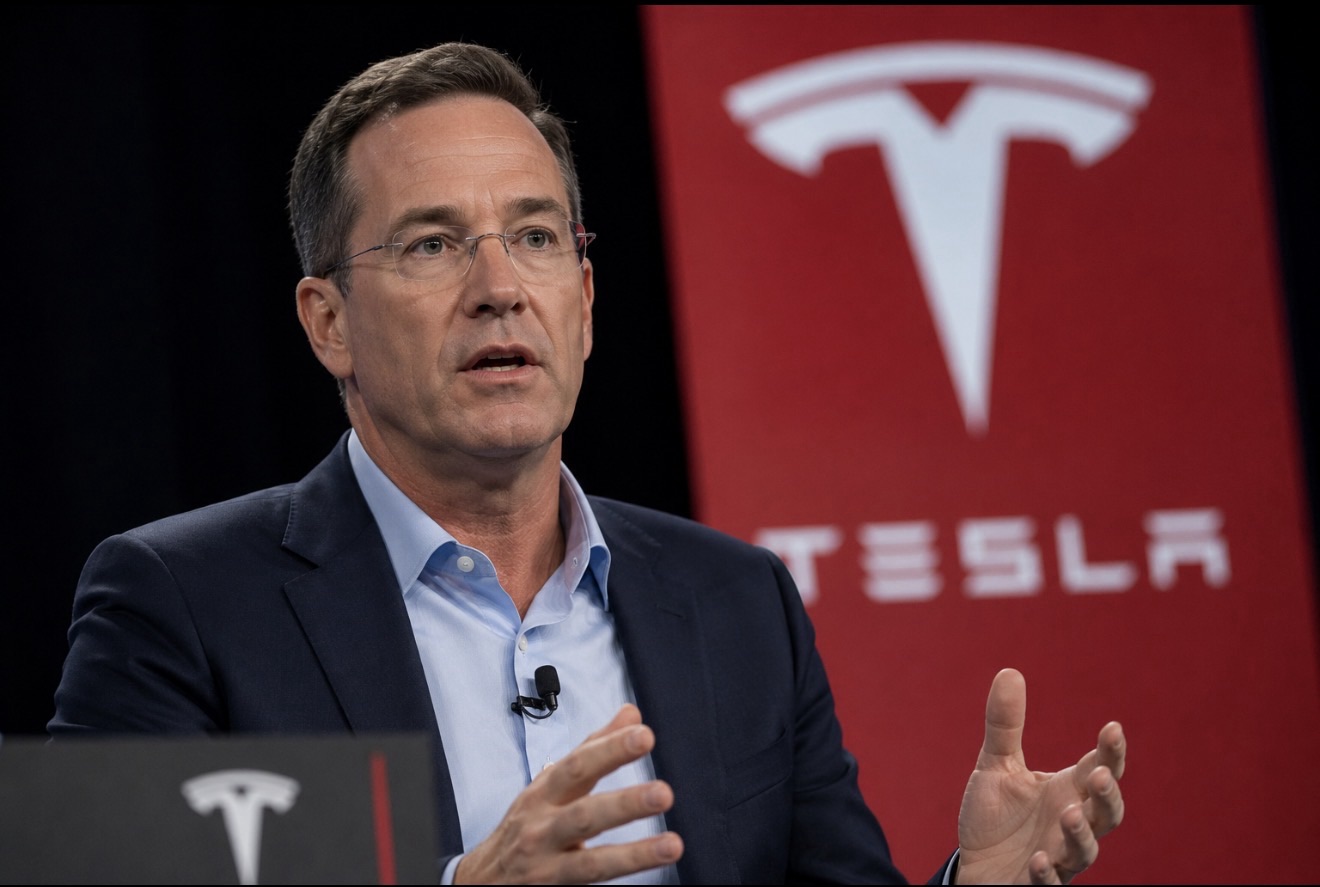
Tesla Chief Financial Officer Vaibhav Taneja told investors Wednesday that the company’s capital spending will continue rising for the next two to three years, extending an aggressive investment cycle as the automaker pours money into artificial intelligence, robotics, and new manufacturing capacity.
The guidance came alongside second-quarter results that underscored just how much cash Tesla is now committing to its transformation. Capital expenditures in the quarter soared 142 percent to $5.79 billion, up from $2.39 billion a year earlier. Taneja reaffirmed that full-year capex will exceed $25 billion in 2026 — roughly three times what the company spent annually in prior years — and signaled that the elevated pace is not a one-time surge but the start of a multi-year buildout.
That spending is spread across several fronts at once. Tesla told shareholders that capacity expansion tied to AI compute, solar, battery materials, and semiconductor manufacturing is already underway, layered on top of production ramps for its Optimus humanoid robot and Cybercab. The company is funding six factories in various stages of construction, along with data-center infrastructure to support its AI ambitions. Chief Executive Elon Musk described 2026 as a “massive capex” year, framing the outlays as the foundation for Tesla’s pivot from an automaker toward an AI and robotics company.
The financial trade-offs were visible in the quarter. Tesla posted revenue of $28.24 billion, up 26 percent from a year ago and ahead of Wall Street’s roughly $26.3 billion consensus. But adjusted earnings of $0.33 per share fell well short of the $0.50 analysts expected, and adjusted EBITDA of $3.27 billion missed the $4 billion forecast. The company continued to burn free cash flow, though at $1.09 billion the deficit came in smaller than the $3.64 billion analysts had penciled in. Investors reacted cautiously, sending Tesla shares down more than 3 percent in after-hours trading.
The pattern echoes Tesla’s first-quarter call, when the stock erased gains after Taneja raised full-year capex guidance by $5 billion. The central tension for shareholders remains the same: the company is committing its largest-ever capital outlay precisely as several of the businesses meant to justify that spending — Optimus, the robotaxi fleet, and AI infrastructure — have yet to generate meaningful revenue. Taneja has acknowledged Tesla is in a very large capital-investment phase and warned that negative free cash flow would persist, but has argued the strategy is necessary to position the company for its next era.
Tesla can afford the bet for now. The company reported $44.7 billion in cash and short-term investments earlier this year, a cushion that gives it room to sustain heavy spending without immediately turning to debt or issuing new shares that would dilute existing holders. Still, the sheer scale of the commitment raises questions about how long that buffer lasts if quarterly cash shortfalls run in the billions, and whether the returns on a rapidly expanding asset base will materialize on the timeline management is promising.
The spending push comes as Tesla works to recover from consecutive years of declining vehicle deliveries. The core auto business has faced intensifying pressure from Chinese automakers — including BYD, Nio, and Xiaomi — that are selling affordable, technology-rich electric vehicles in markets around the world. That competitive squeeze is part of what is driving Musk to reposition Tesla around AI and automation, where he argues the company’s long-term value now lies, rather than defending margins in an increasingly crowded EV market.
Musk also fielded renewed speculation about deeper ties between Tesla and his rocket company, SpaceX, which collaborate on projects including the Terafab chip effort and various AI initiatives. Asked whether the two companies might merge, Musk acknowledged there was overlap but said he couldn’t discuss combining companies on an earnings call.
For investors, Taneja’s two-to-three-year capex outlook reframes the timeline for judging Tesla’s strategy. The question is no longer whether the company can build cars, but whether a valuation resting heavily on unproven AI and robotics businesses can be sustained through an extended stretch of rising spending and negative cash flow. Wednesday’s report offered progress on revenue but left the core debate unresolved — and pushed the answer further out on the horizon.
JBizNews Desk | Austin, Texas
© JBizNews.com All Rights Reserved. Reproduction or distribution without written permission is prohibited.