
 JBizNews
Musk Promises Tesla’s Massive AI Bet Will Pay Off Big as Investors Press for Proof
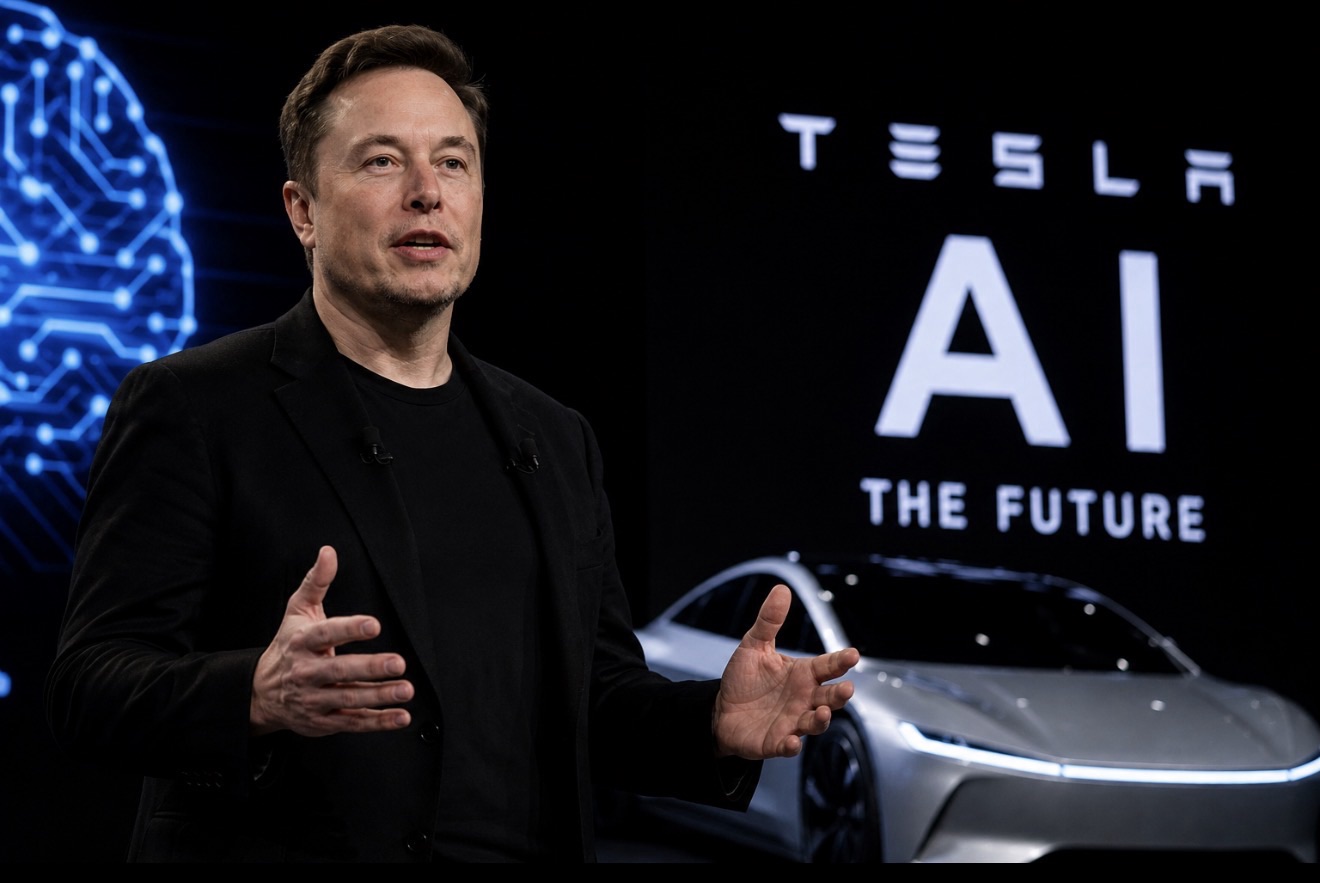
Elon Musk used Tesla’s second-quarter earnings call Wednesday to make his case directly to skeptical investors, insisting that the company’s enormous spending on artificial intelligence and robotics will ultimately deliver outsized rewards even as the near-term costs weigh on profits.
“This is a massive capex year,” Musk told analysts, adding that he was confident the investments the company is making will yield “incredible returns.” The pitch is by now familiar: Musk has spent the past two years recasting Tesla from an electric-vehicle maker into what he calls a physical AI company, built around self-driving robotaxis, the Optimus humanoid robot, and the computing infrastructure needed to run them. Wednesday’s message to shareholders was, once again, to judge the company less by what it sells today than by what it promises to deploy tomorrow.
The operational numbers gave Musk something to work with. Tesla delivered 480,126 vehicles in the quarter, up sharply from 384,122 a year earlier and ahead of Wall Street’s expectations — a rebound in the core auto business after a stretch of declining deliveries. Revenue reached $28.24 billion, comfortably above the roughly $25.7 billion analysts had projected. The energy division continued to emerge as a genuine counterweight to autos: Tesla deployed 13.5 gigawatt-hours of energy storage in the quarter, up from 8.8 gigawatt-hours in the first quarter and 9.6 a year ago, riding demand for grid-scale batteries tied to renewables, data centers, and network stability.
But the profitability picture complicated the story. Adjusted earnings of $0.33 per share fell well short of the roughly $0.51 analysts expected, and automotive gross margin came in at 16.3 percent, below the 18 percent Wall Street had modeled. The gap between strong top-line growth and shrinking margins captures the central bet: Tesla is trading current profitability for an AI-and-robotics future that has yet to prove itself commercially.
That is where investor patience is being tested. The businesses Musk points to as the source of those “incredible returns” remain early. Tesla’s robotaxi service, which Musk once said would reach half the U.S. population by the end of last year, currently runs in only a handful of cities after a broader rollout failed to materialize on schedule. On Full Self-Driving, the company has not released the kind of intervention-rate data that would let outside observers independently verify how close the technology is to genuine autonomy. Optimus, which Musk has described as potentially Tesla’s biggest product ever, has not yet reached production scale.
Retail shareholders have made their impatience plain. Ahead of the call, nearly all of the most popular questions submitted through Tesla’s investor relations site focused on the AI strategy — robotaxis, Optimus, Full Self-Driving, and the Cybercab — with one top-ranked question bluntly asking what is holding the company back from hitting the targets it set for itself. The gap between Musk’s timelines and Tesla’s delivered results has become the defining tension around the stock.
The scale of the wager is enormous. Tesla has committed to more than $25 billion in capital spending this year, roughly three times its 2025 outlay, directed at AI training, chip design, robotaxis, and humanoid robots. The company has told investors to expect negative free cash flow as that money goes out the door, and management has signaled the elevated spending will persist for years. To support the effort, Tesla has been ordering chip-making equipment and deepening a partnership with Intel on advanced AI chips, extending its ambitions into semiconductor production itself.
One tailwind has come from an unexpected direction. The surge in gasoline prices following the outbreak of the U.S.-Iran conflict earlier this year has helped lift EV demand, feeding the cash flow that partly funds Tesla’s AI push — a reminder of how tightly the company’s fortunes remain tied to the traditional auto market even as Musk points it elsewhere. Vehicles still account for roughly 70 percent of Tesla’s revenue.
For now, Musk is asking investors to extend their patience on the strength of his conviction. Whether that conviction converts into the returns he is promising — and on what timeline — is the question Wednesday’s report left hanging, as it has for several quarters running.
JBizNews Desk | Austin, Texas
© JBizNews.com All Rights Reserved. Reproduction or distribution without written permission is prohibited.