
 JBizNews
Corporate Earnings Roundup: Lockheed Raises Outlook, Honeywell Lifts Forecast, American Cuts Guidance as Wall Street Awaits Intel
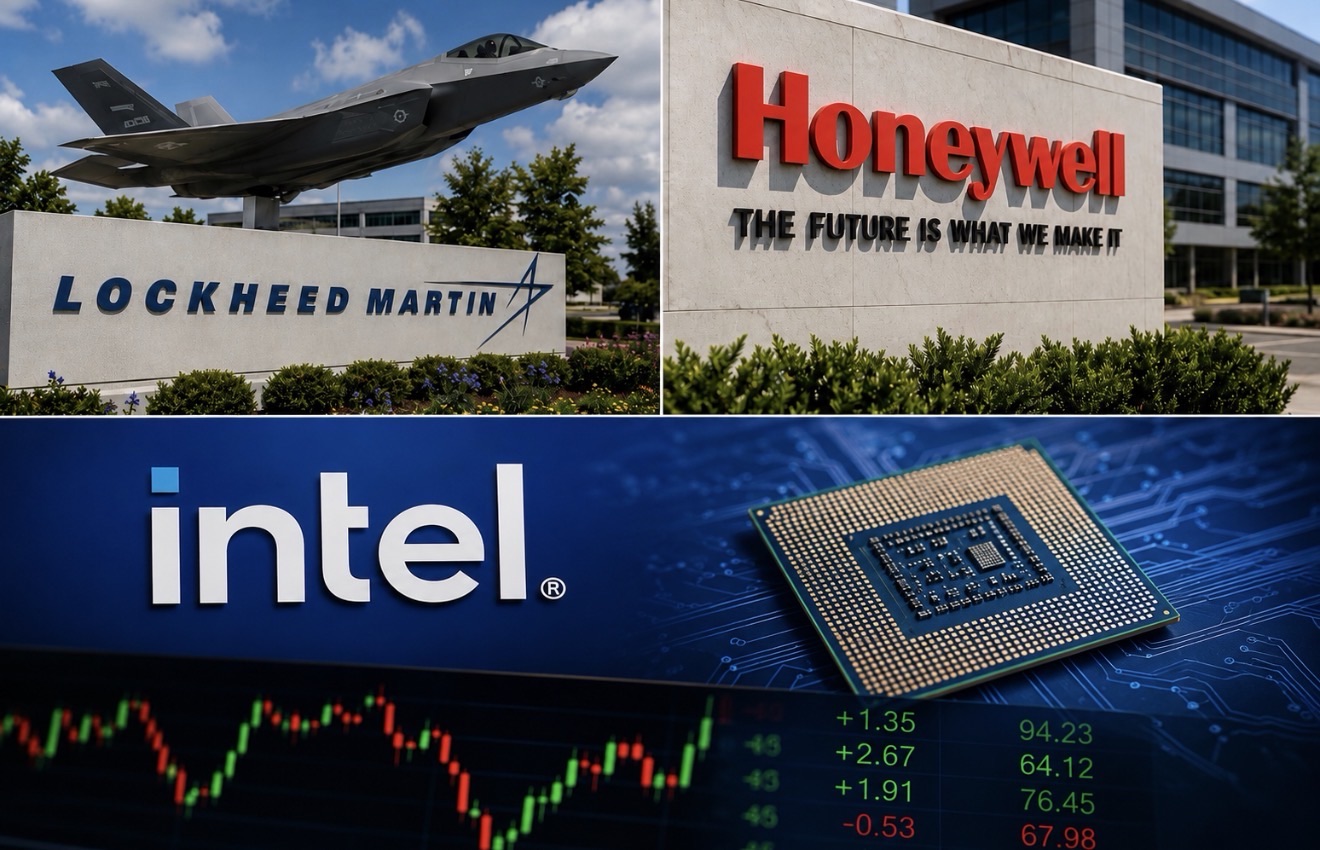
NEW YORK — Thursday, July 23, 2026: A wave of corporate earnings released Thursday painted a mixed picture of the U.S. economy, with defense and industrial companies benefiting from sustained government spending and investment in automation, while higher fuel prices weighed heavily on the airline industry. The reports from Lockheed Martin, Honeywell Technologies and American Airlines, together with anticipation surrounding Intel’s closely watched earnings after the closing bell, offered investors one of the clearest snapshots yet of where corporate America is finding growth—and where rising costs continue to pressure profits.
The earnings arrived as Wall Street traded sharply lower, with investors balancing another surge in oil prices, record artificial intelligence spending by technology companies, and fresh corporate guidance that highlighted the growing divide between sectors benefiting from structural demand and those facing inflationary headwinds.
Lockheed Martin Benefits From Rising Global Defense Spending
Among Thursday’s strongest reports came from Lockheed Martin, which raised its full-year sales and earnings outlook after reporting stronger-than-expected second-quarter results fueled by accelerating global demand for missile defense systems, fighter aircraft and precision weapons.
The company posted $20.1 billion in quarterly revenue, an 11% increase from a year earlier, while net earnings rose to $1.84 billion, or $7.94 per diluted share. Sales were driven by increased production of PAC-3 missile interceptors, THAAD air-defense systems, Precision Strike Missiles, and continued deliveries of the F-35 Joint Strike Fighter.
Lockheed also reported a record backlog of approximately $230 billion, reflecting strong demand from the U.S. Department of Defense and allied governments across Europe, Asia and the Middle East. The company raised its full-year revenue and earnings guidance, reinforcing expectations that global defense spending will remain elevated as nations continue rebuilding military inventories and modernizing defense capabilities.
For manufacturers throughout the aerospace supply chain, the report signals continued demand for advanced electronics, precision components, composite materials and industrial production.
Honeywell Sees Automation Investment Continue
Industrial technology also remained resilient.
Honeywell Technologies increased its full-year earnings forecast after reporting stronger-than-expected revenue during its first quarterly report as a standalone automation company following the separation of its aerospace business.
Quarterly sales increased to $9.72 billion, while orders continued exceeding shipments, expanding the company’s backlog to roughly $38 billion. The strongest growth came from building automation, warehouse technology, industrial software and digital infrastructure, areas benefiting from continued investment in artificial intelligence, data centers, logistics modernization and energy-efficient commercial buildings.
Management raised its adjusted earnings outlook for the year, citing improving order trends and sustained customer investment despite higher interest rates and broader economic uncertainty.
The results suggest businesses continue prioritizing productivity-enhancing technologies, even as other areas of capital spending remain under pressure.
American Airlines Posts Record Revenue but Lowers Profit Outlook
The transportation sector presented a very different picture.
American Airlines reported the highest quarterly revenue in its history, generating $16.7 billion, yet reduced its full-year earnings guidance after rapidly rising jet fuel prices eroded profitability.
The airline reported GAAP net income of $71 million, down sharply from $599 million during the same quarter last year, as fuel expense increased by more than $2.2 billion year over year.
Management lowered its adjusted earnings outlook for 2026, warning that higher energy prices linked to renewed geopolitical tensions are expected to continue weighing on operating margins through the remainder of the year.
Despite resilient passenger demand and stronger ticket pricing, American acknowledged that rising fuel costs are offsetting much of the industry’s revenue growth.
The results also reinforce concerns that transportation companies—including airlines, freight carriers and logistics firms—could remain among the sectors most vulnerable if oil prices continue climbing during the second half of the year.
Intel Becomes Wall Street’s Next Major Test
Attention now shifts to Intel, which is scheduled to report second-quarter results after Thursday’s closing bell.
The semiconductor company is expected to deliver one of the quarter’s most closely watched earnings reports as investors look for evidence that billions of dollars being invested across the technology sector into artificial intelligence are beginning to generate measurable financial returns.
The report follows earnings from Alphabet and Tesla, both of which highlighted unprecedented capital spending on AI infrastructure while raising new questions about when those investments will translate into stronger profitability.
Investors will focus on Intel’s progress in expanding AI chip production, improving its contract manufacturing business, strengthening data-center demand and updating guidance for the remainder of 2026. Management’s commentary is also expected to provide insight into enterprise technology spending, semiconductor demand and the broader outlook for the AI economy.
A Growing Divide Across Corporate America
Taken together, Thursday’s earnings reveal a widening divergence across industries.
Defense manufacturers continue benefiting from increased government procurement and long-term military modernization programs. Industrial technology companies are seeing sustained investment in automation, digital infrastructure and artificial intelligence. Meanwhile, transportation companies are confronting higher operating costs driven largely by rising energy prices.
That divergence is becoming increasingly important for investors as elevated interest rates, geopolitical uncertainty and commodity price volatility create different operating environments across industries.
For business owners, the reports also highlight broader economic trends extending beyond quarterly earnings. Strong corporate investment in automation and infrastructure continues supporting manufacturing demand, while rising oil prices threaten to increase transportation, freight and travel costs throughout the economy.
Wall Street will now turn its attention to Intel’s earnings later Thursday, which could further shape expectations for technology spending and determine whether corporate America’s largest AI investments are beginning to deliver the financial returns investors have been waiting for.
JBizNews Desk | Wall Street
© JBizNews.com All Rights Reserved. Reproduction or distribution without written permission is prohibited