
 Matzav
Petition Calls on Burnham to Reinstate Margaret Thatcher Portrait to 10 Downing Street
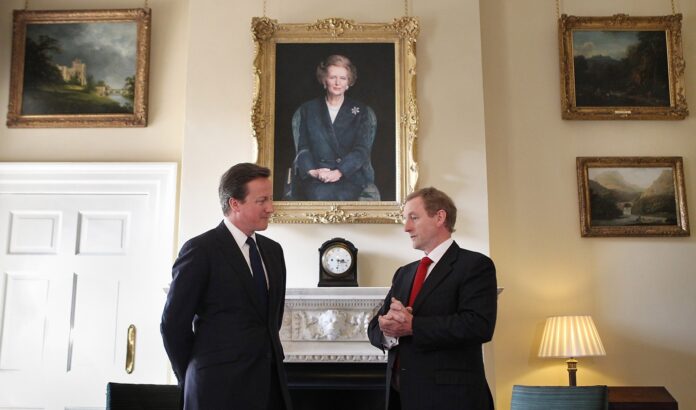
A new petition is urging Britain’s Labour government to return a portrait of former Prime Minister Margaret Thatcher to its longtime place inside 10 Downing Street, arguing that the official residence should preserve the nation’s history regardless of the political views of the government currently in power.
The controversy began shortly after Labour won the 2024 general election, when then-Prime Minister Sir Keir Starmer ordered the portrait of the Iron Lady removed from the Thatcher Room, the office she used as her study during her years at Number 10.
At the time, Starmer rejected accusations that the decision was politically motivated, explaining that he simply preferred not to work beneath portraits of former leaders. He said he disliked “pictures of people staring down at me” and instead favored landscape paintings. Critics, however, pointed to the fact that Chancellor Rachel Reeves later displayed a portrait of Communist Party of Great Britain co-founder Ellen Wilkinson in her own Downing Street office.
With Starmer having left office after just over two years as prime minister, the Margaret Thatcher Centre says the time has come to restore the portrait to its original location. The charitable organization, which promotes the legacy and principles of Baroness Thatcher, has launched a public petition calling for the painting’s return.
The petition specifically seeks the reinstatement of Richard Stone’s portrait of Thatcher—painted after Britain’s victory in the Falklands War—to the Thatcher Room at 10 Downing Street. It also calls for future governments to adopt a policy ensuring that portraits of former prime ministers remain on display “as a matter of historical record,” rather than allowing them to be removed “according to the preference of the incumbent.”
“Number 10 is not a private residence. It is the working seat of government and a building held in trust for the nation, in which the record of those who have faithfully served is properly displayed. The portraits that hang there are not endorsements of a programme. They are an acknowledgement of office, and of history. Gordon Brown understood this when he commissioned a painting of a Prime Minister drawn from the opposing party,” the centre argued.
The organization further contended that removing Thatcher’s portrait from the very room named in her honor undermines Britain’s historical record and opens the door for future prime ministers to selectively erase the legacy of their predecessors.
“To remove the likeness of the first woman ever to lead this country from the room that bears her name is to treat our history as a matter of personal comfort. It sets a precedent by which any future occupant of Number 10 may quietly edit the record of those who came before. It also denies a new generation the sight of a woman who reached the highest office in the land at a time when no woman had done so before.”
The Centre also emphasized Thatcher’s historic place in British politics, noting that she not only became the nation’s first female prime minister but also served longer than any other prime minister during the twentieth century.
According to the organization, Thatcher’s time in office transformed Britain through major domestic and international achievements.
During her tenure, the Centre said, she “led the country to victory in the Falklands, led this country to victory in the South Atlantic, restored its standing among the nations of the world, and gave millions of families the dignity of owning their own homes, and gave millions more a stake in the economic future of the country through privatisation.”
“She remains one of the towering figures of our national life,” the charity proclaimed.
The petition arrives as newly installed Prime Minister Andy Burnham begins his tenure. Although Burnham has not expressed the same dislike of portraits as Starmer, he has long made opposition to Thatcherism a central feature of his political identity.
In his first national address on Monday, Burnham argued that Britain’s current economic challenges stem from policies enacted by Thatcher’s government during the 1980s rather than from the decisions of more recent administrations.
Even so, the Thatcher Centre pointed out that Burnham has also pledged to improve the tone of British politics and move away from partisan “point scoring.”
“Here is a modest but telling opportunity to do precisely that. Returning the portrait would cost the public purse nothing. It would require no legislation and no inquiry. It would simply affirm that the office of Prime Minister stands above the party that happens to hold it, and that the achievements of Baroness Thatcher belong to the nation rather than to a storeroom,” the charity said.
“We do not ask the Prime Minister to share her convictions. We ask him to honour the office she held with such distinction, and the history she made in holding it.”