
 Matzav
Iranian Plot Against Trump Forced Air Force One Switch During NATO Trip, Report Says
A credible threat from Iranian proxy forces against President Trump and Air Force One prompted a last-minute change of aircraft during this month’s NATO summit in Turkey, according to multiple officials familiar with the matter. The incident has also renewed questions about the security capabilities of the Boeing 747-8 donated by Qatar, which Trump had begun using for official travel.
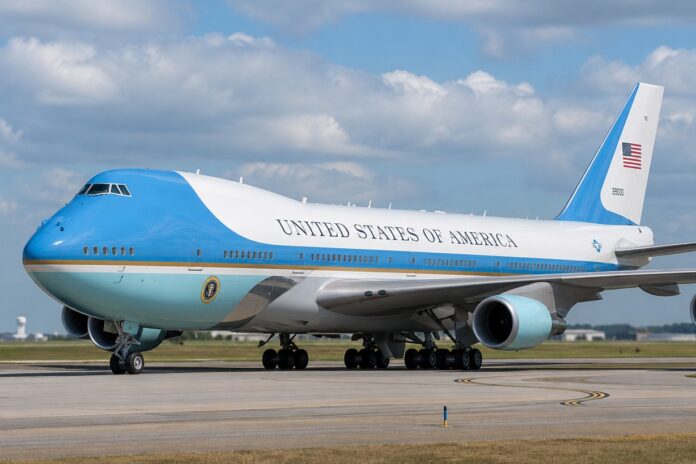
Trump arrived in Ankara aboard the Qatari-donated jet, a newer aircraft that lacks many of the sophisticated defensive systems installed on the traditional Air Force One fleet. According to officials, intelligence indicating a credible threat emerged while the president was attending the summit.
After U.S. authorities detected the danger, the Secret Service recommended that Trump abandon the newer aircraft and instead depart Turkey aboard the older Air Force One. The president later publicly confirmed that he would be leaving on the older plane.
The newly disclosed details help explain the White House’s rapid decision to replace the aircraft before Trump’s departure. They also highlight ongoing concerns about the defensive capabilities of the donated jet, which Trump had pushed to place into service as quickly as possible.
Officials emphasized that the intelligence did not indicate the newer aircraft itself was being specifically targeted. Rather, the threat was directed at Trump regardless of which plane he was traveling aboard.
People familiar with the matter spoke on condition of anonymity because they were not authorized to discuss the classified information publicly.
The White House declined to comment directly on the report. However, a senior administration official pointed to Trump’s own public comments regarding Iranian assassination plots and expressed confidence in the security precautions taken to protect the president and his delegation. The official also spoke anonymously.
According to those briefed on the matter, knowledge of the specific intelligence was tightly restricted within the administration. Many officials were told only that the aircraft change was a precaution stemming from broader concerns involving Iran, and congressional leaders reportedly were not informed about the precise nature of the threat.
Trump initially explained the aircraft swap by saying it would allow American service members stationed in Britain to tour the newer plane, while rejecting suggestions that the decision was motivated by security concerns. The New York Times later reported that the Secret Service had advised him to switch aircraft.
After The New York Times published a report this month detailing significant federal concerns over the donated aircraft’s security features, the government opened a leak investigation seeking grand jury testimony from several Times reporters, along with phone records belonging to them and certain relatives. The Justice Department withdrew those subpoenas on Thursday.
Trump appeared to acknowledge on Sunday that the donated jet still lacks some of the defensive technology installed on the older Air Force One aircraft. When asked about the absence of antimissile systems, he responded that the aircraft would soon be “maxed out.” Although the approximately 14-year-old plane underwent an extensive retrofit to serve as Air Force One, officials have acknowledged the process was completed on an accelerated timetable.
Around the time of the aircraft switch, reports surfaced that Israel had shared intelligence with Washington concerning Iranian efforts to assassinate Trump. Some U.S. officials questioned the reliability of that intelligence, believing it may have been intended to encourage a stronger American military response against Iran.
According to several people familiar with the matter, however, the threat that prompted the Air Force One change in Turkey was unrelated to the intelligence attributed to Israel.
While Trump was attending the summit in Ankara, approximately 1,000 miles from Tehran, the United States resumed military strikes against Iran. During the conference, Trump openly discussed Iran’s repeated attempts to assassinate him when asked why he had abandoned the Qatari aircraft.
“They want to take out the U.S. leader — me,” he said. “I’m on every list. I saw this morning, I’m on every single one of their lists. And so far, I guess I’ve been a little bit lucky, but that maybe doesn’t last very long.”
Iran-linked groups have sought to target Trump for years, dating back to his first term after the U.S. military killed senior Iranian General Qassim Suleimani.
Trump has long criticized the aging Air Force One fleet, arguing that the aircraft no longer project the image he believes the United States should present overseas. Military officials have separately warned that the existing presidential aircraft have remained in service far beyond their originally intended lifespan.
Last year, Qatar announced it would donate a Boeing 747-8 for Trump’s use. Trump has also said he intends to include the aircraft in his presidential library after leaving office.
Administration officials have described the donated jet as a temporary “bridge” aircraft until Boeing completes delivery of the long-delayed next-generation Air Force One planes ordered by the U.S. Air Force.
Since Trump’s return from Turkey, White House officials have said the donated aircraft will be removed from service for approximately one month later this fall to undergo additional upgrades.
“The new Air Force One is perfectly safe for the president’s travels, but will receive additional upgrades and enhancements in the fall which will take approximately one month to complete,” White House Press Secretary Karoline Leavitt said in a statement. “During that time, the president will fly on the old Air Force One.”
Officials have not explained what improvements can realistically be completed during such a short period.
Speaking at a Secret Service briefing on Wednesday ahead of the rescheduled White House Correspondents’ Dinner—which had originally been postponed after a gunman breached a security checkpoint in April—agency leaders warned that the threat environment facing protected officials has reached unprecedented levels.
“The numbers at this agency, and certainly I’ve never seen in my 24-year career, they’re off the charts,” Secret Service Director Sean Curran told reporters. “I think the environment has become very volatile and that’s just across the board. I think not just to our protectees, but local officials. The threat picture and environment is as large as I’ve ever seen it.”
Before becoming Secret Service director, Curran led Trump’s protective detail between the president’s two terms. He was also among the agents shielding Trump during the July 2024 assassination attempt at a campaign rally in Butler, Pennsylvania.
{Matzav.com}