
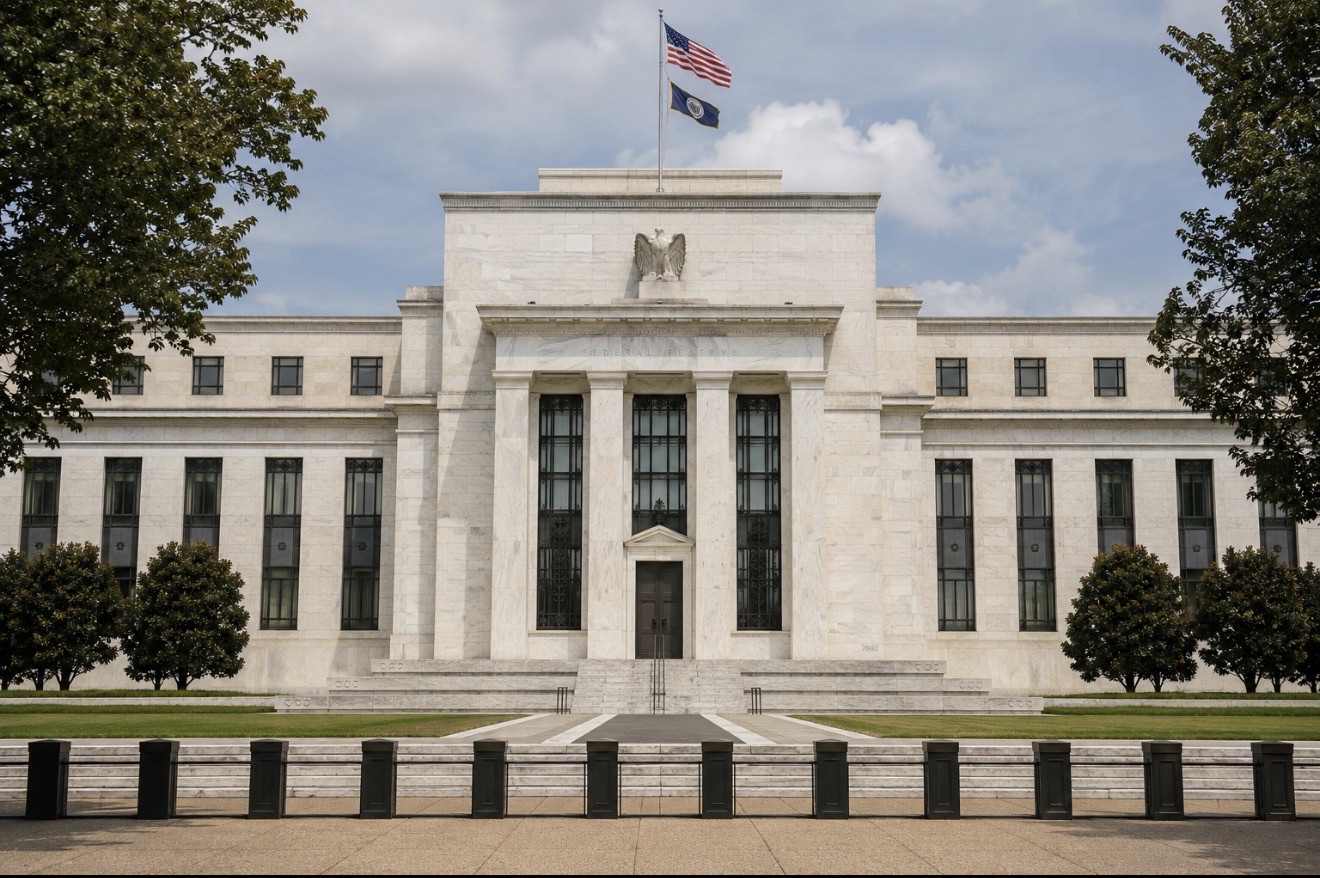

Washington — The Federal Open Market Committee convenes for a two-day meeting beginning Tuesday, and for the first time in this cycle a meaningful share of the market is positioned for the central bank to move rates higher rather than lower.
The committee announces its decision Wednesday, July 29, at 2 p.m. Eastern, followed by a press conference at 2:30 p.m. led by Chair Kevin Warsh. Economists polled by FactSet expect rates to hold at 3.5% to 3.75%, which would mark the fifth consecutive meeting without a change.
Markets are assigning roughly a one-in-three chance to a July increase, while CME pricing puts the probability of no change at about 65% for July, with expectations for a September increase climbing to 82%.
The shift in tone within the committee has been sharp. The June dot plot showed nine of 18 policymakers expecting at least one increase during 2026 — a reversal from three months earlier, when none did. Dallas Fed President Lorie Logan has said publicly that a moderate increase would better balance the Fed’s employment and price goals, and Cleveland Fed President Beth Hammack has pointed to energy and AI-related costs as forces pushing inflation higher.
Governor Lisa Cook has flagged inflation running at 3.7%, well above the 2% target, while Vice Chair Philip Jefferson and Governor Christopher Waller have both warned that policy would be reconsidered if inflation does not cool.
Waller, speaking at a Bank of Italy event in Rome on July 6, said the balance of risks has tilted more toward high inflation than toward labor market weakness — a full reversal from the Fed’s stance a year earlier.
Energy is the variable driving the repricing. Rising oil prices have prompted investors to sharply increase bets on an increase later this year. At the start of 2026 many economists expected at least one cut; resurgent inflation tied to energy costs has pushed forecasters the other way. Energy prices have moved higher through most of July, and continued increases could prompt the committee to act sooner than markets currently expect.
Not everyone in the forecasting community agrees. Economists Christopher Hodge and Selin Aker at Natixis expect the Fed to hold at this meeting and through the remainder of 2026, arguing that data since the June meeting leaned dovish. They noted payrolls rose 57,000 in June, following gains averaging 164,000 over the preceding three months. They expect the labor market to remain stable without generating an inflationary impulse, and see the near-term case for holding resting on further subdued inflation readings.
Cooling June CPI and PPI figures form the counterargument to the hawks.
One complication for anyone trying to read the outcome: Warsh has stepped back from traditional forward guidance, and experts do not expect the press conference to reveal much about his outlook. This meeting also does not produce a Summary of Economic Projections, removing the dot plot as a source of signal.
At Warsh’s first meeting as chair, the committee held the rate steady by unanimous vote, following significant disagreement in April. The statement described economic activity as expanding at a solid pace with inflation elevated relative to the 2% goal, and attributed that elevation to supply shocks and energy constraints. The median federal funds forecast for 2026 rose, implying the potential for one increase before year-end, and PCE inflation expectations for 2026 were revised up sharply.
Futures markets are pricing a path that rises to roughly 3.8% by October and approaches 4% around year-end, holding near that level through mid-2027.
For regional borrowers, the practical takeaway is that the era of waiting for cheaper money appears to be over for the foreseeable term. Businesses with floating-rate facilities, commercial mortgages approaching reset, or planned capital expenditure financed on variable terms should be modeling a higher path rather than a flat one. Escalation in the U.S.–Iran conflict feeding through to energy prices is the specific channel most experts identify as capable of raising the probability of a move later in 2026.
JBizNews Desk | Washington
© JBizNews.com All Rights Reserved. Reproduction or distribution without written permission is prohibited.