
 JBizNews
Business Investment in AI Drives U.S. Factory Activity to Its Strongest Pace in More Than Four Years
Corporate investment in artificial intelligence and advanced technology continued fueling U.S. manufacturing in June, with new data released Monday by the U.S. Census Bureau showing core capital goods shipments posting their largest monthly increase since late 2021. The report offers another indication that businesses are continuing to spend aggressively on equipment despite higher interest rates, trade uncertainty and slowing activity in other parts of the economy.
Shipments of non-defense capital goods excluding aircraft—a closely watched measure of business investment—increased 1.9% during June, while new orders rose 0.9%. Economists monitor the figures because they provide an early indication of corporate confidence and future economic growth.
Much of the increase was driven by continued spending on computers, electronics and electrical equipment as companies expand data centers, modernize manufacturing facilities and invest in artificial intelligence infrastructure.
The figures suggest businesses remain willing to commit significant capital toward productivity-enhancing technologies even as borrowing costs remain elevated and global economic uncertainty continues to weigh on executive decision-making.
For manufacturers, the trend represents a meaningful shift.
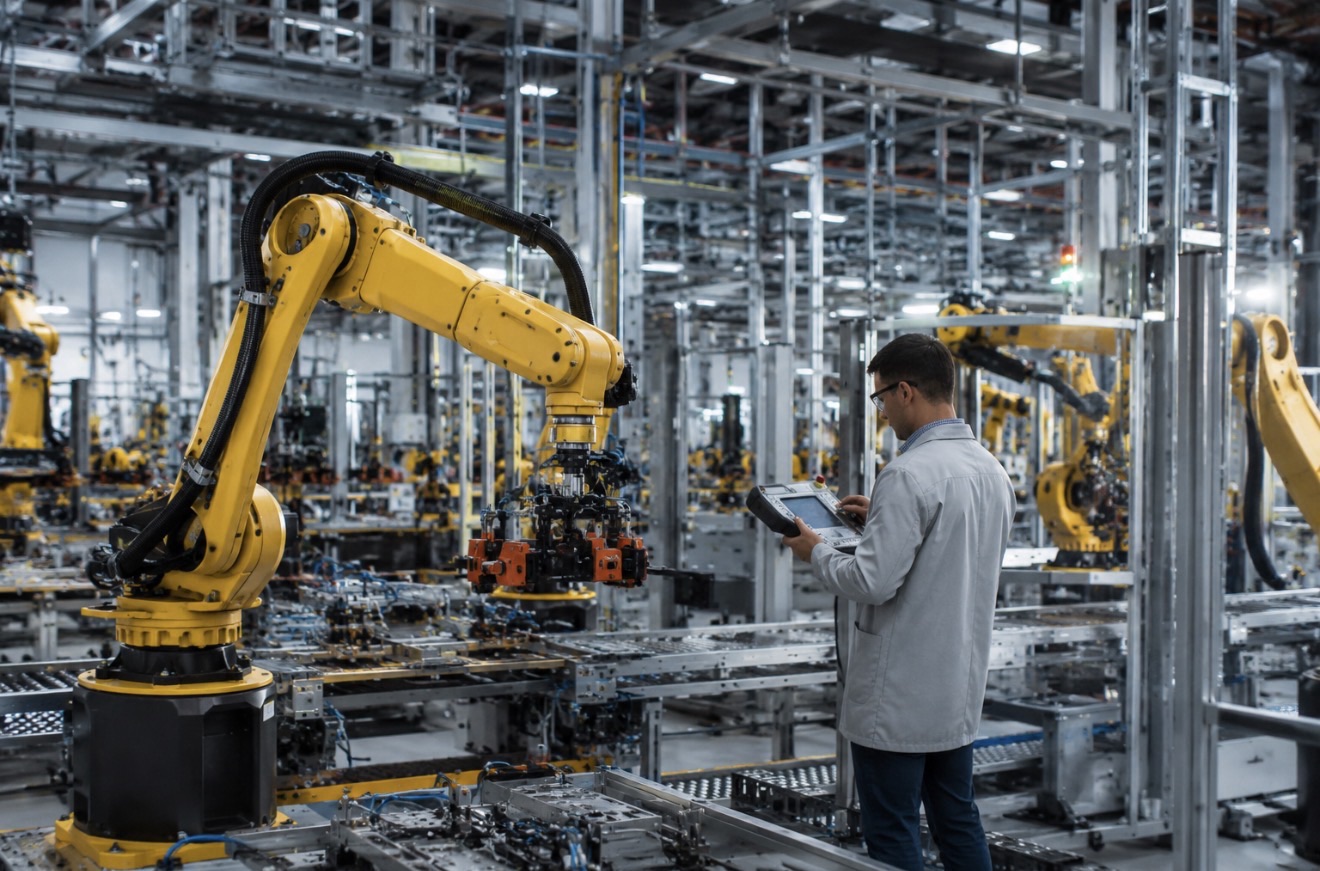
Instead of broad-based factory expansion, much of today’s investment is concentrated in industries tied to AI, automation, semiconductors, cloud computing and electrical infrastructure. Companies supplying servers, industrial automation systems, networking equipment and electrical components continue benefiting from demand created by large-scale AI projects.
The spending boom extends well beyond technology companies.
Manufacturers, financial institutions, healthcare providers, retailers and logistics companies are increasingly investing in AI-powered systems to improve efficiency, automate repetitive tasks and analyze growing volumes of business data. Those investments require substantial purchases of hardware, networking equipment and supporting infrastructure.
The report also highlights how business investment has become an increasingly important pillar of economic growth.
While consumers remain cautious in certain discretionary spending categories, corporations continue investing in long-term productivity improvements that they believe will strengthen competitiveness and reduce operating costs over time.
Industrial companies throughout the supply chain are benefiting.
Producers of electrical equipment, precision machinery, industrial software, construction materials and factory automation systems continue reporting steady demand as businesses upgrade facilities to accommodate more sophisticated technologies.
The trend also supports employment across manufacturing, engineering and construction, particularly in regions where data centers and advanced manufacturing projects are expanding.
Economists caution that business investment could become more uneven during the second half of the year as companies evaluate trade policy changes, financing costs and geopolitical developments.
Nevertheless, Monday’s report indicates that AI-related capital spending remains resilient and continues supporting one of the strongest areas of the U.S. economy.
For investors, the data reinforces expectations that companies involved in semiconductors, industrial automation, electrical infrastructure and data-center construction may continue benefiting from elevated capital spending even if broader economic growth moderates.
The report also suggests the current AI investment cycle is extending well beyond software development.
Companies are now investing heavily in the physical infrastructure required to support artificial intelligence, including manufacturing equipment, networking technology, power systems and specialized facilities capable of operating increasingly sophisticated computing platforms.
For the broader business community, Monday’s figures demonstrate that the AI economy is becoming a major driver of industrial production rather than simply a technology story. Continued corporate investment is supporting manufacturers, suppliers and construction firms while helping offset slower activity in other sectors of the economy.
JBizNews Desk | New York
© JBizNews.com All Rights Reserved. Reproduction or distribution without written permission is prohibited