
 Matzav
Newly Released Messages Reignite Questions About COVID Lab Leak Theory and Influential Scientific Paper
A new batch of internal Slack messages obtained as part of Sen. Rand Paul’s investigation is renewing debate over the origins of COVID-19, revealing that several authors of the highly influential 2020 paper rejecting the laboratory-leak theory privately continued discussing evidence they believed pointed toward a possible lab accident. The disclosures have intensified scrutiny of the scientific study that shaped public opinion and government messaging during the pandemic.
The newly released communications, highlighted in a report by The Federalist, show that multiple contributors to the landmark “Proximal Origin” paper were privately expressing concerns about a potential laboratory origin even after publishing research that concluded such a scenario was not plausible.
The latest revelations build on messages previously released by the House Select Subcommittee on the Coronavirus Pandemic in 2023. Those earlier communications showed lead author Kristian Andersen privately describing a laboratory origin as “friggin’ likely.”
In another internal conversation, Andersen wrote, “The main issue is that accidental escape is in fact highly likely — it’s not some fringe theory,” while another co-author acknowledged that COVID-19 “easily could have” leaked from a laboratory.
Despite those private discussions, the paper published in Nature Medicine on March 17, 2020, concluded that a laboratory origin was not plausible. The study quickly became one of the most frequently cited scientific papers during the COVID-19 pandemic and played a major role in shaping public understanding of the virus’s origins.
After the earlier messages became public, Andersen maintained that the comments reflected the normal scientific process, explaining that his initial concerns had been resolved before the paper was ultimately published.
According to The Federalist, however, the newly disclosed Slack conversations call that explanation into question.
One message sent by Andersen in June 2020—months after the paper appeared in print—suggested he still harbored significant doubts.
“Gotta say — some smoking(ish) guns starting to appear that I’m not comfortable with.”
Rather than publicly revising their conclusions, the researchers instead discussed privately how to continue defending the natural-origin theory despite lingering questions, according to The Federalist’s report.
The report also revisits the origins of the “Proximal Origin” paper itself, noting that it was drafted after a February 1, 2020 conference call organized by Dr. Anthony Fauci, then director of the National Institute of Allergy and Infectious Diseases, as questions mounted over whether the virus could have originated from a laboratory.
According to The Federalist, Fauci’s role in helping initiate the effort was not disclosed when the paper was published. The report further notes that Fauci later cited the study after President Donald Trump publicly argued that COVID-19 may have escaped from a laboratory.
The newly released communications also indicate that Fauci remained in contact with Andersen after publication.
In a Slack message dated May 23, 2021, and cited by The Federalist, Andersen wrote: “Just had a meeting with Fauci and his team this morning. They get it and deeply appreciate what we’re doing, so we’ll keep dancing.”
The messages further reveal that the researchers revisited several of the paper’s key scientific arguments as new information emerged.
In one exchange, Andersen acknowledged: “In our paper we argue against (a) manipulation and (b) tissue culture. Our main arguments were that manipulation is hard. But the Germans came out and created a reverse genetics system of SARS2 in less than two weeks, so clearly it’s not that hard.”
Another discussion reportedly included Andersen acknowledging that the paper overstated how widespread certain coronavirus research actually was.
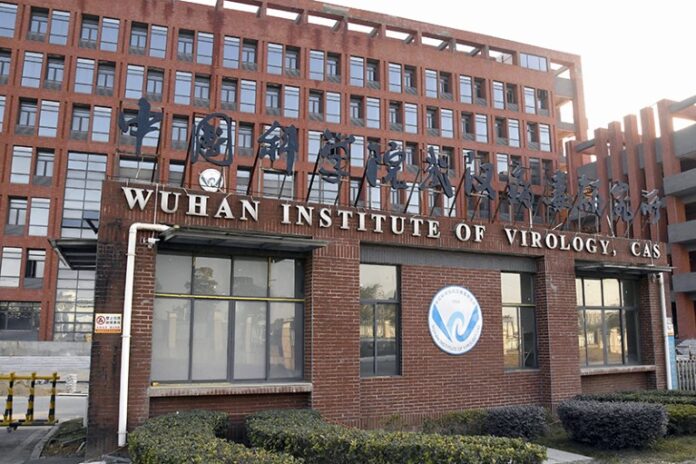
“We describe this in the paper and say that this work is performed ‘all [over] the world,’ but that isn’t true — it has exclusively been going on at WIV [Wuhan Institute of Virology].”
The latest disclosures are expected to intensify the ongoing debate surrounding the origins of COVID-19 as congressional investigators continue examining the pandemic, the federal government’s response, and the scientific research that heavily influenced public policy during one of the most consequential public health crises in modern history.