

The Federal Open Market Committee convened Tuesday morning for a two-day meeting that is widely expected to leave interest rates untouched — and that markets will spend the rest of the summer decoding, because the decision that matters is the one that comes after it.
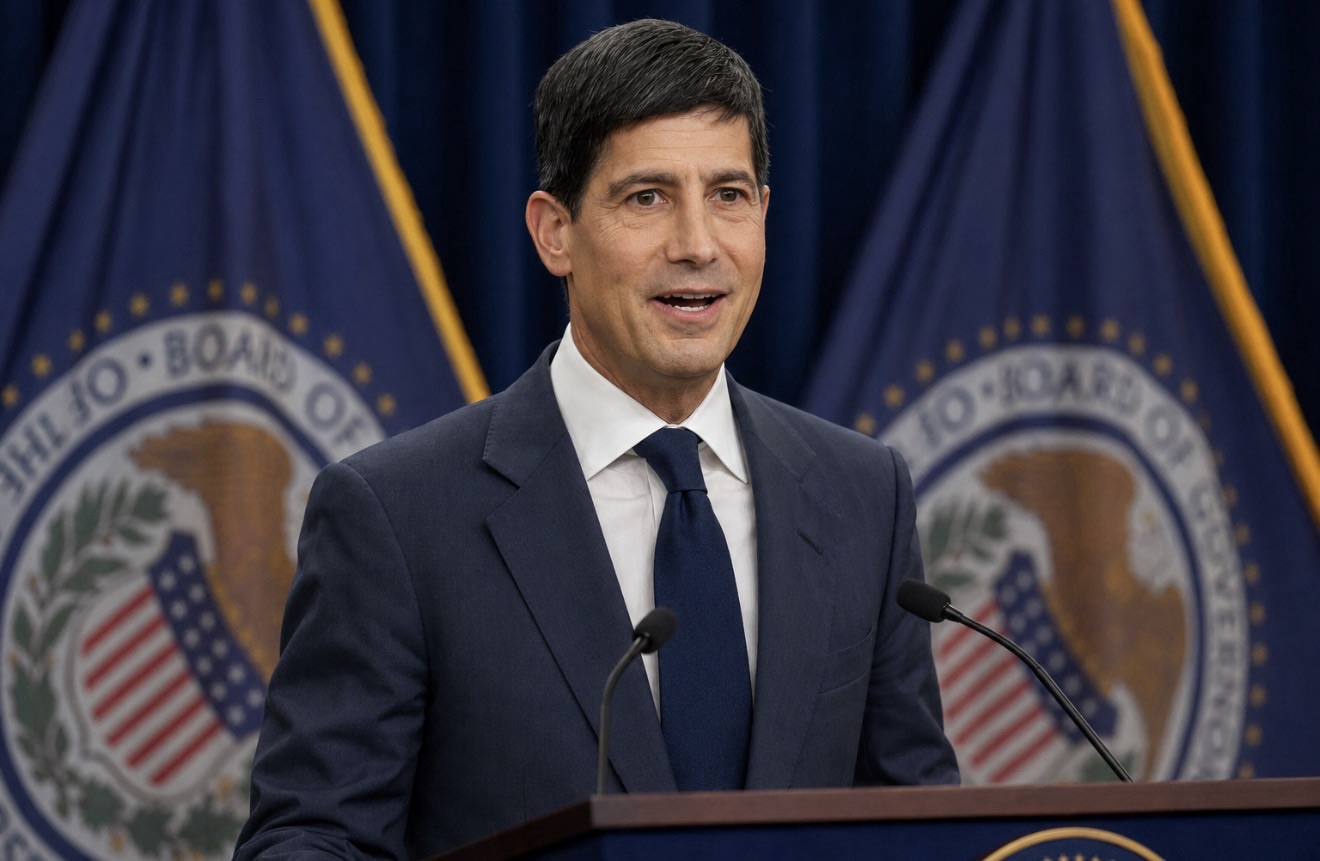
The policy statement lands at 2 p.m. Eastern Wednesday. Chair Kevin Warsh takes questions at 2:30. The federal funds target range stands at 3.50% to 3.75%.
Futures pricing puts a September hike near 80%.
The backdrop moved in the Fed’s favor overnight
Three sessions of falling yields have taken pressure off the committee. The 10-year Treasury fell for a third consecutive day Tuesday to 4.62%, its lowest in about a week, after touching 4.7% last Thursday — the highest level since January 2025. The 2-year yield dropped nine basis points Monday to 4.322%.
Oil did the work. West Texas Intermediate traded 1.6% lower Tuesday at $81.27 after falling roughly 8% Monday, and Brent slid 2% to $86.63 — down from above $100 last Thursday. The pause in US-Iran hostilities is holding, and talks involving Saudi Arabia and Oman over the future of the Strait of Hormuz continue.
That reversal alone reshaped the meeting. A week ago, with Brent above $100, a July hike looked live. It no longer does.
The committee is genuinely split
June’s projections showed nine officials expecting at least one rate increase in 2026 and only one projecting a cut. In March, not a single official had penciled in a hike. Warsh declined to submit projections of his own.
The outside views are just as divided. Citadel Securities has said it expects the Fed to raise rates this week specifically to reinforce Warsh’s credibility after his repeated pledges to restore price stability. UBS has said a surprise hike would not be shocking, and that Warsh’s own stance is the deciding factor. Citi takes the opposite position — that raising rates purely to defend credibility lacks justification when market-based inflation expectations have not become meaningfully unanchored.
Warsh has removed the usual signposts
This meeting produces no Summary of Economic Projections and no dot plot. Warsh has abandoned forward guidance and declines to pre-commit. What remains is a short statement and a press conference.
That narrows Wednesday to two signals: the precise wording, and the vote count. Whether any official dissents in favor of a hike will tell markets more about September than anything Warsh says out loud.
The data underneath is softening
June durable goods orders came in Monday at a gain of 0.4%, well short of the 2% consensus — a weak reading on business capital spending and an argument for patience. June CPI and PPI both cooled more than expected.
Against that, inflation has run above the 2% target for five years.
What is happening while they deliberate
The memory trade cracked overnight in Asia. Samsung fell more than 13%, SK Hynix dropped over 14% and Kioxia plunged more than 18%, extending Monday’s damage to American names after ChangXin Memory’s Shanghai debut closed up 465%. SK Hynix reports after the US close Tuesday.
Then the earnings arrive on top of the decision. Microsoft and Meta report Wednesday afternoon, hours after the statement. Apple and Amazon follow Thursday alongside the advance estimate of second-quarter GDP. Four of the largest American companies will defend their AI capital spending into a market that may have just been told borrowing costs are rising.
For tri-state operators
Three things worth doing this week.
If you have a floating-rate line or an equipment loan repricing this quarter, Wednesday at 2 p.m. is the moment — but September is where the actual risk sits at four-to-one odds. Price a fixed-rate lock and decide whether the premium is worth it before the statement, not after.
Watch the 10-year, not the fed funds rate. At 4.62% it governs commercial real estate financing and longer-term borrowing far more directly. It has come down three sessions running, which makes this a better week to lock a term deal than last week was.
If you are quoting work into the fourth quarter, assume money costs more in October than it does today.
The single variable that decides all of it is oil. If crude holds near $81 through August, the September case weakens materially. If the Gulf reignites — and Saudi Arabia reported intercepting drones aimed at its petroleum facilities Monday — the September hike becomes close to automatic.
JBizNews Desk | Wall Street
© JBizNews.com All Rights Reserved. Reproduction or distribution without written permission is prohibited.