
 Matzav
Iran Launches ‘Attempted Surprise Attack’ On US Forces In Middle East — Day After Cease-Fire Talks Made ‘Significant’ Progress
Tensions in the Middle East escalated sharply Tuesday after Iran attempted what U.S. military officials described as a “surprise attack” against American forces, even as diplomatic efforts to secure a cease-fire reportedly made significant progress.
The latest confrontation came as the United States and Saudi Arabia carried out coordinated strikes against Iran-backed terrorist targets in Iraq, responding to a series of Islamic Revolutionary Guard Corps-directed attacks on American personnel stationed in the region.
According to U.S. Central Command, American and Saudi warplanes struck terrorist logistics hubs and weapons facilities shortly after Iran attempted to launch a coordinated assault on U.S. forces across the Middle East.
CENTCOM said the IRGC orchestrated more than 30 drone attacks over the past three days, but reported that every one of them was successfully thwarted.
“From February through April 2026, there were more than 600 attempted attacks on U.S. citizens and facilities by Iran-aligned terrorist militias in Iraq,” the combatant command said in a statement.
“The IRGC and its terrorist proxies must cease these attacks to avoid further U.S. military response.”
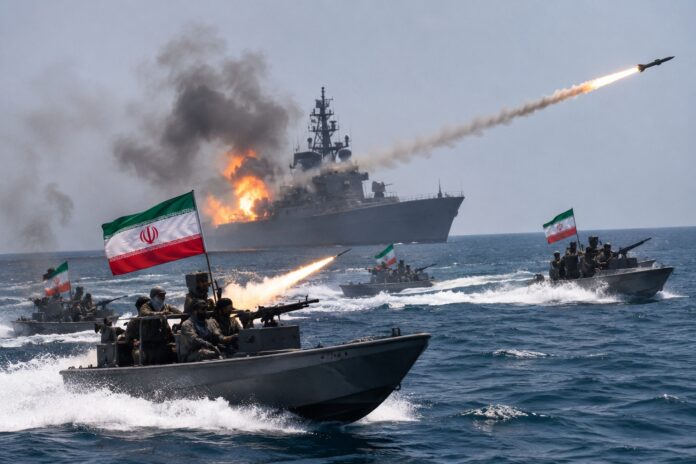
Later Tuesday, CENTCOM said Iranian forces attempted another escalation by firing multiple ballistic missiles from Iran toward American positions in the region in what officials described as an “attempted surprise attack.” U.S. forces intercepted the incoming missiles before they reached their targets.
The military confrontation unfolded just as diplomats involved in negotiations between Washington and Tehran reported that cease-fire discussions had achieved “significant” progress.
President Donald Trump, who paused additional military strikes against Iran last Friday, said he remains hopeful that diplomacy could produce an agreement but cautioned that military action could quickly resume if negotiations collapse.
“You know, they wanted to talk. … we’re having good talks, so we’ll see what happens,” Trump told reporters Monday. “I think there’s a good chance that something could happen, and if it does, good.
“If it doesn’t, we go back to doing what we were doing two days ago,” Trump warned.
According to Axios and The Associated Press, the United States is working alongside Qatar, Pakistan, and Egypt to facilitate the ongoing negotiations between Iran and Oman over the future administration of the strategically vital Strait of Hormuz.
Omani mediators said Monday that discussions over creating a fair management structure for the Strait of Hormuz have been complicated by proposals involving new fees for ships passing through the waterway.
One proposal under discussion would allow Iran and Oman to collect service fees in exchange for providing maritime security throughout the strait, effectively giving the two countries joint responsibility for overseeing one of the world’s most critical shipping lanes, a regional source told Axios.
Another concept being considered would model the arrangement after the Strait of Malacca, where Malaysia, Indonesia, and Singapore jointly oversee maritime security through a system funded by collected fees.
The Trump administration, however, continues to insist that the Strait of Hormuz remain open to international shipping without new restrictions or tolls, maintaining that the vital waterway should continue operating freely as it did before the conflict erupted.
{Matzav.com}