
 Matzav
Matzav Inbox: Stop Giving Har Habayis Activists the Publicity They Crave
Dear Jewish News Media,
Please stop.
Stop what, you may ask.
Allow me to step back for a moment and provide some historical context.
Klal Yisroel is a nation because Hashem gave us the Torah at Har Sinai. From the very moment of Matan Torah, it has been understood that there are those entrusted with leading Klal Yisroel and faithfully transmitting the Torah and its laws from one generation to the next. What elevates these leaders to the status of Gedolei Hador is not merely their vast Torah knowledge. Rather, it is their singular devotion to understanding the Torah of Hashem to such a degree that their entire being becomes intertwined with the Torah itself. This is what we call Daas Torah.
The Torah commands us, לא תסור מן הדבר אשר יגידו לך ימין ושמאל. Chazal understood this as an eternal directive: we are not to deviate from the rulings and guidance of the Torah leaders of each generation.
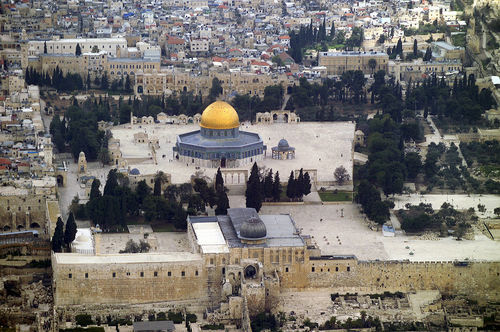
In recent years, there has been an increasing focus on ascending Har Habayis. A growing movement of so-called “Geulah activists” argues that encouraging large numbers of Jews to visit Har Habayis will diminish the Arab presence, increase visible Jewish davening and Torah learning on the mountain, and ultimately hasten the coming of Mashiach.
It is an appealing idea, but it is deeply misguided.
Since 1967, when the Old City came under Israeli control, the Gedolei Haposkim have repeatedly ruled that Jews should not ascend Har Habayis. Numerous reasons have been offered, foremost among them that it is impossible to determine with absolute certainty the precise boundary between the Machaneh Leviyah and the Machaneh Shechinah. Consequently, someone who unknowingly crosses into the prohibited area would be liable for an issur kares, as we are all considered tamei meis. Furthermore, even entering the Machaneh Leviyah requires immersion in a mikvah with a proper chafifah. While many people may indeed fulfill all the necessary preparations, public encouragement to ascend the mountain will inevitably lead others to do so without proper preparation, causing them to violate the prohibition of a baal keri entering Har Habayis.
To be sure, there are arguments on the other side. Many Rishonim and Acharonim conclude that the Dome of the Rock stands atop the location of the Kodesh Hakadashim, making it possible to calculate the boundaries of the 500-by-500 amos described in the Mishnah. Others argue that if we know the location of the Makom Hamikdash, there may even be circumstances under which certain korbanos could be offered, since tumah hutrah or dechuyah b’tzibbur. In addition, there are undoubtedly many mitzvos that can be fulfilled by ascending Har Habayis.
The problem with these arguments is not that they lack sources. The problem is that they lack the fundamental reverence for the rulings of our Gedolim. Is it reasonable to assume that the Gedolei Haposkim did not consider these very arguments before issuing their rulings? Our mesorah teaches us that one who follows the guidance of the Chachmei Yisroel never loses.
Let us ask a simple question in learning: ממה נפשך? If, chas v’shalom, the Gedolim were mistaken in ruling that Jews should not ascend Har Habayis, then we have nothing to fear, because by obeying their ruling we have fulfilled the Torah’s command of Lo Sasur. But if they are correct—and that is certainly the more reasonable assumption—then the consequences of disregarding their ruling are immeasurably more serious.
History has repeatedly shown that people can develop all sorts of cheshbonos. Yet Shmuel Hanavi told Shaul: החפץ השם בעלות וזבחים כשמע בקול השם הנה שמע מזבח טוב להקשיב מחלב אילים. Hashem desires obedience to His will more than even the loftiest spiritual aspirations.
The activists argue that the unprecedented access Jews now have to Har Habayis must itself be a sign from Hashem. Surely, they say, this is an indication that we are meant to ascend.
But this argument is equally flawed.
We no longer have nevuah. We no longer have the Urim V’Tumim to interpret Heavenly signs. Instead, Hashem gave us the Gedolei Yisroel—the Einei HaEidah. Through their Daas Torah, they are granted siyata d’Shmaya to discern what Hashem expects of Klal Yisroel in every generation.
And so I return to my original plea:
Please stop.
Stop publishing articles celebrating the growing numbers of Jews ascending Har Habayis, followed by a brief disclaimer reminding readers that the Gedolei Haposkim of this and previous generations ruled otherwise. Those disclaimers do not solve the problem. Such articles are themselves נותן יד לפושעים. We would be far better off giving these efforts no publicity whatsoever. As the saying goes, there is no such thing as bad publicity. Every article normalizes this movement and encourages additional people to follow a path that openly disregards the rulings of the Gedolei Hador.
As for the claim that these efforts are bringing Mashiach closer, sadly, they appear instead to reflect precisely what Chazal describe at the end of Sotah regarding the period immediately preceding the coming of Mashiach: בעקבות משיחא חוצפא יסגא… נערים פני זקנים ילבינו.
B’ezras Hashem, the day will soon come when we will once again ascend Har Habayis with the rebuilding of the Beis Hamikdash. Until then, we continue to daven: והראנו בבנינו ושמחנו בתיקונו.
With a heart that yearns for that day,
Y. S.
To submit a letter to appear on Matzav.com, email [email protected]
DON’T MISS OUT! Join the Matzav Status by . Join the Matzav WhatsApp Groups by .
The opinions expressed in letters on Matzav.com do not necessarily reflect the stance of the Matzav Media Network