
 JBizNews
Big Tech’s AI Spending Is Creating a Construction Boom Few Investors Are Talking About
Artificial intelligence is fueling one of the largest infrastructure buildouts in decades, creating new opportunities far beyond Silicon Valley as technology companies race to secure the electricity, land and construction capacity needed to power the next generation of AI.
Microsoft, Amazon, Meta and Google have all committed tens of billions of dollars toward expanding data-center capacity, but the biggest winners may not be software developers. Instead, utilities, engineering firms, construction companies, industrial manufacturers and electrical-equipment suppliers are emerging as some of the largest beneficiaries of the AI investment cycle.
Unlike previous technology booms, AI requires enormous amounts of physical infrastructure. New data centers demand dedicated substations, transmission lines, backup power systems, cooling equipment and, in many cases, entirely new sources of electricity. In several regions, utilities are struggling to connect new facilities quickly enough because demand is growing faster than the electrical grid can expand.
That challenge is prompting technology companies to take a more direct role in infrastructure development. Rather than waiting for utilities to build additional capacity, many are investing alongside energy developers, supporting new natural-gas facilities, nuclear projects and renewable-energy installations to ensure reliable long-term power supplies.
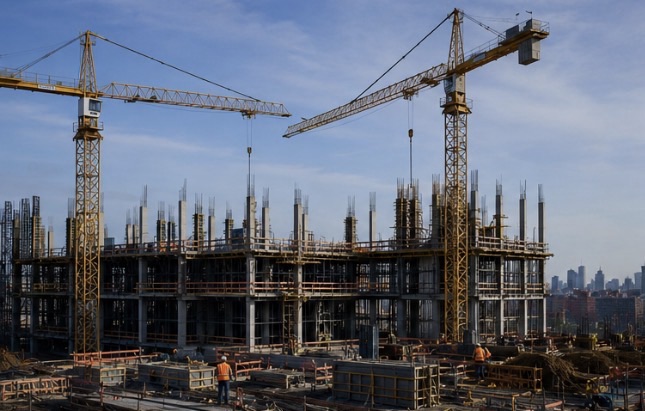
Construction firms are also seeing unprecedented demand. Large AI campuses require years of planning and billions of dollars in concrete, steel, electrical equipment and specialized cooling systems before a single server is installed. Suppliers of transformers, switchgear, backup generators and industrial HVAC systems are reporting growing order backlogs as more projects move forward.
For businesses, the opportunity extends well beyond the technology sector. Companies involved in engineering, manufacturing, logistics, industrial services and commercial construction could benefit from sustained demand as AI infrastructure continues expanding across the United States.
Investors are increasingly recognizing that the AI economy will not be built by software companies alone. The firms providing the physical foundation—from electricity and construction to industrial equipment and engineering—may become some of the most consistent long-term beneficiaries of the industry’s rapid growth.
As AI adoption accelerates across healthcare, finance, manufacturing and logistics, the infrastructure supporting that transformation is becoming just as valuable as the technology itself.
JBizNews Desk | Wall Street
© JBizNews.com All Rights Reserved. Reproduction or distribution without written permission is prohibited.