
 Matzav
Judge Under Fire After Mocking Chareidi Witnesses in Courtroom Recordings
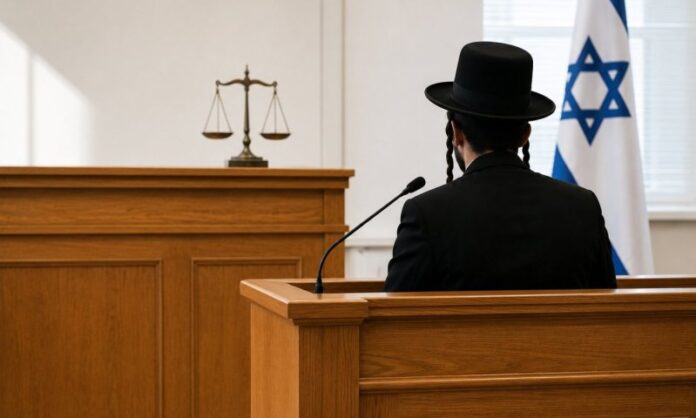
Newly released recordings have sparked criticism after an Israeli judge was heard making remarks perceived as mocking Chareidi witnesses during court proceedings. The witnesses filed a formal complaint, alleging the comments reflected prejudice against the Chareidi community, but the complaint was ultimately closed after the judge apologized and judicial authorities accepted her explanation.
The recordings, aired by Israel’s Channel 14, feature Hadera Magistrate’s Court Judge Yifat Unger-Biton addressing two Chareidi witnesses in what they described as a dismissive and insulting manner during a hearing.
In one recording, the judge tells a witness, “Sir, you speak at lightning speed. I’m saying that you’re used to going into tefillos at the shul and finishing them very quickly. You race through the prayers at a crazy pace. Nobody besides you can even understand the prayers… But here we speak slowly. We need to understand what you’re saying.”
In another exchange from the same case, the judge asks a different witness, “Is this your affidavit? This tzetel (Yiddish for ‘note’) that you brought with you?” The witness replied, “You call it a tzetel, but for us it’s a significant document.”
The two witnesses subsequently filed a complaint with Israel’s Commissioner for Complaints Against Judges, Justice Asher Kula, arguing that the judge’s remarks demonstrated bias against Chareidim, demeaned both them and their religious practices, and undermined confidence in the judiciary’s impartiality.
In her response, Judge Unger-Biton acknowledged that she may have chosen her words poorly but insisted she had no intention of offending the witnesses. She said she was attempting to speak in terms that would be familiar to them and offered an apology for her remarks.
After reviewing her response, Justice Kula decided to close the complaint. In his written decision, he stated, “Even if the judge’s explanations are correct… a judge must always be careful with his or her words and pay attention to how they may be perceived from an objective standpoint. The judge did the right thing by apologizing in her response for her remarks to the witnesses.”
The report also noted that this was not the first time Judge Unger-Biton had come under scrutiny over recorded courtroom comments. According to the report, another recording surfaced in 2019 in which she questioned one of the parties during a hearing using language that also drew public attention.
In a statement, the Judicial Authority’s spokesperson said, “In her response to the Commissioner for Complaints Against Judges, the judge apologized for her remarks, and the commissioner determined that the matter had been fully addressed.”
{Matzav.com}