
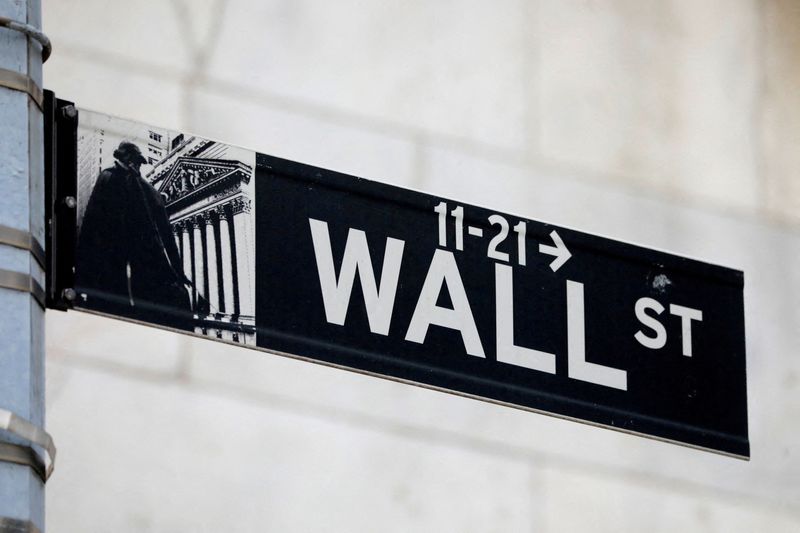

Wall Street opened August with a broad advance Monday as crude prices tumbled on word that the United States had shelved a planned military strike against Iran in favor of negotiations, and as Amazon crossed $3 trillion in market value for the first time.
The Dow Jones Industrial Average climbed roughly 640 points, or about 1.2%, in early trading, lifting the blue-chip average back above 53,000 after Friday’s close at 52,485.03. The S&P 500 rose to 7,561.06, a gain of 71.34 points or 0.95%. The Nasdaq Composite added about 1.2%. The small-cap Russell 2000 lagged the rally, slipping 0.5%.
President Donald Trump told reporters aboard Air Force One on Sunday that he had called off what he described as massive strikes on Iran and that discussions with Tehran would begin Monday afternoon. “We’re talking to them in the form of a negotiation,” he said. Gulf allies, including Saudi Arabia, were said to have pressed for diplomacy over escalation. Iran’s Foreign Ministry spokesperson, Esmaeil Baghaei, told reporters that no negotiations between Tehran and Washington are currently underway — a contradiction that did not stop traders from pricing in a lower risk of disruption at the Strait of Hormuz.
Bond markets moved the same direction. The 10-year Treasury yield eased about seven basis points to roughly 4.67%, while the two-year fell about five basis points, both reflecting a cooler inflation outlook if energy costs retreat. Fed funds futures tracked by CME Group’s FedWatch tool showed traders putting roughly a 64.5% probability on a rate move at the Federal Reserve’s September meeting, following the central bank’s decision to hold steady on July 29.
Market Movers
Amazon carried the session. Shares rose as much as 5.3% shortly after the opening bell, pushing the company’s market capitalization past $3 trillion for the first time and making it the fifth U.S. company ever to reach that level, joining Nvidia, Apple, Microsoft and Alphabet. The move extended a rally that began Thursday, when the company posted $200.6 billion in second-quarter revenue and reported that Amazon Web Services grew 37% year over year — its fastest pace in 18 quarters. Management reaffirmed full-year capital spending of close to $220 billion, most of it directed at artificial intelligence infrastructure, chips and robotics.
For business owners, the AWS number matters more than the milestone. Cloud capacity pricing, logistics costs and third-party seller economics all run through the same buildout, and a 37% growth rate signals continued heavy demand for the compute that increasingly sits underneath small-business software, payments and inventory systems.
SpaceX moved the other way, falling nearly 2% to $106.28 in premarket trading ahead of its first quarterly earnings report as a public company on Tuesday. A lockup period expires Thursday, freeing roughly 930 million shares — about $100 billion worth at current prices — to trade. The stock debuted at $135 a share on June 12 and touched $225.64 four days later.
AstraZeneca dropped 7.3% before the bell following a report that the drugmaker had held merger discussions with Bristol Myers Squibb.
Commodities
West Texas Intermediate crude fell 6.2% to $79.41 a barrel, and Brent crude declined 5.1% to $83.24. The drop unwinds a portion of July’s run-up, when Hormuz shipping concerns pushed pump prices higher across the tri-state region and squeezed margins for trucking fleets, delivery operators and food distributors. Diesel-dependent businesses will not see relief immediately — retail fuel prices lag the futures market by roughly two weeks — but a sustained move below $80 would begin to filter through by late August.
The Week Ahead
Earnings season resumes at full speed. Palantir Technologies reports after Monday’s closing bell, with Advanced Micro Devices, McDonald’s, SpaceX and Disney all due later in the week. Of the roughly 300 S&P 500 companies that have reported so far, about 85% have beaten estimates, and aggregate profit growth is tracking above 47% — one of the strongest quarters in years.
On the economic calendar, the ISM manufacturing reading for July lands Monday morning, followed by JOLTS job openings, weekly jobless claims, and the July employment report on Friday. The jobs number will carry the most weight for the Fed’s September decision, and for the small and mid-sized employers across New York, New Jersey and Connecticut still weighing hiring plans against elevated borrowing costs.
Monday’s rally rests on a single unconfirmed diplomatic development. Should Tehran’s denial hold and talks fail to materialize, crude will retrace quickly, and the equity gains built on cheaper energy will go with it.
JBizNews Desk | New York
© JBizNews.com All Rights Reserved. Reproduction or distribution without written permission is prohibited.