
 Vos Iz Neias
U.S. Support for Israel Divides Jewish Voters Ahead of Michigan Senate Primary
DETROIT (VINnews) — U.S. support for Israel is fracturing Jewish voters and testing the Democratic Party’s future as Michigan Democrats prepare to choose their U.S. Senate nominee on Tuesday.
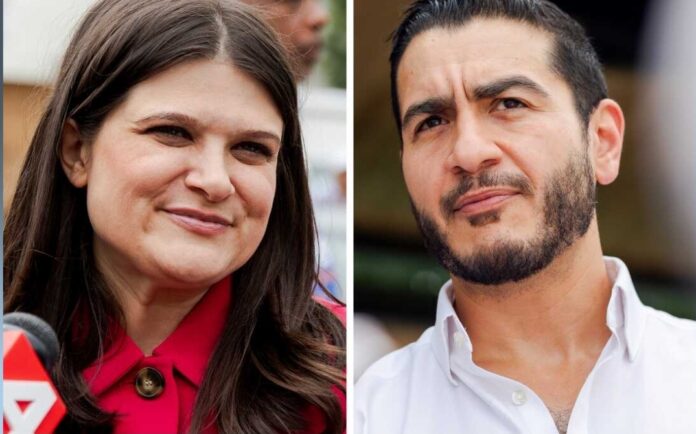
The closely watched primary pits progressive physician Abdul El-Sayed against establishment centrist U.S. Rep. Haley Stevens. The contest has become a proxy battle over the war in Gaza, the influence of pro-Israel groups and the direction of the party in a key swing state.
Pro-Israel organizations affiliated with AIPAC have poured more than $30 million into the race supporting Stevens and opposing El-Sayed, the largest such investment by the group in a single contest. El-Sayed has made the spending a central campaign theme, portraying it as evidence of undue outside influence. Stevens, a reliable supporter of Israel who represents a district with a large Jewish population, has condemned what she calls El-Sayed’s “inflammatory rhetoric.”
The race is unfolding in a state that was the birthplace of the 2024 “uncommitted” movement protesting Democratic support for Israel’s military campaign in Gaza. Michigan is also home to one of the nation’s largest Arab-American communities alongside an influential Jewish population that makes up about 1.4% of the statewide electorate.
Jewish Democrats are split. Some have organized under banners such as “Jews for Abdul,” drawn to El-Sayed’s progressive domestic agenda on health care and education even while disagreeing with aspects of his foreign policy views. Others view his criticism of Israeli government policy and U.S. aid as crossing a line, raising concerns about antisemitism and the party’s longstanding bipartisan support for the Jewish state. Jewish Voice for Peace has endorsed El-Sayed, while mainstream Jewish organizations and many communal leaders have expressed alarm.
Campaigners on both sides have been active in the Detroit area in the final days before the Aug. 4 primary. Supporters of Stevens emphasize her record of standing with the Jewish community, mourning alongside families affected by the Oct. 7, 2023, Hamas attacks and advocating for the release of hostages. El-Sayed’s backers stress grassroots energy in Detroit and Dearborn, arguing the race is about whether Democrats will prioritize working-class issues over what they describe as special-interest money.
El-Sayed, who is Muslim and has courted Jewish voters without moderating his positions on Israel, has rejected accusations of antisemitism. “I love and revere Judaism and the Jewish people,” he has said. Stevens has warned that his approach risks alienating key constituencies and weakening Democrats in the November general election against Republican former Rep. Mike Rogers.
Recent polls have shown El-Sayed leading, though the heavy outside spending and late campaign intensity leave the outcome uncertain. The winner will face a competitive general election in a state President Donald Trump carried in 2024.
The Michigan primary is being watched nationally as a test of whether progressive criticism of Israel can prevail in a statewide race and reshape the Democratic coalition. Jewish voters here, long a reliable part of that coalition, find themselves navigating deep divisions over the war in Gaza and its political fallout.