
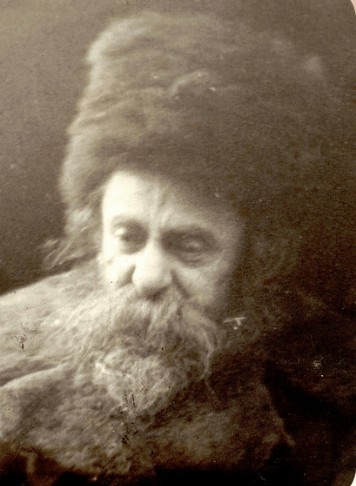

New York (VINNEWS/Rabbi Yair Hoffman) It happened during the Yamim Noraim in Belz. Thousands of chassidim had come to shelter in the shadow of the Belzer Rav, Rav Yehoshua Rokeach zt”l, known as the Mittler Rav. Somewhere in that vast crowd stood a very small boy, weeping.
An adult noticed him and assumed the worst — that the child had been jostled and trampled among the feet of the teeming masses. He bent down and asked the boy what the tears were about. The child grew flustered and would not answer. Only after gentle coaxing did he lower his head and say quietly, “I see that everyone is crying. That is why I cry too.”
The man tried to soothe him. There is no reason for you to cry, dear child, he explained. Everyone here is weeping over the aveiros that they have to do teshuvah for in these days. But you are a small child. You have never tasted the taste of sin. You have no aveiros to cry over.
The boy answered with a sweetness that has echoed for more than a century: “That is not so. I see that Zeide is also crying. He certainly has no aveiros — and even so, he cries.”
The child was Aharon Rokeach.
He would grow up to become the fourth Belzer Rebbe, to lead one of the largest chassidic courts in Europe, to lose almost everything he had, and to rebuild it entirely from ashes.
Rav Aharon was born in Belz, in Austrian Galicia, in 1880 — the oldest child of Rav Yissachar Dov Rokeach, the Maharid, who would become the third Belzer Rebbe, and Rebbetzin Basha Ruchama, a descendant of the Chernobyler dynasty. He was a fourth-generation link in a chain that began with Rav Sholom Rokeach, the Sar Sholom, who established the Belzer court around 1817 after learning by the Chozeh of Lublin.
Most assumed that he had been named for his maternal ancestor Rav Aharon of Chernobyl. His father later explained that the name had been given for Rav Aharon of Karlin. Just as Rav Aharon of Karlin took upon himself the tzaros of Klal Yisrael, the Maharid is said to have foretold, so would this son absorb Jewish suffering. Few predictions in chassidic history proved more literal.
His mother died when he was roughly four years old. His grandfather, the Mittler Rav, drew the orphaned boy close and personally oversaw his growth in Torah and yiras Shomayim until his own petirah in 1894.
On one Seder night, the boy sat beside his grandfather. When the door was opened for Shefoch Chamascha, he turned and said, “Zeide, do you see the Yid who has come in?” His grandfather answered him, “My dear child — not everything that one sees must one tell over” (see Barza Yakira, London 5763, in the name of the Chernobyler Rebbe, transmitted from Rav Yechiel of Kirlovitz, who was an aidim of the household of the Mittler Rav).
The Mittler Rav also tested the boy in learning. He once asked him why Esther HaMalkah used a doubled expression: “Fast for me, and do not eat and do not drink, three days, night and day.” If one does not eat and does not drink, that is precisely what is called a fast — so why the repetition?
The child answered immediately. Had the possuk written only “fast for me,” one might have thought that the decree applied only to days on which eating is optional, and not to days on which eating is itself a chiyuv and a mitzvah. Esther therefore doubled the language, “do not eat and do not drink,” to include Pesach as well — when there is a mitzvah to eat matzah and to drink the four kosos, they were nonetheless not to eat or drink. This is consistent with what Chazal derive from the words “vaya’avor Mordechai,” that Mordechai passed over the first day of Yom Tov of Pesach with a fast (see Ohr L’Nesivosi, Av 5764, p. 47).
His father, at the seder, once deliberately did a series of unusual acts at the table, all of them to provoke his young son into asking. The boy said nothing. Finally his father turned to him and asked directly: “Does nothing I am doing trouble you? Do you have no questions at all?”
The child replied, “When I see that the tatte is doing something, I have no questions.”
His emunas chachamim was so complete that it silenced curiosity itself. That would become the defining posture of his life — and, in the darkest years, the posture his own chassidim would take toward him.
Hidden Years
He married young — at roughly fourteen — to his cousin Malka, a daughter of his father’s brother Rav Shmuel, the Rav of Sokal. He lived for years in his father-in-law’s home and disappeared into learning.
Those who knew him in that period described a young man who ate almost nothing, slept almost not at all, and worked steadily to conceal every one of his accomplishments. Belzer tradition holds that for some fifty years he did not sleep in a bed, but rather sat upon it or upon a chair. Whatever the precise measure, the pattern was consistent and lifelong: an existence stripped nearly bare of physical pleasure, filled instead with tefillah and limud.
When his father was niftar on 22 Cheshvan 5687 — October 1926 — Rav Aharon accepted the mantle of leadership as Rav of Belz and Rebbe of the Belzer chassidim. Thousands upon thousands looked to him. Yidden and non-Yidden alike came to call him the Wonder Rebbe.
The Churban
The war destroyed his world with a thoroughness that is difficult to write down.
With the Nazi advance, the Rebbe fled Belz together with his younger half-brother, Rav Mordechai Rokeach, the Rav of Bilgoray, who was some twenty-two years his junior. The two moved from town to town — Sokal, Premishlan, Vizhnitz — sustained by Belzer chassidim in Eretz Yisrael, England, Switzerland and the United States, who poured money and effort into keeping them one step ahead of the Gestapo. His photograph was published in Julius Streicher y”s’s Der Stürmer. He sat near the top of the Gestapo’s list of rabbanim marked for extermination.
In Premishlan the Nazis yemach shmam burned the shul with Jews inside. Among those murdered was the Rebbe’s eldest son, Rav Moshe. The Rebbe was hiding in that same town at the time. Rav Moshe’s wife and five children were murdered afterward.
His eldest daughter, Rivka Miriam — the wife of Rav Shmuel Frankel, son of Rav Avraham Yehoshua Heschel, av beis din of Hibnov — perished together with her husband and five of their seven children.
All of his children had been born to his first Rebbetzin. Two sons, Avraham and Elazar, and one daughter had died young, years before the war. Every one of the children who remained was murdered. Rav Moshe, the eldest, was a son-in-law of Rav Avraham Pinchas Sholom Rottenberg of Wolbrom, himself a grandson of Rav Sholom Rokeach and of the Chozeh of Lublin. Rav Yisrael was a son-in-law of Rav Eliyahu Chaim of Skohl, a grandson of the Sar Sholom. Two more sons carried the names Avraham Yehoshua Heschel and Elazar Menachem Nachum. His daughter Eidele was the wife of Rav Meshulam Yeshaya Zusha Twersky, son of Rav Pinchas of Ostila. Mirel was married first to Rav Yuda Wagshal of Lvov and afterward to Rav Moshe Elyakim Beriah Zak. Sarah Bracha was the wife of Rav Yisrael Rosenfeld, son of Rav Naftali Shmuel Tzvi of Kaminka. The spouses were killed with them, and dozens of eineklach and ur-eineklach. His Rebbetzin did not survive. Rav Mordechai lost his family as well.
The brothers were moved to the Krakow ghetto, and in September 1942 to the ghetto of Bochnia, where the Rebbe of Belz lived under the name Aharon Singer and passed as a master tailor. Even there, the accounts agree, the seder of his learning and davening did not break.
In May 1943, after an earlier attempt to reach Slovakia had failed, the brothers were driven out of occupied Poland and across the Hungarian border by a Hungarian counter-intelligence officer sympathetic to Jews.
The cover story was audacious to the point of absurdity. The Rebbe, his attendant and Rav Mordechai had their beards and peyos shorn and were dressed as captured Russian generals being transported to Budapest for interrogation. German checkpoints waved the car through.
What it cost the Rebbe of Belz to sit in that car in that condition is not something he ever discussed. They reached Budapest in Iyar 5703 and remained some eight months in the Jewish quarter, where he was able to lead publicly once again.
A Boy in Budapest
Budapest in those months was a city living on borrowed time and largely unaware of it. Hungarian Jewry had not yet been touched. Life continued. Torah continued.
Inside the building of the Budapest kehillah, one of the city’s dayanim, Rav Yonasan Shteif zt”l, had established a yeshiva. It sat on the top floor, above a school, with a large hall below. It existed for a specific and often overlooked group — local boys who had no way of reaching a yeshiva outside the city, and who would otherwise have had nothing.
The program was called Tiferes Bochurim, and roughly two hundred boys and young men passed through it. The rebbeim were chassidishe rebbeim. There was Torah, there was Gemara, and there was food, and none of it cost a filler. Some of the bochurim were outstanding and some were entirely ordinary, and no one ever made the distinction matter. Everyone simply learned. In a city that would shortly be emptied of its Jews, two hundred boys sat and learned because someone had decided that they must not be lost.
One of those boys was a friend of this author, Reb Moshe Rubin, today a resident of Cedarhurst and near 100 years old. When word reached the bochurim that the Belzer Rebbe was in Budapest, he made his way to the house where the Rebbe was staying. In earlier years his father had taken him along for brachos. This time he went in by himself.
The bracha he received, as he understood it, was for arichus yamim — that he should live long and grow up to be an alter Yid. What has stayed with him for more than eighty years, though, is not the words. It is the face. He still describes it the same way he did as a boy: the Rebbe looked like a malach.
The bracha, he will tell anyone who asks, came true.
From a Siddur
Another episode from those same Budapest months was on Chanukah of 5704, after the Rebbe had come out of the lager and before he left for Eretz Yisrael. Following the hadlakas ner Chanukah there was a mitzvah to sing a certain kapitel of Tehillim, and it was the Rebbe’s fixed practice that it be sung from a siddur. On this occasion one of those present did not take a siddur and began singing the mizmor by heart. In the middle of the mizmor he became confused, lost the thread, and could not continue, and a siddur was placed into his hands. When he had finished, the one who recorded the story told him plainly that this had happened to him because he had not listened to the words of the Rebbe.
The point of the account is that the Rebbe’s insistence was straight Shulchan Aruch — devarim shebiksav ein omran b’al peh, that which is written may not be recited by heart. The Chavos Yair (siman 175) wished to permit reciting the entire Sefer Tehillim by heart, on the grounds that it is a davar shebich’chovah, but the Machatzis HaShekel questions his words. The Magen Avraham (s”k 1) adds that in order to be motzi others one may not recite by heart even words that come easily to the tongue — which would seem to apply here, since the mizmor was being sung before a tzibbur, and would be more stringent still. Everything the Rebbe did was al pi Shulchan Aruch. One who had not learned Shas and poskim properly would not perceive it, and the Rebbe’s conduct would appear foreign and strange to him. But one who had learned Torah as Torah — and not made of it a kardom lachpor bah, a spade to dig with — looks and understands that all of the Rebbe’s actions were according to the Shulchan Aruch.
Out of Europe
Through the efforts of Rav Yitzchok Isaac Herzog and other askanim, entry certificates for Eretz Yisrael were secured. On January 17, 1944, the Rebbe and the Bilgorayer Rav boarded a train out of Budapest, traveling by way of Istanbul, and arrived in Eretz Yisrael in early February 1944 — 9 Shevat 5704. Two months later the Nazis occupied Hungary and began deporting its Jews.
Silence
He had arrived. He was, by any measure, one of the last great figures of a world that no longer existed, and gedolei Yisrael related to him accordingly. And he almost never spoke of what he had lost.
It was his personal practice not to speak publicly of the Belzer chassidim who were murdered, and least of all of his own children. Visitors who tried to draw him into reminiscence about Belz before the war found him willing to speak warmly of their grandfathers and unwilling to speak of his own. On one rare occasion he described the details of his rescue — out of hakaras hatov, to a representative of the Frierdiker Rebbe of Lubavitch, who had worked to save him.
Rebuilding From Nothing
The gap between his stature and his circumstances was almost absurd. He settled first in Tel Aviv, where the shtiebel on Achad Ha’am Street was frequently so empty that passersby had to be asked to come in so that there would be a minyan for the Rebbe’s tish. The glory of Belz was in ruins. There were no institutions, and barely a community.
He began anyway.
In Eretz Yisrael he remarried. His second Rebbetzin, Chana, brought a son and a daughter with her into the marriage, and both were raised in the Rebbe’s home. She lived until 5774.
Schools and yeshivos were established in Tel Aviv, Bnei Brak and Yerushalayim. In 1950 he moved his court to the Katamon neighborhood of Yerushalayim and founded a yeshiva there. He then drew up plans for a large yeshiva and beis medrash in the center of Yerushalayim, not far from Machane Yehuda. The cornerstone was laid in 1954.
There was one more loss to absorb. Rav Mordechai of Bilgoray had remarried after the war and had a son, Yissachar Dov. Rav Mordechai then fell ill and was niftar, leaving a tiny orphan. Rav Aharon — who had buried six children of his own — took the boy under his wing and personally saw to his chinuch and to his every need.
His Ways
The chassidishe world knew him as a tzaddik and a baal mofes, and the stories multiplied around him in his lifetime. Rav Yechezkel Shraga Halberstam, the Shinover Rebbe, is quoted as having said of him while he was still a young man that it appeared the yetzer hara had simply forgotten about him. He was known for eating very little, holding that one is able to serve the Ribbono Shel Olam on a higher plane that way. He was makpid not to shake the hand of a child under bar mitzvah directly, but to wrap his hand in a towel first. He washed his hands many times over the course of a day.
Of himself he is quoted as having said only one thing: a person is permitted to take pride in a middah he was born with — and thank G-d, he was born with the middah of rachmanus.
That rachmanus took a particular form. He could not bear to hear anything bad said about a Yid, not even by implication. He would not permit the phrase mechallel Shabbos to be used of a person. In its place he would say that the man had forgotten the ikar of Shabbos, or that he thought it was Friday.
The same instinct produced one of the sharper scenes of his years in Eretz Yisrael. He had supported the Chazis HaDatis HaMe’uchedes in the elections to the first Knesset, the list on which Agudas Yisrael ran together with the Mizrachi and HaPoel HaMizrachi. One of his chassidim remarked in his presence that the list had united Yidden and goyim together — meaning, by goyim, the religious Zionists. The Rebbe was shaken. He instructed the man to wash his hands three times, several times over, and to go back and say instead that Yidden had united with Yidden. He then warned him not to repeat what he had said.
He held that in Eretz Yisrael one must take care to employ Jewish workers, and all the more so in the building of a shul. He related that his father had said that he wished to be makpid on this, but could not, because of the fear of arousing the hatred of the gentiles in golus. And therefore, the Rebbe concluded, now that we have come to Eretz Yisrael, one must be makpid on it.
Two Answers
Not everything preserved in Rav Aharon’s name is biography. Two of his answers, both recorded by others, show a Rebbe who thought carefully about how ordinary Yidden might actually acquire great mitzvos under the conditions of their own day.
The first concerns shidduchim. Sefer Avnei Zikaron brings that Rav Aharon of Belz said, in the name of his father the Maharid, who had received it from the Rebbe of Lublin z”l, that a shadchan who is mechaven l’shem Shomayim has a segulah that his own children should be talmidei chachamim. A second version of the same teaching is cited in Sefer Bishurun Melech: some say in the name of Rav Aharon that he would regularly say, in the name of his father, that it is enough that the money not be the shadchan’s ikar kavanah. Even if the money is also on his mind, so long as it is not the main thing and his primary intent is l’shem Shomayim, the segulah applies — that he should have children who are talmidei chachamim.
The second concerns hachnasas orchim. The Terumas HaDeshen writes that a guest who has been invited in advance is not considered an orei’ach in the fullest sense; the mitzvah in its primary form speaks of haba min hasadeh, one who arrives in from the road. Rav Aharon was asked, in light of that, how this great mitzvah can be fulfilled nowadays. He answered that one fulfills it by taking a guest who is in need of transportation and driving him in one’s car to where he must go. The answer was heard in the name of the gaon and chassid Rav Binyamin Mendelson zt”l, av beis din of Komemiyus.
Neither answer is a chiddush of scale. Both are the same instinct that ran through his whole life — that a mitzvah is not a memory of how things once were, but something a Yid can still take hold of this afternoon.
Torah for Parshas Re’eh
He published nothing, but chassidim wrote down what they heard at his tish, and the material was later gathered in Likutei Imrei Kodesh, a collection of the Torah of the Belzer Rebbes. The pieces on Parshas Re’eh carry the years in which they were said — 5703, 5704, 5705, 5712, 5714. The earliest of them belongs to the year he spent in Budapest. The rest belong to the years of rebuilding in Eretz Yisrael.
On the possuk “Shemor v’shamata es kol hadevarim ha’eileh asher anochi metzavecha, l’maan yitav lecha u’levanecha acharecha ad olam,” the Sifri, brought by Rashi, explains shemor as referring to mishnah — that a person must guard the Torah in his innards so that he not forget it, as the possuk says, ki na’im ki tishmerem b’vitnecha; and once he has learned it, it becomes possible for him to hear and to fulfill.
The order is backwards on its face. First a person hears, and only afterward is there something for him to guard. Why does shemirah come before shemiah?
Rav Aharon answered in the name of the Arizal. Every person has a shoresh neshamah, a root of his soul. When he merits and purifies his limbs, that root spreads through all of them. But before any of that, a person must first take care to guard the measure of neshamah he was born with — and only afterward, through his good deeds, does he cause the root to extend through the whole of him. That is the order of the possuk. Shemor — guard what you were given. V’shamata — and then, through your deeds, you will come to hear and take in what you did not have before. And so Moshe Rabbeinu asked it of Klal Yisrael: l’maan yitav lecha u’levanecha acharecha ad olam.
He returned to the same possuk in a later year from another direction. The Sifri says that if a person has guarded what he heard, in the end he will guard what he did not hear. What has a person heard that he could already have forgotten? The Gemara in Niddah teaches that while a child sits in his mother’s womb he is taught the entire Torah. That is what he has heard. Guard that — and in the end you will guard what you never heard, what a person merits to attain out in the air of the world.
On the words “ki am kadosh atah laHashem Elokecha, u’vecha bachar Hashem lihyos lo l’am segulah,” Rashi writes that your own holiness comes to you from your fathers, and beyond that, Hashem chose you.
His father the Maharid had asked the obvious question on Rashi. If the holiness is his own, it is not from his fathers; and if it is from his fathers, it is not his own. He answered that the higher the madreigah of a tzaddik, the more clearly he perceives that everything he has is shefa given to him from above. That is the meaning of kedushas atzmecha me’avosecha. A person is to think always that whatever holiness he holds reached him from his fathers — and to go on longing, past that, for u’vecha bachar Hashem, that the Ribbono Shel Olam should choose in him himself.
Rav Aharon added a diuk of his own. The identical phrase appears earlier, in Parshas Va’eschanan, and there Rashi says nothing. There the possuk reads becha bachar Hashem; here it reads u’vecha, with a vav. The vav is what opens the second statement — you are a holy people, holy from your fathers, and in addition to that, Hashem has chosen you. In Va’eschanan, without the vav, the possuk is saying something else entirely, and Rashi’s comment does not belong there.
A third piece runs through the parsha’s korban Pesach. The possuk says u’fanisa vaboker v’halachta l’ohalecha, and Rashi explains that this means the morning of the second day — the source for the requirement of linah, of remaining overnight after Yom Tov. His father had asked why the Torah hints at linah specifically here, at Pesach, when linah applies to every korban.
The kadmonim write that on the first night of Pesach the Ribbono Shel Olam lifts Klal Yisrael above their own level and grants them a great kedushah with no preparation whatever on their part. Afterward He gives them the Omer, so that the preparation for kabbalas haTorah should come through the work of their own hands. What was given on the first night is not taken back; an impression of it remains with them, and from that point onward they rise only according to what they themselves do.
That, Rav Aharon said, is why the parsha writes sheishes yamim tochal matzos — six days — where elsewhere the Torah writes seven. Rashi brings that eating matzah on the seventh day is not a chovah. Only the first night is obligatory, because only the first night is a gift. The days that follow are left to a person’s own hand. And that is why linah is hinted here of all places: the point is precisely the morning after, when the gift has been withdrawn and a Yid must carry what he was given into ordinary days.
He also preserved the Torah of the Rebbes who came before him.
The Sar Sholom, on lo sikpotz es yadcha me’achicha ha’evyon, in Dover Shalom: there is an order of precedence in tzedakah — the poor of one’s own city before the poor of one’s land, and the poor of one’s land before the poor of other lands. Now, when a man opens his hand, the four fingers stand apart and are plainly of unequal length. When he closes it into a fist, they come out even. The possuk is telling a person not to close his hand and declare that there is no order here and no one has precedence over anyone. Open the hand, and see that they are not the same — each according to its own place.
And the Mittler Rav, in 5646, when Rav Aharon was a boy of six living in his home, on lo sosif alav v’lo sigra mimenu. There are times when a thought arises in the heart of people who guard the Torah that it would be better to set aside a little of the mitzvos and not to multiply chumros and seyagim — because when those who fear Heaven do not ease matters, the ones who have strayed will never draw near at all, and will only be driven further off. To that the Torah says: even when a person calculates that by adding, or by subtracting, more people would keep the mitzvos — even then, do not add and do not subtract.
21 Av 5717
The great building in Yerushalayim was completed in the summer of 1957. Roughly a month later, on Motzaei Shabbos Parshas Eikev, 21 Menachem Av 5717 — August 18, 1957 — Rav Aharon Rokeach was niftar suddenly in Yerushalayim. He was laid to rest on Har HaMenuchos.
The streets of Yerushalayim filled. Rabbanim and baalei batim, chassidim and misnagdim, bnei yeshiva and secular Israelis, people from across the country and from abroad came out to accompany him. He had left no sons. His nephew, the orphan he had raised, was nine years old.
That boy, Rav Yissachar Dov Rokeach, was crowned Rebbe in 1966, and under his leadership Belz has grown into a worldwide kehillah of tens of thousands — in Yerushalayim, Bnei Brak, London, Antwerp, Montreal and Boro Park.
Zechuso yagen aleinu.
The author can be reached at [email protected]