
 Matzav
WIN FOR WOKE: Far-Left Firebrand Abdul El-Sayed Pulls Off Stunning Michigan Senate Primary Upset
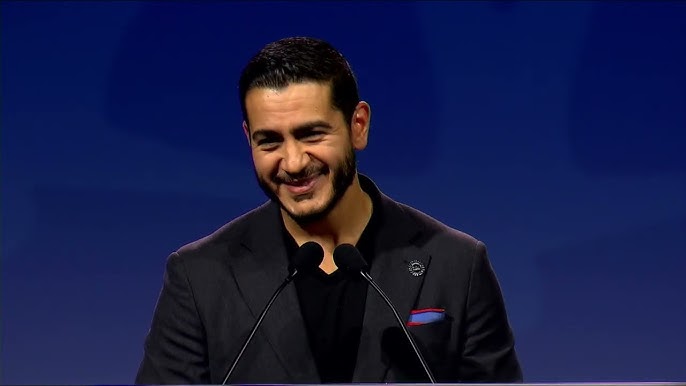
DETROIT — Progressive candidate Dr. Abdul El-Sayed narrowly defeated Rep. Haley Stevens in Michigan’s Democratic Senate primary, delivering one of the biggest victories for the Democratic Party’s left wing this election cycle and setting up a high-stakes November showdown against Republican Mike Rogers.
The Associated Press and multiple news organizations projected El-Sayed as the winner shortly before 10 a.m. Eastern Time on Wednesday. The outspoken progressive campaigned on a platform that included “Medicare for All,” abolishing Immigration and Customs Enforcement (ICE), higher taxes, and ending U.S. military aid to Israel.
With 99% of the vote counted, El-Sayed’s lead stood at fewer than 15,000 votes out of more than 1.5 million ballots cast. The razor-thin margin came as a surprise after several polls released during the final week of the campaign showed him holding a comfortable double-digit advantage.
Campaign spending in the contest topped $80 million, making it the costliest Democratic Senate primary in U.S. history, according to AdImpact.
The victory sends El-Sayed, who lost the 2018 Democratic gubernatorial primary to Gov. Gretchen Whitmer, into the general election against former Congressman Mike Rogers. Democrats view the Michigan seat as critical to their effort to regain control of the Senate next year.
The outcome also marks one of the first major electoral successes this cycle for the Democratic Party’s progressive wing outside its traditional liberal strongholds.
Michigan has long been fertile ground for progressive politics. It was the birthplace of the “uncommitted” protest movement against President Joe Biden during the 2024 Democratic presidential primaries and also backed Sen. Bernie Sanders in the state’s 2016 Democratic presidential contest.
If he wins in November, El-Sayed would become the first Muslim ever elected to the U.S. Senate. During his election night gathering in the Detroit area, where large Arab-American and Muslim communities reside, several supporters were seen performing Islamic prayers.
Rogers argued that the bruising Democratic primary would leave his opponent politically weakened heading into the general election.
“Whoever comes out of it is going to have a coalition problem. Remember, voting starts in about five or six weeks. We’re in an election cycle now,” Rogers told The Post hours before El-Sayed’s primary win.
“We’ve been building toward that day. They’ve been fighting each other and moving further and further to the left.”
Tuesday’s primaries also produced victories for several other progressive candidates, including Rep. Rashida Tlaib of Michigan, Michigan state Rep. Donavan McKinney, and Bernie Sanders-backed William Lawrence.
One notable setback for progressives came in Missouri, where Rep. Wesley Bell scored a decisive victory over Cori Bush in a Democratic House primary centered in St. Louis.
The Michigan Senate race evolved into a broader ideological battle between the Democratic establishment and the party’s progressive faction, with each side arguing that its candidate offered the stronger path to victory in November.
Throughout the campaign, El-Sayed advocated eliminating co-pays and deductibles under “Medicare for All,” abolishing ICE, publicly financing elections, imposing an arms embargo on Israel, and freezing property tax assessments for homeowners age 65 and older.
Those positions earned him endorsements from left-wing personalities including streamer Hasan Piker and the Democratic Socialists of America. Although frequently associated with the movement, El-Sayed has said he considers himself a capitalist and is not a member of the DSA.
The race frequently turned personal. El-Sayed argued that Stevens could not “string together two coherent sentences” and suggested she had been influenced by the American Israel Public Affairs Committee (AIPAC), whose affiliated super PAC spent nearly $30 million supporting her campaign.
Stevens, whose Midwestern accent and slogan, “Stick it to ’em,” attracted widespread attention online, sought to frame the race as one centered on Michigan rather than national ideological divisions, insisting, “It’s a Michigan moment for me.”
Should El-Sayed prevail in November, he could create challenges for Senate Democratic leadership. The Michigan Democrat has previously expressed opposition to Senate Minority Leader Chuck Schumer continuing to lead the party.
Schumer endorsed Stevens during the primary, joining other prominent Democrats, including Whitmer and retiring Sen. Gary Peters, who campaigned alongside her in the closing days of the race.
Supporters of Stevens argued she was the stronger general election candidate. A recent EPIC-MRA survey showed Rogers leading El-Sayed 46% to 43%, while Stevens held a narrow 44% to 42% advantage over the Republican.
Rogers narrowly lost Michigan’s Senate race to Sen. Elissa Slotkin in 2024, but El-Sayed has repeatedly dismissed concerns about his electability.
“When they say I’m not electable, they’re not talking about me,” El-Sayed told supporters during a rally in Grand Rapids on Saturday.
“They’re saying that you couldn’t possibly be open-minded enough … to elect somebody with a name like mine who prays like I do in a state like ours.”
El-Sayed also enjoyed the full support of members of the progressive congressional “Squad” during his campaign.
Democrats currently must gain four Senate seats to reclaim the chamber’s majority.
“We have a real shot to take the majority of the United States Senate,” Peters told reporters while campaigning for Stevens on Sunday. “That’s become increasingly likely as every month goes by. But it doesn’t happen if we lose Michigan.
“This state is absolutely critical.”