
 Matzav
JD Vance Presses Congress to Lock In Anti-Fraud Crackdown After $230 Billion in Suspected Fraud Identified
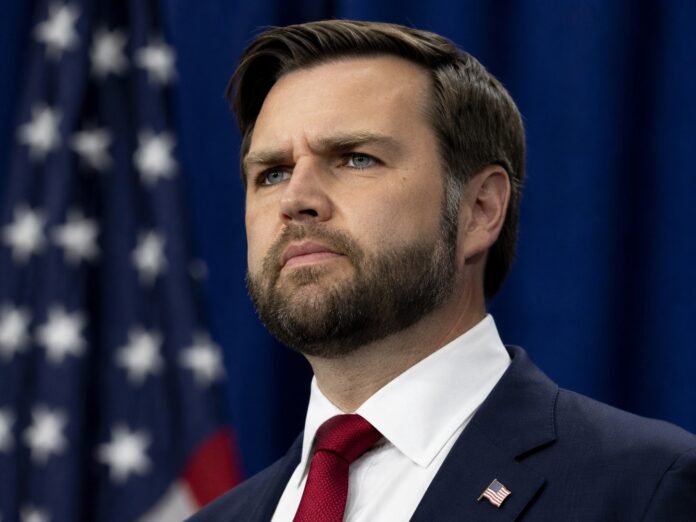
WASHINGTON — Vice President JD Vance on Wednesday urged Congress to permanently strengthen the Trump administration’s government-wide anti-fraud campaign, saying lawmakers must act to expand data-sharing, increase criminal penalties, and provide additional resources after federal investigators identified an estimated $230 billion in fraud.
Speaking during a Capitol-area roundtable on combating government fraud, Vance said the administration’s fraud task force has already uncovered approximately $230 billion in fraudulent activity and prevented another $56 billion in improper payments since its formation.
Vance said the initiative has brought together numerous federal agencies, but argued that its long-term success depends on Congress passing legislation to make the reforms permanent.
“This effort will fundamentally always have a limitation unless our colleagues in the House and the Senate are working with us,” Vance said. “In order to make this really work, we need our colleagues in Congress to really codify some of this stuff, to make sure that it becomes law.”
The vice president described fraud as a crime with two sets of victims, saying it not only costs taxpayers billions of dollars but also deprives vulnerable Americans of resources intended to help them. He pointed to programs such as Medicaid and federal nutrition assistance as examples of systems that have been exploited by fraud.
“The most obvious victim, of course, is the American taxpayer, who has their hard-earned tax dollars stolen from them to enrich people who are violating our laws and taking advantage of our country. But I think more profoundly, and more sadly, the second victim of fraud are the people who benefit from programs that the American people have set up in their generosity and in their kindness of spirit, and those programs don’t function as well or don’t even have the resources necessary to work because they’ve been stolen from by fraudsters,” Vance said.
A central focus of the discussion was improving the exchange of information between state governments and federal agencies. Vance argued that federal officials often lack adequate visibility into who is ultimately receiving benefits administered by the states and said Congress should require more consistent data sharing.
Andrew Ferguson, who also addressed the roundtable, argued that weak penalties and outdated government systems have allowed fraud to flourish. He said modern technology and improved data-sharing could stop many fraudulent claims before taxpayer money is ever distributed.
“Data is the enemy of fraud,” Ferguson said, adding that relatively simple verification tools could save taxpayers hundreds of billions of dollars.
Ferguson also called for significantly tougher punishment for those convicted of defrauding government programs.
“We want to work with Congress to dramatically increase the sentences associated even with low-level frauds,” Ferguson said. “To make every fraudster think long and hard about whether it’s worth facing a long time in jail before deciding to raid our programs.”
White House Deputy Chief of Staff Stephen Miller echoed those concerns, arguing that current criminal penalties have failed to deter large-scale fraud because many offenders receive relatively light sentences.
“This may be hard to believe that you could steal hundreds of thousands and ultimately millions of dollars and not do any significant jail time. I think probably the simplest explanation is that when Congress was drafting these statutes, they still lived in a high-trust society, and it eclipsed their imagination that there would be systemic, widespread, continual lying, fleecing, and organized crime to rip off hundreds of billions of dollars from the American taxpayer, which is what has happened. There needs to be strict, clear, mandatory minimums,” Miller said.
White House Domestic Policy Council Director Vince Haley also addressed the gathering, presenting what he described as 10 “practical proposals” for Congress to strengthen the administration’s anti-fraud efforts.
“Fraud steals taxpayer dollars, but such corruption steals something even more precious: it steals the blessings and benefits of work,” Haley said.
Vance concluded by saying the administration will continue working with Congress to advance three primary objectives: expanding information-sharing between governments, imposing tougher penalties on fraudsters, and providing additional funding for fraud investigations. He also thanked officials across multiple agencies, describing the initiative as a true “whole of government” effort.
{Matzav.com}